In complex construction projects, particularly a project that has high density of MEP (Mechanical, Electrical, and Plumbing) systems, coordination can be the largest point of bottleneck. Conventional work processes cannot match the amount of detail and collaboration needed and result in conflicts, delays, and rework that is expensive.
However, what would happen should many of these issues be resolved even prior to the start of construction? This is precisely what has occurred in an actual case study by Tesla Outsourcing Services, where the BIM saved 40 percent of time on MEP coordination in a Performing Arts Center project.
We shall divide this into a simple and understandable manner.

Dense MEP systems within limited ceiling space
Project Overview: A High-Complexity Environment
The performing arts centers are not only architectural wonderworks, but also MEP-intensive spaces in which various systems must work in harmony with each other. The coordination issue in this project was the result of the sheer concentration of services and the rigid space constraints.
The project involved:
- Complex HVAC systems for audience comfort
- Advanced lighting and electrical layouts
- Extensive plumbing and fire protection systems
- Tight ceiling voids with limited routing space
Due to the mutual systems, minor misalignments would result in significant conflicts. This put the situation in which coordination was not only valuable, but also essential towards project success.
Deep Dive: The Everett Alvarez Performance Center
MEP BIM Modeling, Clash detection and BIM Coordination at LOD 350 with Coordination Meetings in USA time zones.
MEP BIM Coordination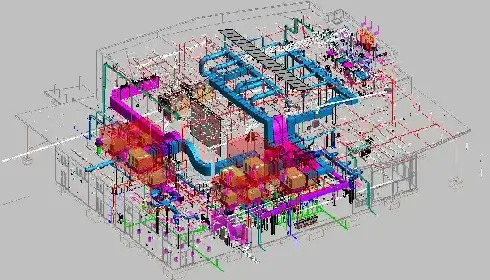
The Problem: Why Coordination Was Taking Too Long?
Prior to the full implementation of BIM, the project depended on conventional means of coordination. Although these approaches are effective when dealing with small projects, they fail to work in dynamic environments. The result? Delays, confusion and rework.
Key challenges included:
All these factors combined to significantly increase coordination time.
Clashes between systems
- HVAC ducts overlapping with beams
- Pipes interfering with cable trays
Lack of spatial clarity
- 2D drawings couldn’t represent real-world depth
- Difficult to visualize how systems interact
Late issue detection
- Problems discovered during construction
- Increased cost and time for corrections
Fragmented communication
- Different teams working in isolation
- Slow coordination cycles
The BIM Solution: An Intelligent Approach to Coordination
A systematic BIM-based workflow was implemented to deal with these issues. This changed the whole process of coordination to be proactive. Instead of fixing problems on-site, the team began solving them digitally, before construction started.
The BIM approach included:
This approach didn’t just improve coordination it transformed it.
- Creating a detailed 3D model of all MEP systems
- Running clash detection analysis regularly
- Conducting coordination meetings using the model
- Optimizing routing based on real spatial data
Key BIM Strategies That Made the Difference
Detailed 3D Modeling
The first step was to build accurate and information-rich models of all systems. This allowed teams to understand how each service interacts within space.
What this improved:
- Clear visualization of layouts
- Accurate positioning of services
- Better understanding of space constraints
Clash Detection & Resolution
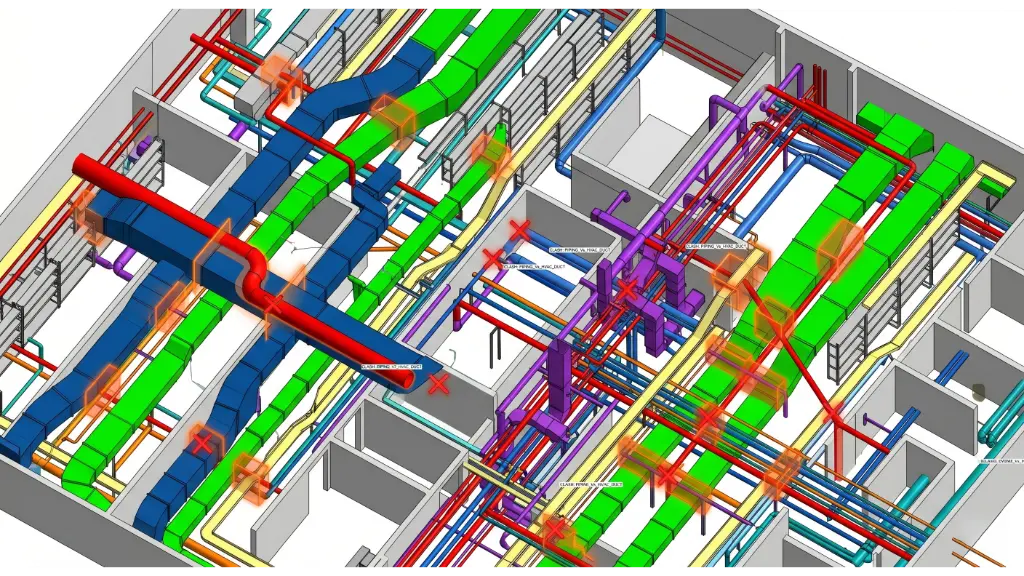
Clash detection became the backbone of coordination. Instead of waiting for issues to appear on-site, the team identified them early.
Types of clashes resolved:
- Hard clashes (physical overlaps)
- Soft clashes (clearance and accessibility issues)
Benefits achieved:
- Faster identification of conflicts
- Reduced rework during construction
- Better planning and sequence
Collaborative Coordination Process
BIM enabled each of the stakeholders to work on a unified platform. This improved communication and time wastage through poor communication.
Coordination improvements included:
- Regular model-based review meetings
- Real-time updates and feedback
- Faster decision-making
Optimized Service Routing
With a clear 3D model, routing decisions became more efficient. Instead of trial-and-error on-site, systems were planned intelligently.
Routing advantages:
- Efficient use of limited ceiling space
- Reduced service overlap
- Improved maintainability
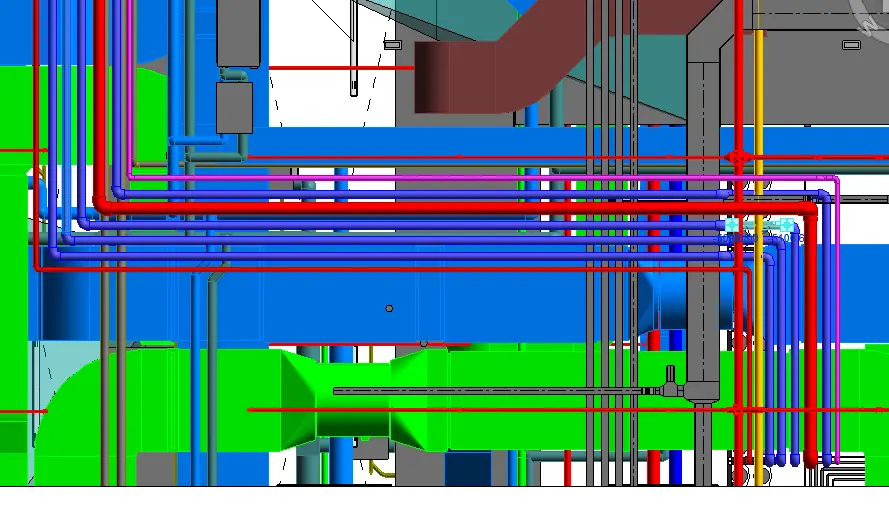
MEP clashes between ducts, pipes, and cable trays
The Result: 40% Faster Coordination
The implementation of BIM delivered a measurable and impactful outcome, a 40% reduction in coordination time. This wasn’t just a number, it translated into real project benefits. In other words, what used to be accomplished in weeks was done in significantly shorter periods of time. This enabled the project team to remain ahead of time and unnecessary delays were avoided.
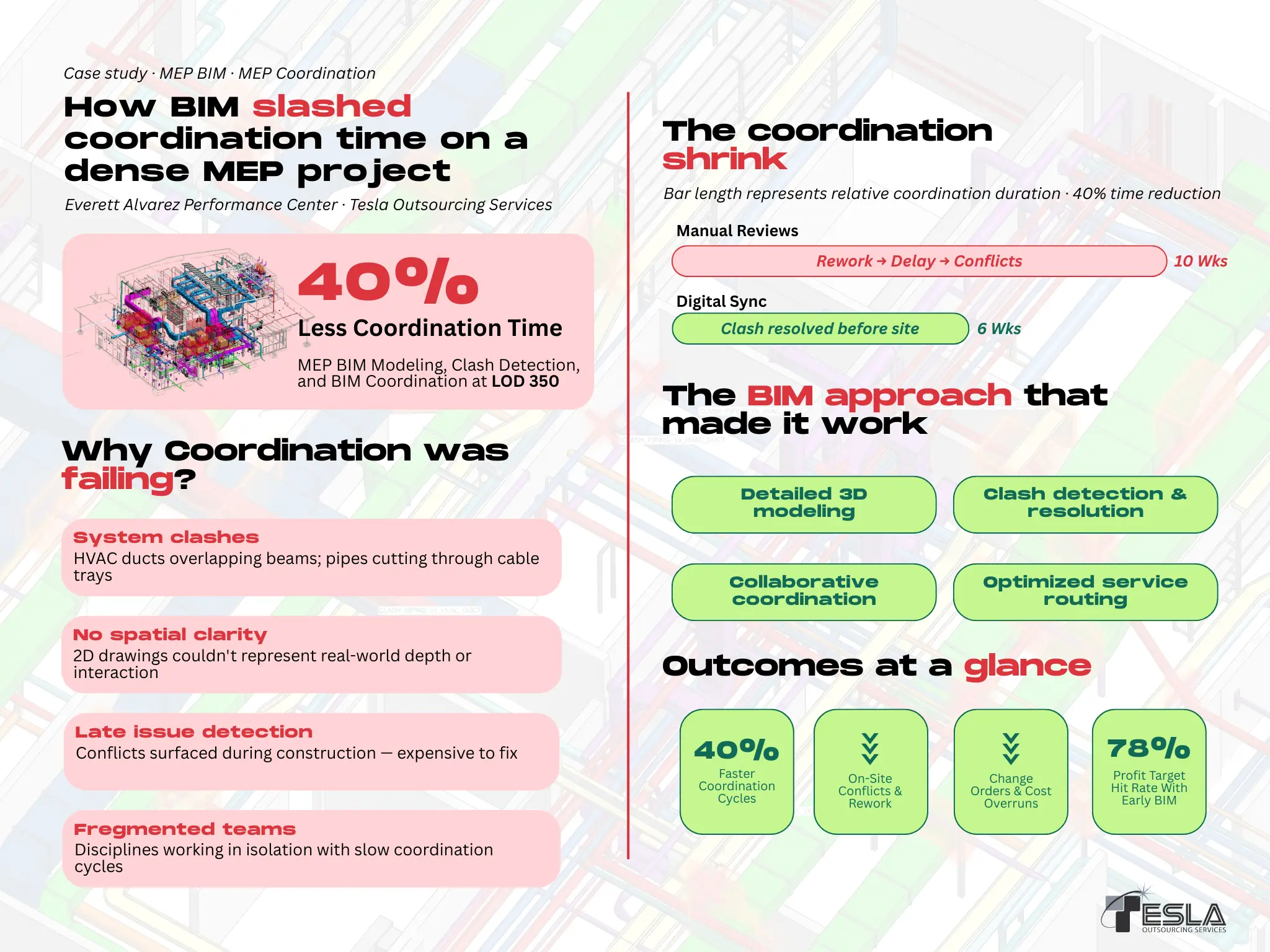
Key outcomes:
- Reduced coordination duration significantly
- Faster clash resolution cycles
- Minimal on-site conflicts
- Improved workflow efficiency
Why BIM Was So Effective in This Project
BIM proved to be effective in that it did not only deal with the symptoms of coordination problems but also the causes. It added order, organization, and cooperation to an otherwise disjointed process.
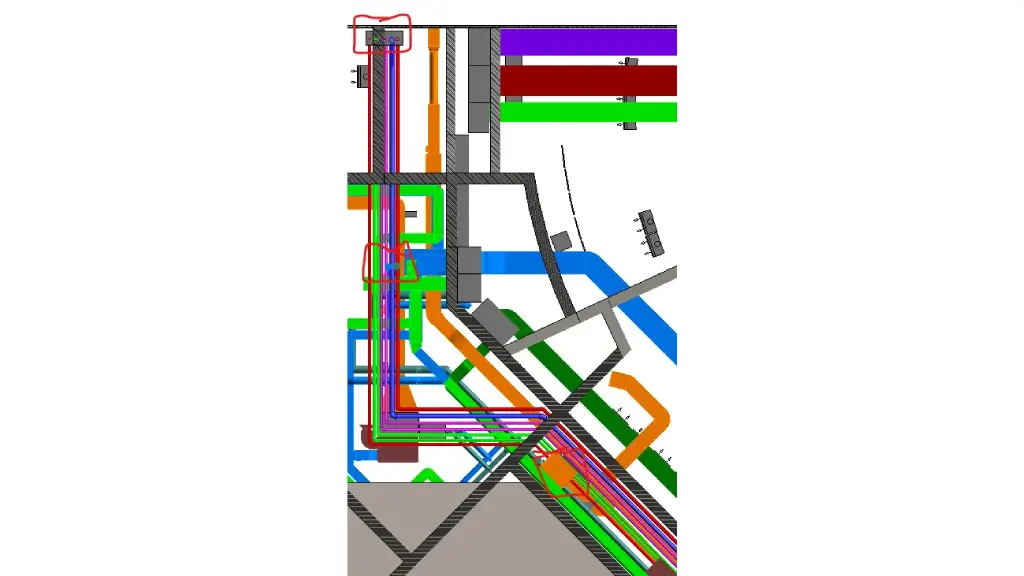
Improved coordination through BIM-driven workflows
The main reasons behind its success:
The below reasons and the combination created a smoother and faster coordination process.
Early problem detection
- Issues were solved before reaching the construction stage
Better visualization
- 3D models made complex systems easy to understand
Improved collaboration
- Teams worked together instead of in silos
Data-driven decisions
- Every decision was backed by accurate model information
FMI 2025 Project Management Study reports firms that involve project management early in the estimation and coordination phase hit their profit targets 78% of the time, compared to only 55% for those who do not.
Impact Beyond Coordination
Coordination is not the only benefit of BIM because it has one of the biggest advantages. The good effect in this project was realized during the construction process. In simple terms, BIM helped the team save both time and money.
On-site benefits:
- Fewer installation errors
- Reduced need for rework
- Better coordination between trades
- Smoother execution workflow
Cost-related benefits:
- Lower rework costs
- Fewer change orders
- Improved resource utilization
Why This Case Study Matters for the Industry
This project serves as a good demonstration of the ability of the BIM to resolve one of the most long-standing problems in construction, which is the lack of coordination. The complexity of the buildings will only add to the necessity of combined workflows. The success of this case study highlights a broader industry shift toward digital construction practices.
Key industry insights:
These insights are not limited to large projects they are applicable across various scales and sectors.
- BIM enables early problem-solving, reducing downstream risks
- Visualization improves stakeholder alignment
- Data-driven workflows enhance decision-making
- Collaboration tools break down disciplinary silos
Lessons to Be Learned in Future Projects
This case study can be a definite guide to professionals who want to use BIM effectively. The results were not achieved by technology alone, but by combining tools with structured processes and collaboration.
Best practices to adopt:
Following these principles can significantly improve coordination efficiency in any project.
- Start BIM coordination early in the design phase
- Develop detailed and accurate models
- Use clash detection consistently and strategically
- Maintain regular coordination cycles
- Ensure all stakeholders work within a shared environment
Conclusion
The case study of the Performing Arts Center clearly shows how BIM is transforming the way complex MEP coordination should be done in the current-day construction. The process that used to take a lot of manual labor, repeated editing, and on-site troubleshooting became a simplified, proactive, and very efficient process.
Using the coordination as a digital tool, the project team could identify and fix problems earlier and enhance interdisciplinary communication as well as make decisions more quickly and informed. The outcome 40% decrease in the coordination time-is not merely some statistics, but the manifestation of better planning, cooperation and performance.
What is more important, this case shows that BIM is not only about the development of 3D models, but about the possibility of having a smarter workflow in which time, cost and quality are all optimized in the same way.
With the ever-increasing complexity of projects, BIM is not a foresighted choice anymore, it is a realistic need. Teams who adopt it well will not only minimize the challenge of coordination but also enjoy a clear competitive advantage in completing projects quicker, more precisely and with more confidence.
BIM ROI: Measurable Success Stories in Cost, Time, & Quality
Read Guide on BIM ROI