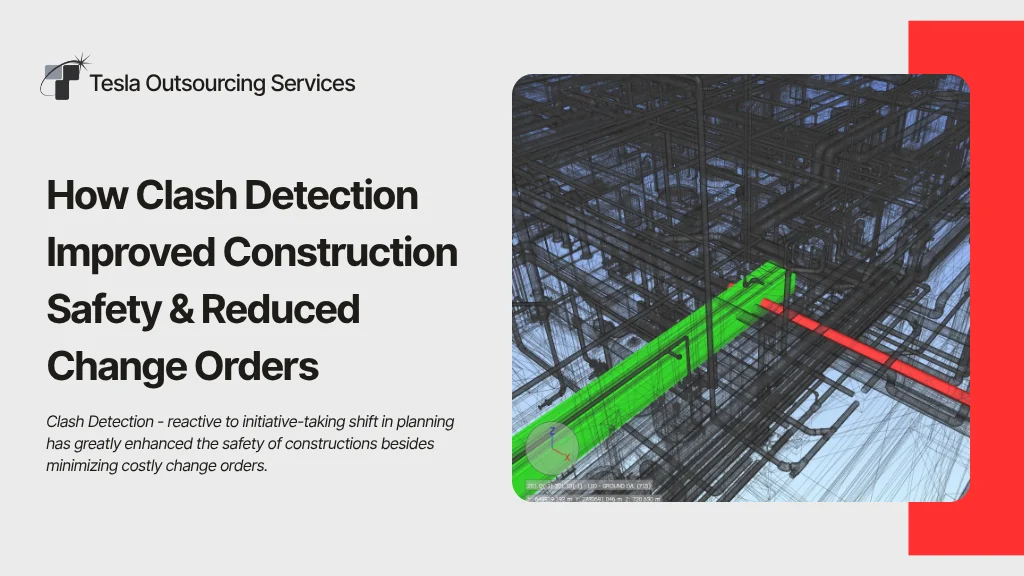
In construction, issues do not always appear out of thin air, they tend to be concealed either in drawings, poor communication or lack of coordination. The very problem is that most of these issues are found at the last moment when the construction is already in progress. It is here that the clash detection with the help of BIM (Building Information Modeling) turns it all.
Teams can predict, visualize as well as resolve conflicts prior to the commencement of the construction rather than responding to issues on-site. This reactive to initiative-taking shift in planning has greatly enhanced the safety of constructions besides minimizing costly change orders.
This must be understood in a more practical sense.
Explore BIM ROI: Measurable Success Stories in Cost, Time, & Quality
Read the ArticleLearning about Clash Detection
Clash detection is not purely a geometrical concept but rather a buildability, safety and efficiency concept. Clash detection is not only the matter of detecting the overlapping elements, but it is also the matter of making all building systems compatible with each other.
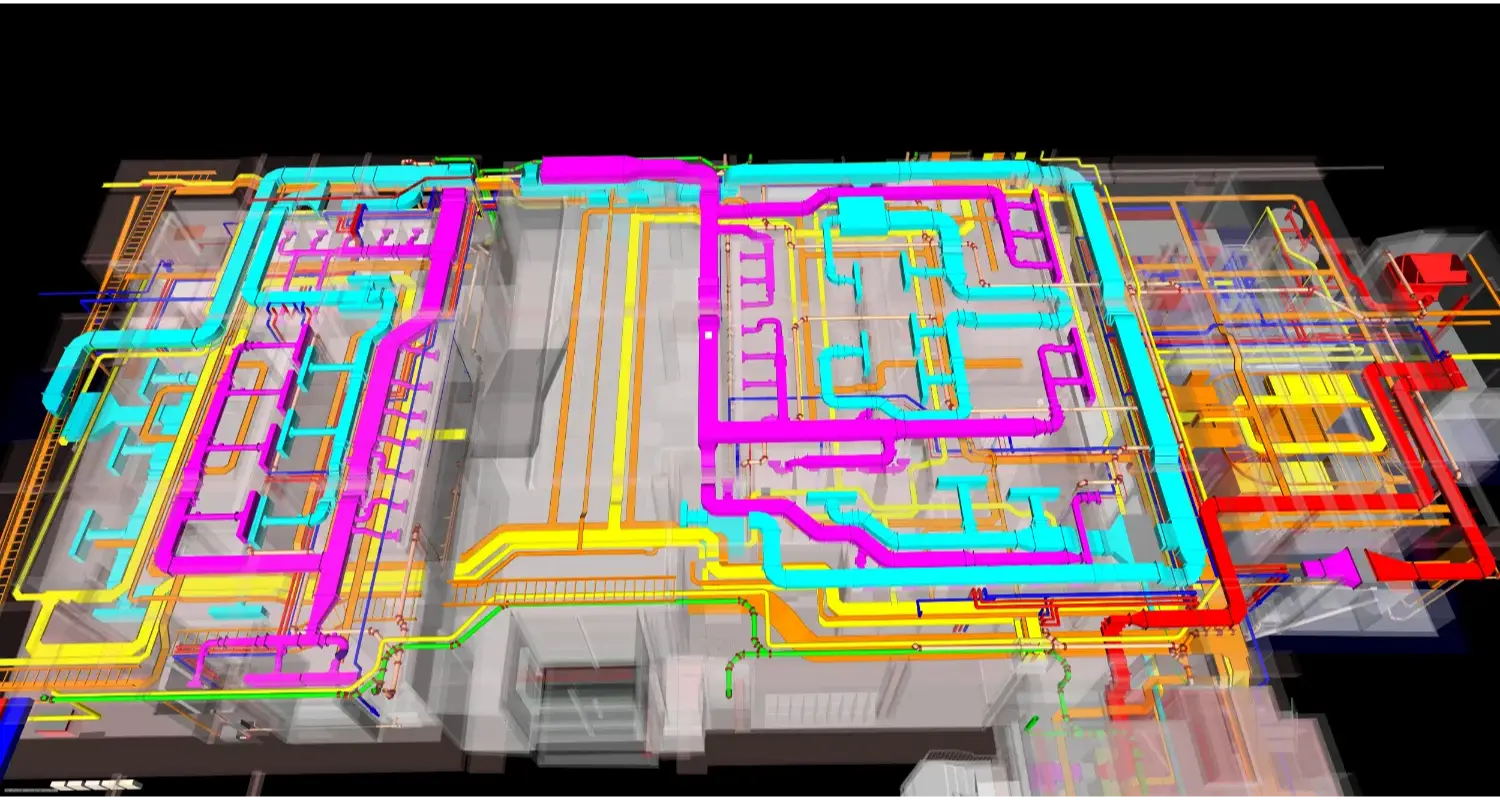
A BIM workflow integrates all the disciplines into one digital environment, architecture, structure, and MEP. This hybrid model enables teams to see the interaction of every system in a real-time manner.
Types of clashes:
- Hard Clashes (Physical Conflicts)
- Example: A duct passing through a structural beam
- Immediate issue that must be resolved
- Soft Clashes (Clearance Issues)
- Example: Not enough space for maintenance access
- Can affect long-term building operations.
- Workflow Clashes (Time-Based Conflicts)
- Example: Two teams scheduled to work in the same area at the same time
- This can lead to site congestion and safety risks.
Why Safety Improves When Clashes Are Resolved Early
Construction sites are dynamic and complex. When conflicts are discovered during construction, workers are forced to adjust under pressure. These adjustments often lead to unsafe practices.
Clash detection reduces these risks by ensuring that everything fits correctly before installation begins.
Keyways clash detection enhances safety:
- Cuts guesswork on-site
- Workers don’t need to make risky decisions in real time.
- Clear instructions reduce confusion.
- Reduces hazardous rework.
- There is no need to cut beams or rerouting services suddenly.
- Minimizes exposure to dangerous tools and environments.
- Ensure proper working space.
- Adequate clearance for installation and maintenance
- Prevents cramped and unsafe working conditions.
- Improve construction sequence!
- Activities are planned in the correct order.
- Reduces overlapping tasks and site congestion.
- Enhance communication!
- Everyone collaborates with the same coordinated model.
- Fewer misunderstandings between trades
As of early 2026, leading global insurers are beginning to offer premium credits of up to 10% for AEC firms that demonstrate a “Safety by Design” workflow. By using high-maturity BIM models to resolve physical and workflow clashes before site mobilization, firms are classified as lower risk for workplace injuries and structural liabilities.
How Clash Detection Directly Reduces Change Orders
Change orders are one of the biggest reasons projects go over budget and behind schedule. They usually occur when something unexpected is discovered during construction. Most of these issues are not truly “unexpected”—they are simply undetected during the design phase. Clash detection solves this problem by shifting issue identification to an earlier stage.
Common causes of change orders:
- Design inconsistencies between disciplines.
- Lack of coordination between teams
- Missing or incomplete information
- Site conflicts discovered during execution
How does clash detection prevent these?
- Finds conflicts before construction starts.
- Allow design teams to resolve issues early.
- Reduces last-minute decision-making.
Minimizes disruption to construction workflow.
Due to the high cost of skilled labor and materials in 2025/2026, industry data suggests that resolving a single “hard clash” during the design phase is 25 to 30 times more cost-effective than attempting to fix the same conflict once construction has reached the job site.
What Happens Without Clash Detection?
Imagine a situation where a plumbing system is installed first. Later, the HVAC team realizes their duct needs the same space. Now, the project faces multiple problems:
- The duct must be redesigned.
- Installed plumbing may need removal.
- Added labor is needed.
- Work is delayed.
- Costs increase significantly.
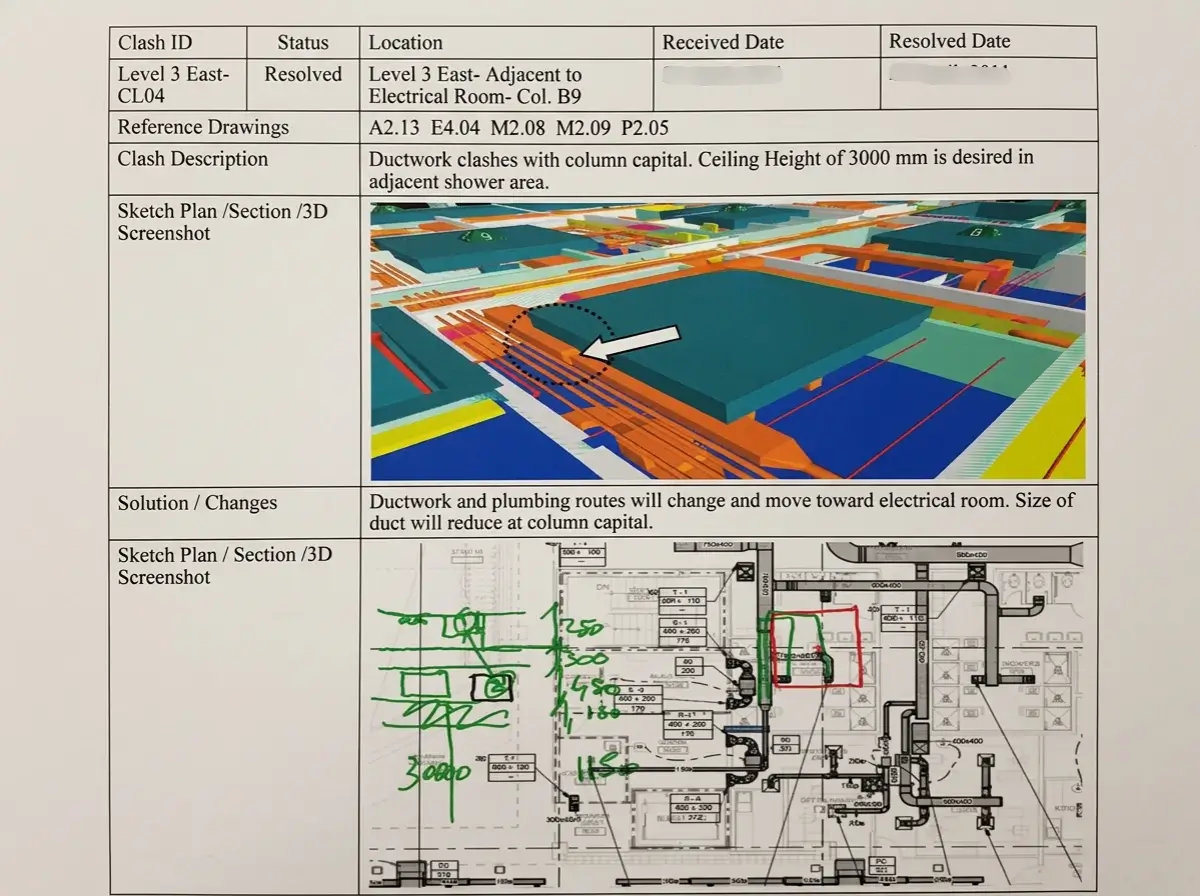
Clash report relating to clash between duct and column
On-site consequences without clash detection:
- No Rework and material wastage
- No Unsafe site conditions
- No Project delays
- No Increased costs
- No Conflicts between teams
Workflow of clash detection
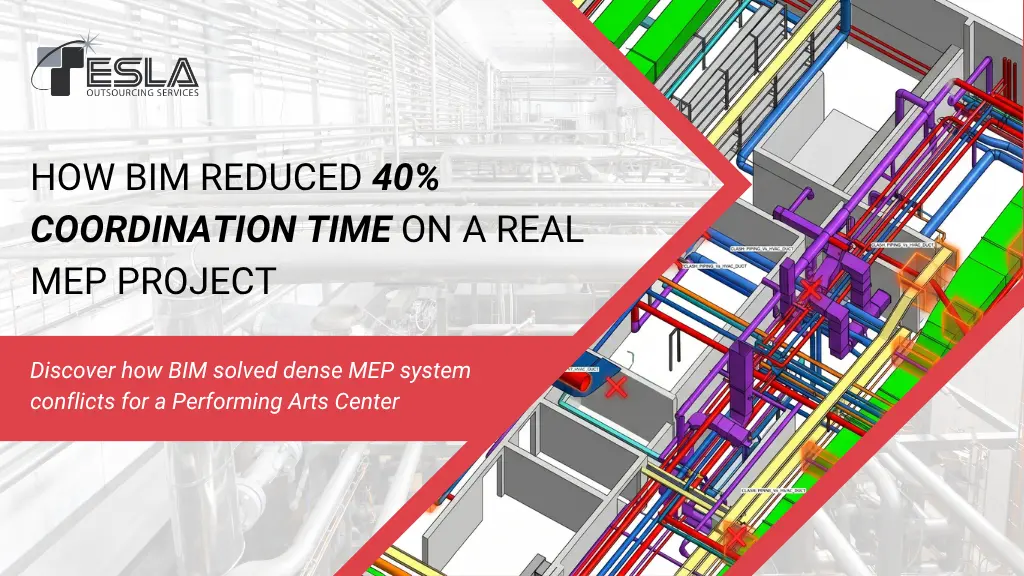
See how BIM coordination slashed MEP timeline by 40% in a Performing Arts Center
Read the Case StudyStep-by-Step Process of Clash Detection in BIM
Clash detection follows a structured workflow that ensures all systems are properly coordinated.
Step 1: Model Creation
Each discipline creates its own detailed model:
- Architectural model
- Structural model
- MEP model
Step 2: Model Federation
All models are combined into a single coordinated model.
Step 3: Running Clash Tests
Clashes are created automatically using such tools as Navisworks and Revizto.
Step 4: Clash Reporting
Reports are generated with:
- Clash location
- Elements involved
- Severity level
Step 5: Coordination Meetings
The teams communicate to solve the conflicts in a team-based way.
Step 6: Model Updates
Change in design is undertaken and authenticated.
Step 7: Rechecking
This is repeated until clashes are reduced or eradicated.
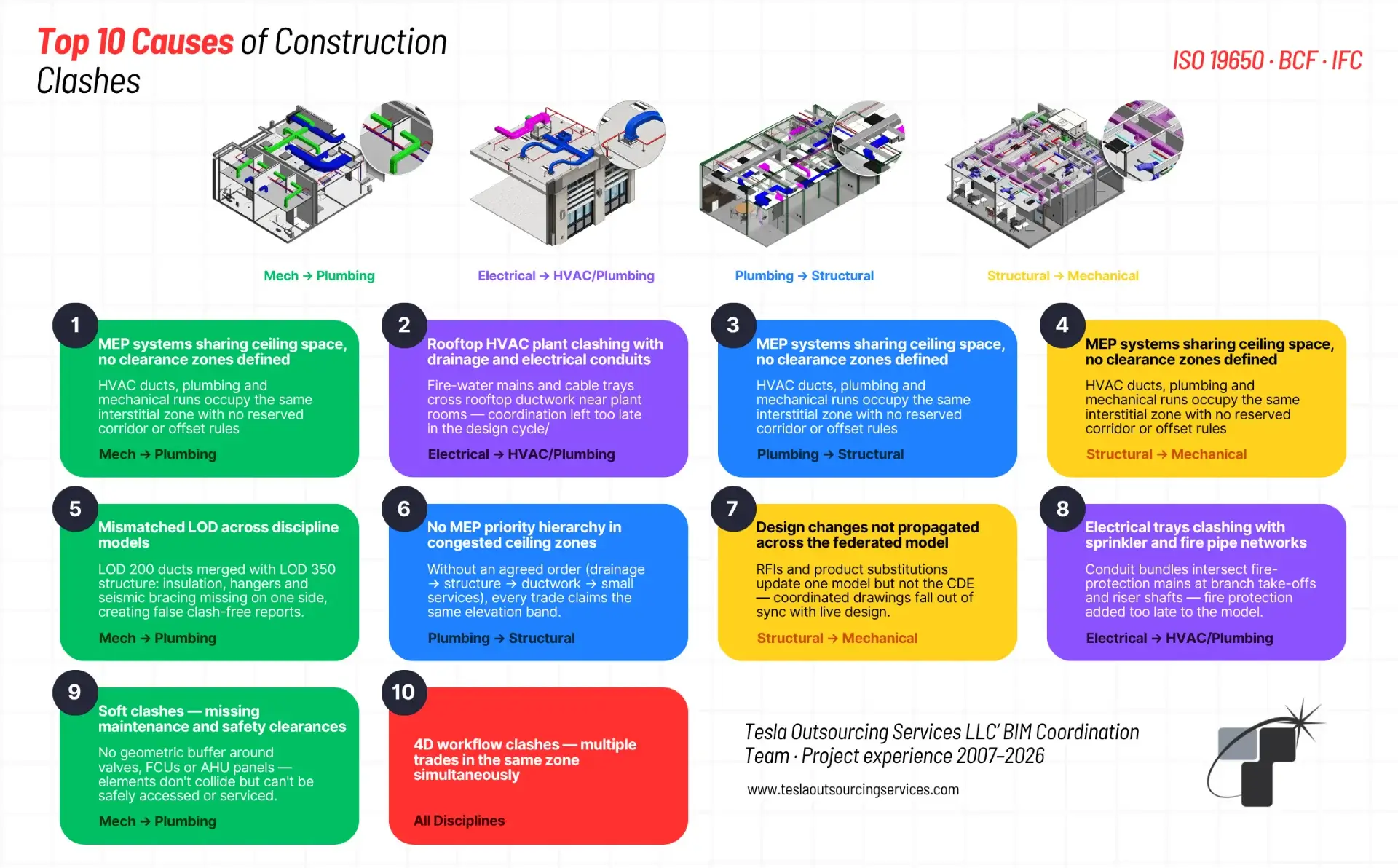
Causes of Clash
Benefits of Clash Detection
Clash detection offers benefits that go beyond just coordination.
Better Project Visualization
- Teams can see the project before it is built.
- Helps with better decision-making.
- Reduces design ambiguity.
Improved Client Confidence
- Clients can understand the design clearly.
- Fewer surprises during construction
- Build trust in the process!
Higher Quality Construction
- Systems are installed correctly the first time.
- Reduces defects and performance issues.
Efficient Resource Management
- Better planning of materials and labor
- Reduces wastage.
Stronger Team Collaboration
- Encourages coordination between disciplines.
- Creates a unified workflow.
Prioritizing Clashes: What Matters Most?
Not all clashes need immediate attention. Prioritization is key to efficiency.
High-priority clashes:
- Structural vs MEP conflicts
- Beam and duct intersections.
- Pipe routing through columns.
Medium-priority clashes:
- Maintenance clearance issues
- Equipment access problems
Low-priority clashes:
- Minor overlaps that do not affect functionality.
Best Practices for Valuable Clash Detection
To do an effective and useful clash detection, teams need a structured approach.
Recommended strategies:
- Define clear clash detection rules!
- Set tolerance levels for each system.
- Use standardized naming conventions.
- Assign responsibility for each clash.
- Track clashes until closure.
- Conduct regular coordination meetings.
Added practical tips:
- Focus on actionable clashes, not just quantity.
- Avoid overloading reports with unnecessary data.
- Maintain model accuracy at every stage.
Tools That Make Clash Detection Powerful
Modern BIM tools simplify and enhance clash detection. These tools help teams collaborate efficiently across locations.
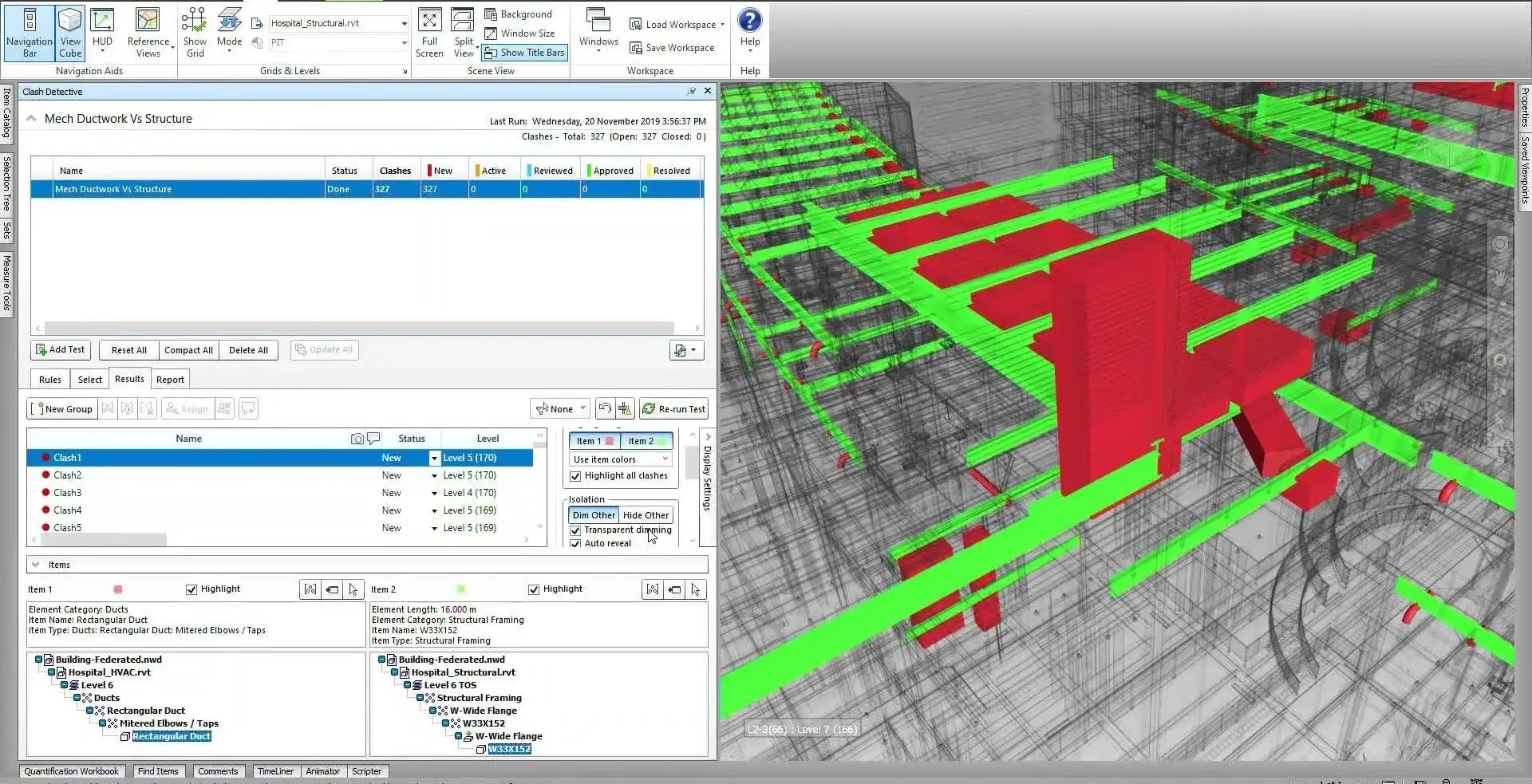
Navisworks For Clash Detection
Commonly used tools:
- Navisworks
- Advanced clash detection and reporting
- Easy visualization of conflicts
- BIM 360 / Autodesk Construction Cloud
- Cloud-based coordination
- Real-time collaboration
- Revit Interference Check
- Basic clash detection within models
Challenges in Clash Detection
Even though clash detection is powerful, it requires proper execution.
Usual challenges:
- Incomplete or inaccurate models
- Lack of coordination between teams
- Too many irrelevant clashes
- Poor clash management
How to overcome them:
- Ensure high-quality model inputs.
- Train teams in BIM workflows
- Filter clashes effectively
- Focus on high impact issues.
The Future of Clash Detection
Clash detection has ceased to be merely a coordination tool that has now become a smart system capable of expecting, prioritizing issues as well as even preventing them even before they occur.
The need to have smarter coordination tools is growing as construction projects are being formed into complex ones. Clash detection should have a future that should involve incorporation of better technologies that cannot be limited to mere identification of conflicts.
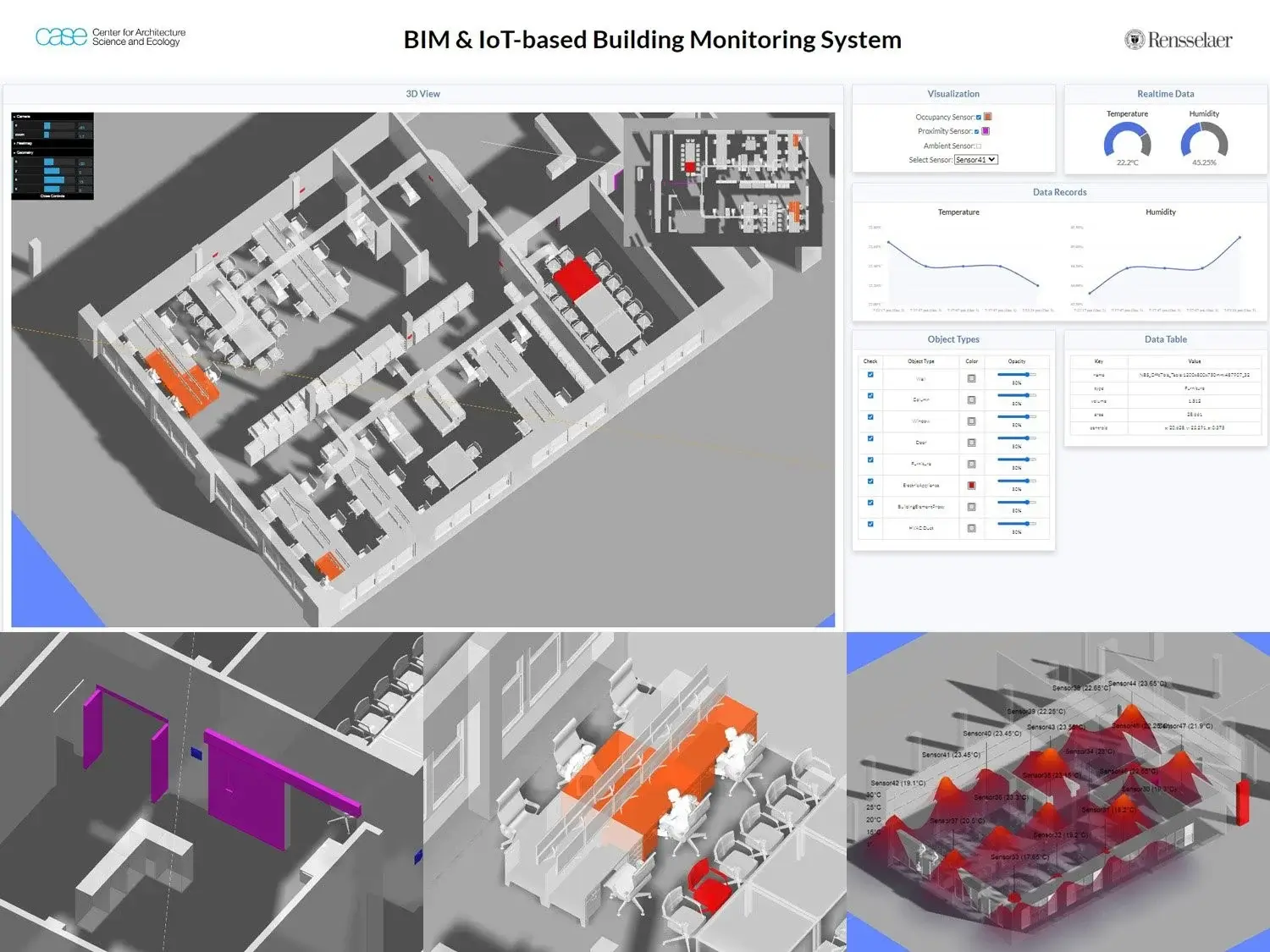
BIM & IoT based clash detection
AI based clash detection.
- Automatically filters and gives high priority to critical clashes.
- Saves on time wastage in solving unnecessary matters.
- The past project data can be learned to help make better decisions.
Integration with 4D and 5D BIM
- It is a combination of time (4D) and cost (5D) with clash detection.
- Helps find scheduling conflicts before execution.
- Enables better planning of construction sequences.
Digital twins and real-time monitoring
- Extend clash detection beyond design and construction.
- Tracks building performance and system conflicts post-construction.
- Helps in predictive maintenance.
Automation in coordination workflows
- Reduces manual effort in clash testing and reporting.
- Enables faster resolution cycles.
- Improves overall project efficiency.
Cloud-based collaboration platforms
- Allowing global teams to work on the same model simultaneously
- Improves transparency and communication.
Conclusion
Clash detection has also changed construction as a reactive process into an initiative-taking process as problems are now solved at the design stage. They no longer require teams to address issues in a hazardous and unsafe workplace, as they can use a secure and regulated digital environment, leading to safer working environments and simplified application. Change orders should be minimized, there should be better coordination and maintenance of project schedules and budgets. Finally, clash detection can help the projects to go ahead in a clear and confident manner, as whatever is constructed on site is already planned, coordinated, and efficient.