Scan to BIM modeling is highly popular in the construction industry today. The growing demand for green buildings requires better processes to reduce waste and improve energy efficiency. Construction and Demolition (C&D) activities are the largest contributors to global waste generation.
The Importance of Controlling Waste
Why is this such a big deal? Studies show that C&D accounts for a massive share of total waste. For instance, it is 59% in the UK, nearly 75% in France, and around 55% in the US. As the demand for housing continues to grow, these numbers will only climb if left unchecked.
Governments worldwide have strict recycling targets, and the construction industry must step up to meet them. Contractors are increasingly turning to Point Cloud to BIM modeling to calculate accurately, segregate, and minimize this waste.
Using Scan to BIM to Reduce Waste
Construction Waste Minimization has been a major focus for years. Virtual Design and Construction (VDC) helps create sustainable new buildings by reducing carbon footprints. Using Building Information Modeling during the design stage minimizes waste through practical applications like Clash detection, MEP coordination, detailed 3D visualization, and eliminating on-site rework. You can learn more about the significance of BIM Clash Detection in construction projects, highlighting the importance of clash detection and coordination in the AEC industry.
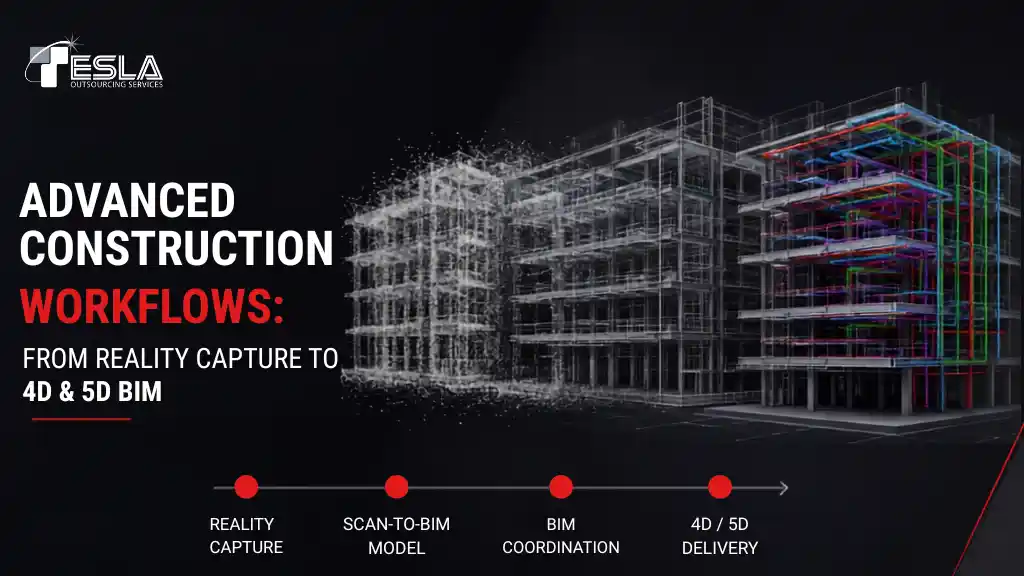
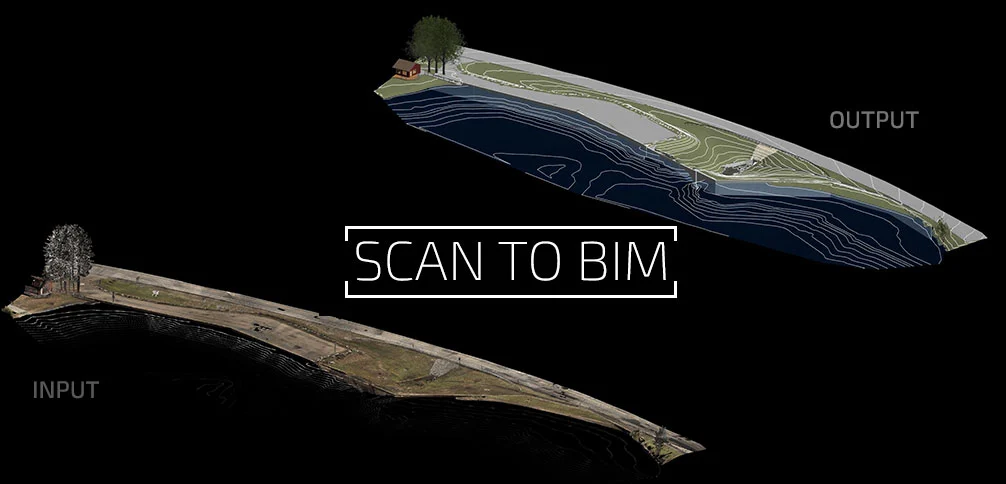
Scan to BIM delivers these exact benefits to renovation and demolition projects. Laser scanners capture the exact as-built status of a building. The resulting 3D model is rich in data, making it the perfect tool for planning a clean, efficient renovation.
Explore our Scan to BIM services and see how we convert raw scan data into construction-ready Revit models.
Explore Scan to BIM ServicesBetter Waste Management on Site
Architectural, structural, and MEP models generated from point cloud data let you assess waste before demolition even begins.
By scanning facades, interiors, and common areas, you get a highly precise 3D replica. This model includes technical data, such as material types and exact quantities. When you know exactly what needs replacing, you can easily sort the resulting waste into the right recycling streams.
For example, an MEP virtual model shows the exact location and material of old pipes. When you replace them, you know exactly how much waste you have and can send it directly to a recycling or reuse facility instead of a landfill.
Summing Up!
The digital revolution has completely changed how we build, manage, and renovate properties. Originally, BIM was just for new construction. Today, high-quality laser scanners have changed the game. With a stronger focus on environmentally friendly demolition and renovation, Point Cloud to BIM is the clear path forward for a greener industry.