In the modern AEC landscape, staying ahead of the curve isn’t just about design excellence—it’s about operational efficiency and data precision. Architectural BIM Services have evolved from a luxury to a fundamental necessity for successful project delivery.
For Project Managers at mid-to-large firms, the challenge is no longer just “getting it built.” It’s about mitigating risk, controlling spiraling costs, and ensuring seamless collaboration across dispersed teams. This is where high-fidelity Architectural BIM Modeling bridges the gap between conceptual design and construction reality.
This guide provides a strategic overview of Architectural BIM, exploring how it transforms traditional workflows into streamlined, data-driven processes that drive ROI in 2025 and beyond.
What is Architectural BIM?
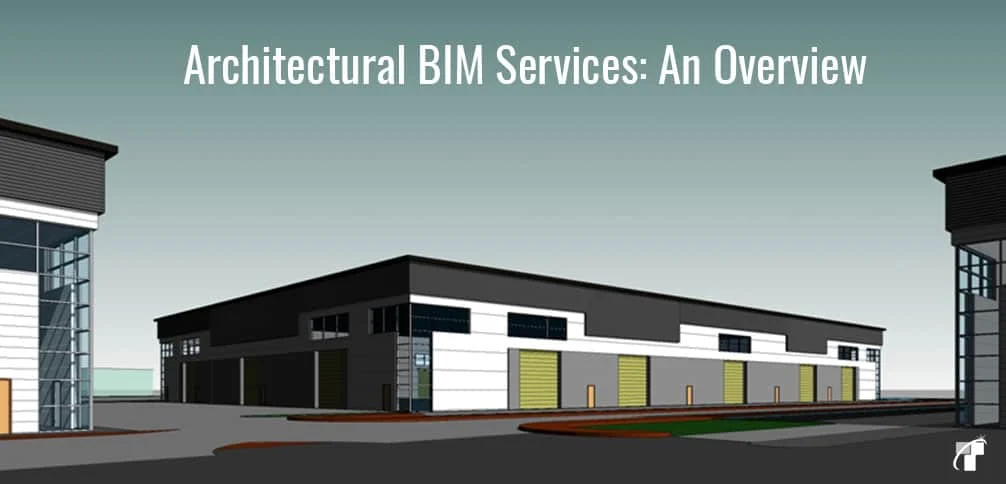
At its core, Architectural BIM (Building Information Modeling) is the intelligent process of converting schematic designs into data-rich, 3D digital representations. Unlike static CAD drawings, BIM models are dynamic; every element—from a load-bearing wall to a window fixture—carries metadata regarding geometry, material properties, and phasing.
Architectural BIM Services encompass the creation and management of these models to support the entire project lifecycle, from schematic design (SD) through to construction documentation (CD) and facility management.
The Modern Input-Output Workflow
To ensure precision, professional BIM workflows now accept a wide range of inputs and deliver versatile outputs tailored to your project’s execution plan.
Typical Inputs Include:
- Legacy Data: AutoCAD (.dwg) files, PDF drawings, and hand-drawn sketches.
- Reality Capture: Point Cloud data (laser scans) for renovation and retrofit projects.
- Conceptual Models: Rough massing models from tools like SketchUp or Rhino.
Standard Deliverables Include:
- 3D Revit Models: Fully parametric models (LOD 100 to LOD 500).
- Construction Documentation: Intelligent 2D sheets (plans, sections, elevations) extracted directly from the model.
- BIM Coordination Files: Navisworks (.nwd) files for clash detection.
- Visualization Assets: Photorealistic renderings and walkthroughs.
The Strategic Benefits of Architectural BIM Services
Adopting a robust Architectural BIM Modeling strategy offers more than just 3D visualization; it serves as a risk management tool for Project Managers and Stakeholders.
Enhanced Visualization and Communication
BIM eliminates the guesswork associated with 2D drawings. By visualizing the pre-construction model in 3D, architects, engineers, and clients can explore the “virtual building” before a single brick is laid. This clarity speeds up approval cycles and ensures that all parties perfectly understand design intent.
Cost Reduction and Waste Elimination
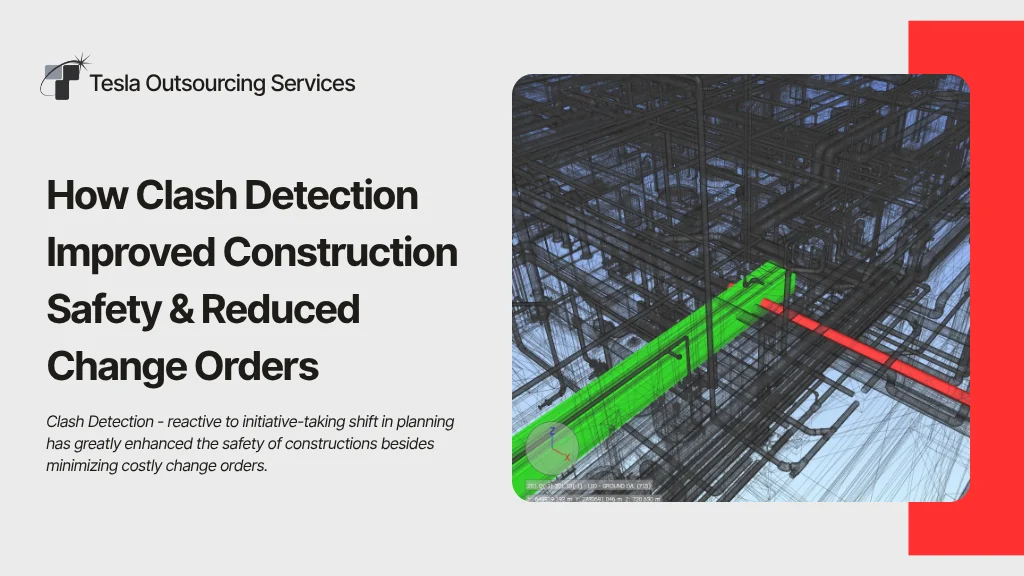
One of the most significant advantages of BIM Services is the ability to identify issues early. Through virtual construction, teams can detect and resolve conflicts (e.g., a duct running through a structural beam) during the design phase. This proactive approach significantly reduces Change Orders (COs) and on-site material waste, directly protecting the project’s bottom line.
Streamlined Coordination and Risk Mitigation
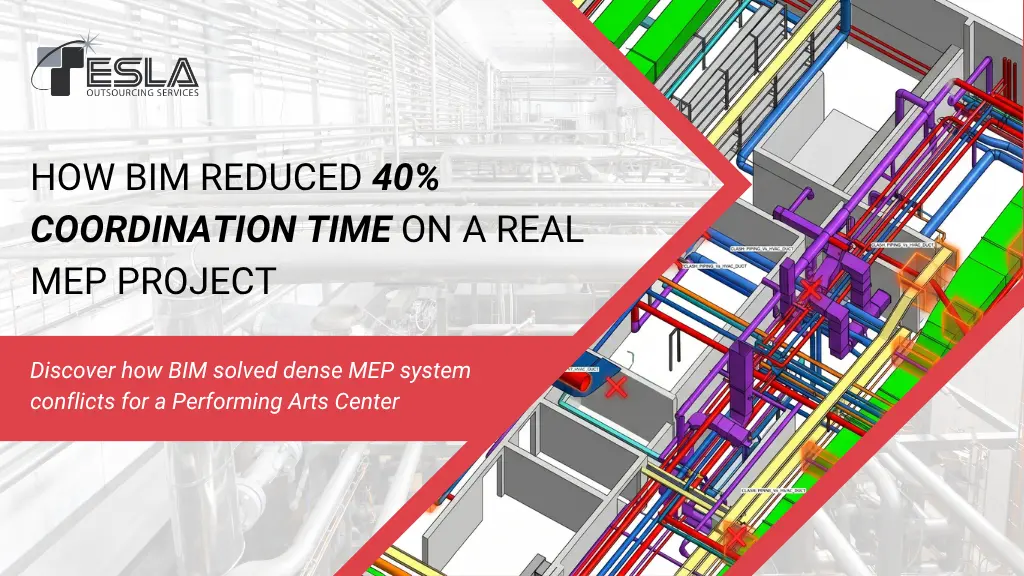
Modern construction projects involve complex MEP (Mechanical, Electrical, Plumbing) and structural systems. Architectural BIM serves as the governing background for all other disciplines. When updated centrally, it ensures that every consultant is working off the latest “single source of truth,” minimizing the risk of miscommunication and costly rework.
Precision in Practice
Seeing is believing. We partnered with a client to deliver BIM modeling for a complex housing project. The result was a streamlined workflow that minimized errors and accelerated the construction timeline.
Read the Case Study: Architectural BIMSoftware and Standards: The Backbone of Quality
The effectiveness of Architectural BIM relies heavily on the technology stack and adherence to global standards. Selecting the right partner means ensuring they are proficient in the industry-leading tools that integrate with your existing workflow.
- Primary Platforms: Autodesk Revit, ArchiCAD, Allplan Architecture, and Vectorworks.
- Coordination Tools: Autodesk Navisworks and BIM 360/Autodesk Construction Cloud (ACC).
- Standards Compliance: Leading service providers adhere to ISO 19650, AIA standards (LOD definitions), and local building codes to ensure interoperability and compliance.
Strategic Insight
High-quality construction documents extracted from a coordinated BIM model act as a safeguard during disputes. They provide an accurate record of design intent, helping to resolve liability questions quickly should they arise.
Conclusion
The role of Architectural BIM spans far beyond simple 3D modeling. It is a strategic asset that empowers AEC firms to visualize outcomes, minimize financial risk, and accelerate construction schedules. By integrating these digital workflows, Project Managers can ensure that errors are resolved in the virtual world, not on the job site.
At Tesla Outsourcing Services, we function as an extension of your team, providing the technical expertise and scalability needed to deliver complex BIM projects on time and within budget.
FAQ: Common Questions about Architectural BIM
Q2: Can you convert our old 2D PDF drawings into BIM models?
Yes. This process is often called “Paper to BIM” or “CAD to BIM.” We can take scanned PDFs, blueprints, or legacy CAD files and recreate them as fully parametric 3D Revit models for renovation or archiving purposes.
Q3: Is Architectural BIM only for large commercial projects?
No. While essential for large complex structures, Architectural BIM Services are increasingly used for residential projects, retail spaces, and renovations. The benefits of accuracy, quantity take-offs, and visualization apply to projects of all sizes.
Q4: How does BIM help with cost estimation?
BIM models enable accurate Quantity Take-Offs (QTOs). Because every element in the model is quantified, you can quickly generate schedules for materials (e.g., total flooring square footage or concrete volume), resulting in far more accurate budget estimates.
Ready to optimize your next project with high-precision BIM? Contact us today for a free consultation and discover how our services can streamline your workflow.
Expert Consultation