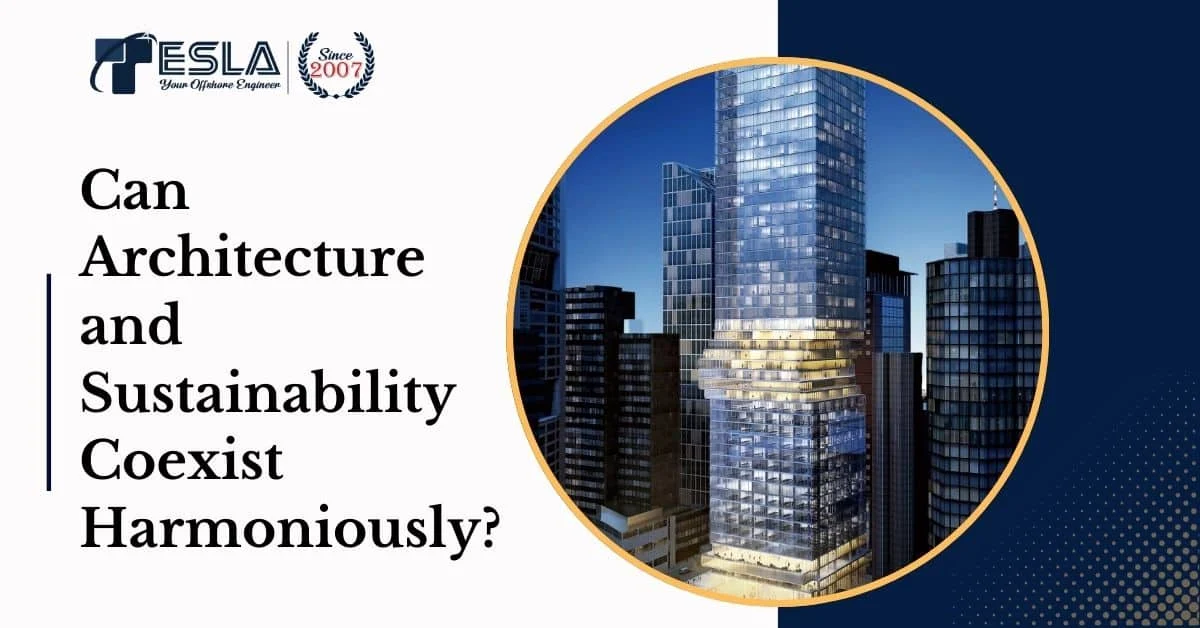
‘Omnia’ in Latin means ‘everything’; and that is exactly what Omniturm, a German building, brings to the table. Standing tall at 190 meters, Omniturm is the sixth tallest building in Germany. It’s a testament to architectural creativity, a guide to living sustainably and an example for how urban planning might be radically repurposed. Omniturm is a mixed-use building located in Frankfurt, Germany, transforming the skyline alongside the Commerzbank Tower and the Main Tower, both popular names in the world of architecture.
It houses residential spaces, offices, and commercial spaces in one building. And it does all of that while reducing energy consumption and greenhouse gas emissions for which it received an Innovation Award in 2023. Apart from its sustainable methods, it is also an architectural marvel with a mid-rise undulation at the residential floors. The architectural style, sustainability and its mixed-use aspect required a plethora of creative and intelligent minds to combine their collective expertise to make it a success. Let’s see how they achieved this feat perfectly:
Engineering Challenges and Innovations
Structural Engineering in High-Rise Design: The building’s one-of-a-kind “hip swing” architecture, a brainchild of the renowned Bjarke Ingels Group, was brought to life through the application of Building Information Modeling (BIM). This digital platform enabled the optimization of spatial utilization, structural analysis, and the integration of complex building systems. BIM facilitated the creation of a hybrid floor system, combining concrete slabs and steel beams to support the cantilevered and shifted geometry.
While aesthetically striking, this design presents significant structural challenges due to wind-induced dynamic forces. Unlike other high-rise structures, such as 432 Park Avenue, which employ open floor plans to attenuate these wind loads, the Omniturm’s vertically offset residential floors introduce unique structural challenges. To counteract the lateral forces exerted on the cantilevered floors and optimize the performance of the support sections, engineers from Spannverbund incorporated precast concrete elements, refined through finite element analysis (FEA). This integrated approach ensured structural integrity and stability of the tower.
Engineering the Foundation: The foundation of the Omniturm, a critical component of such a complex and slender structure, demanded an engineered solution capable of supporting the building’s immense weight and unique geometry. A deep foundation system, with a combined pile-raft foundation (CPRF) and a basement slab, was implemented after rigorous geotechnical investigations. This intricate system, integrating pile rigidities with geotechnical parameters, ensures the foundation’s stability and capacity to support the superstructure’s immense weight. These innovative solutions are put in place to support the towering 45 floors of Omniturm, out of which 8200 square meters, or 8 floors are residential, 44,000 square meters are a dedicated workspace and 1700 square meters are restaurants and shops.
A Benchmark for Sustainable Development
Sustainability as a Design Imperative: Beyond its architectural and structural prowess, the Omniturm stands as a global benchmark for sustainable high-rise development. It joins a growing collective of innovative buildings that prioritize environmental responsibility and occupant experience. Projects like The Edge in Amsterdam, with its emphasis on employee health and productivity through advanced technology integration, and One Central Park in Sydney, acclaimed for its biophilic design and sustainable features, share a similar vision with the Omniturm. The German marvel has earned a LEED Platinum rating, indicating exceptional performance in categories such as energy efficiency, water conservation, and indoor environmental quality. The building’s facade, incorporating triple-glazed windows and high-performance insulation, significantly reduces heat gain and loss. Moreover, the integration of solar photovoltaic panels on the building’s envelope contributes to on-site renewable energy generation.
The Omniturm’s commitment to sustainability extends to its transportation infrastructure. The integration of the Schindler MyPort elevator system exemplifies this focus by optimizing passenger flow and reducing energy consumption. The Schindler ‘MetaCore’ has subsequently saved 30% energy compared to traditional elevator systems, reducing the building’s carbon footprint. It additionally introduces an innovative approach to building repurposing, using simulation based technology to extend the lifespan and functionality of existing structures. This sustainable solution contributes to resource conservation and urban regeneration.
The Schindler MyPORT System: In today’s fast-paced environments, managing an equally fast-paced host of around 2200 people who live, work or visit Omniturm, can prove to be a hassle. Schindler MyPORT was installed in the core of the building as a cutting-edge vertical transportation system. It provides a solution to the time, inefficiency and the energy consumption of traditional elevator systems, which are also wasteful in terms of space and operational efficiency. The PORT technology provides smartphone, chip-card, or temporary card access, guiding users to the nearest elevator for rapid transportation.
This advanced system prioritizes safety and security by identifying and segregating diverse passenger groups, and assigns elevators accordingly. This eliminates the tiring wait for an elevator which is usually followed by an overcrowded box, when talking about traditional elevator systems. By optimizing elevator allocation and implementing energy-saving technologies such as regenerative braking, the system has reduced energy consumption by an estimated 30% compared to traditional elevator systems. This substantial reduction in energy usage aligns with the building’s LEED Platinum certification and overall commitment to environmental responsibility.
This technology offers swift, convenient, and secure transportation for the building’s occupants, enhancing the overall user experience.
Future Directions
As cities worldwide look to evolve, the success of the Omniturm offers valuable insights for future developments. By prioritizing early integration of architectural, engineering, and sustainability expertise, and leveraging advanced technologies such as Building Information Modeling (BIM), it inspires architects, engineers, and policymakers to adopt similarly ambitious sustainability goals and push the boundaries of design and technology. The Omniturm exemplifies the potential of collaborative, data-driven design in creating sustainable and resilient urban environments.
Omniturm’s impact extends even beyond its physical structure. It’s a social space, encouraging a sense of community among residents, employees, and visitors. The integration of retail and dining spaces creates a vibrant atmosphere, transforming the building into a destination in itself.


