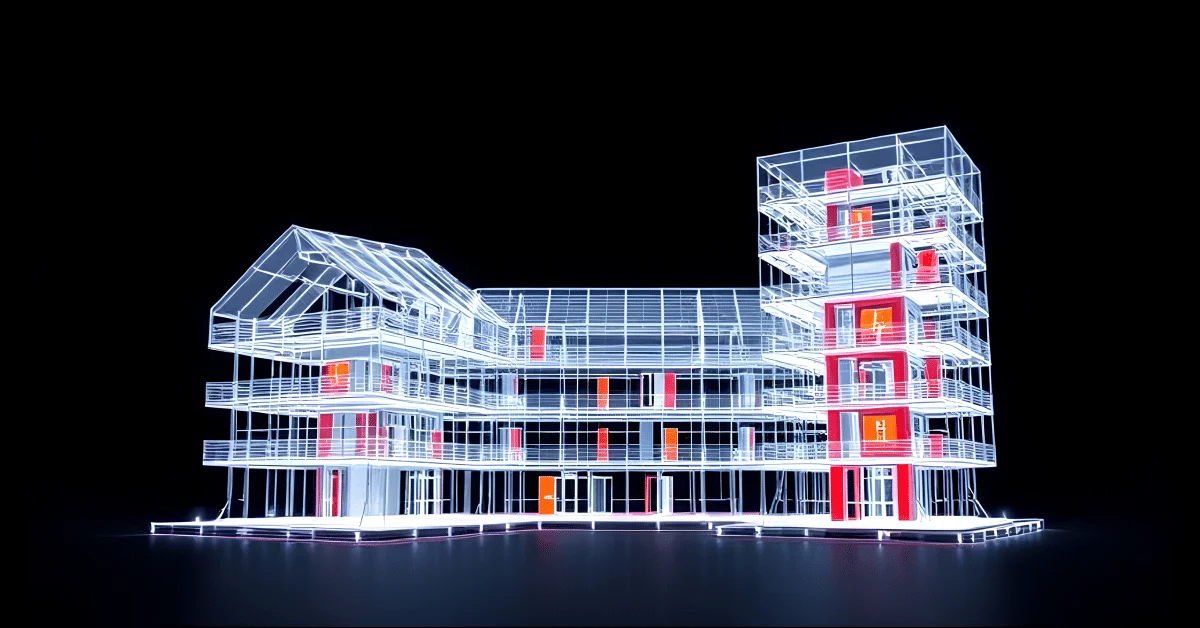
As cities expand and skyscrapers soar, managing buildings after construction has become increasingly complex. Operational costs often surpass initial construction expenses, sometimes tripling over a building’s lifecycle. A case study published by Wiley on a large-scale project in Western China highlights the effectiveness of 7D Building Information Modeling (BIM), which solves some of these management issues. The report estimated a 35% reduction in design modifications and a 19.8% decrease in construction management fees of the said project. These impressive results demonstrate the powerful cost control and efficiency benefits that 7D BIM offers.
While 7D BIM does include data management post-construction, its primary focus is on optimizing the operational phase of a building’s lifecycle. Managing infrastructure after construction is fraught with challenges, from maintaining efficiency and controlling costs to ensuring occupant satisfaction. Traditional methods fall short of addressing the complexities of modern structures. 7D BIM fills this gap by leveraging digital technology to streamline building operations, offering a structured framework for collecting, managing, and analyzing building data. This approach supports informed decision-making, optimizes resource allocation, and anticipates maintenance needs, ultimately extending the value of BIM far beyond the construction phase.
7D BIM’s versatility is applicable across various building types, including schools, hospitals, residential complexes, and commercial spaces. It significantly enhances utility management and adapts to the diverse functions these buildings serve.
Let’s delve into these benefits to understand the transformative impact of 7D BIM.
Data Collation and Management
7D BIM facilitates effective facility management by enabling the creation of an “as-built” model. This is a comprehensive digital manifestation that includes details of the original design with those constructed, hence making the building resourceful for continual operations. It offers a substantial shift in building management by establishing a comprehensive centralized digital repository of building data. This single platform offers access to energy use information, occupancy patterns, equipment specifications and performance, and post-construction modifications for all stakeholders involved in the building’s lifecycle. This ensures consistent data flow and seamless collaboration throughout the building’s lifespan.
Data standards like COBie (Construction Operations Building Information Exchange) are essential for making sure everyone uses the same language when talking about building data. This helps different software programs work together smoothly. By getting rid of paper files, BIM makes things easier to manage and ensures that important information is always available for keeping the building in good shape, making improvements, or even selling it.
Predictive Maintenance & Asset Lifecycle Management
Aided by this extensive data reservoir, 7D BIM ensures that effective, efficient, and proactive management programmes can be accomplished over the life cycle of the building. Through in-depth analysis of various building equipment and predicting wear and tear based on multiple factors, 7D BIM provides a robust foundation for informed decision-making. The centralized platform facilitates modifications and analysis, overcoming the limitations of traditional building methods, which often lack detail and precision. The collected dataset vastly ameliorates the quality of service during the building’s lifecycle, streamlining the process of maintenance scheduling through minute attention to detail, thus reducing the burden on the stakeholders involved. Although processing the vast amount of data may require specialized tools, the long-term benefits are manifold. Future maintenance and restoration projects can be executed more effectively, ensuring the building remains in optimal condition until its eventual demolition.
A digital twin of the building helps in achieving these maintenance goals through construction simulation and real-time monitoring and has been implemented in world-famous structures like Dubai’s Museum of the Future.
Safety and Well-being
7D BIM facilitates effective facility management, contributing to a safe and secure environment for building occupants. By using the existing BIM model, facility managers can easily modify it to capture the “as-built” conditions of the structure. This allows for a more accurate and up-to-date representation of the building, which is essential for effective maintenance planning and safety management. 7D BIM optimizes maintenance schedules, ensuring critical tasks are performed at appropriate intervals. This helps prevent equipment failures, reduce downtime, and maintain a safe and functional building.
Facility managers can enhance occupant well-being by integrating safety considerations with the BIM model. Features such as air quality monitoring, lighting control, and emergency response planning contribute to a safer and more comfortable building environment.
Facility managers can identify potential safety hazards and implement preventive measures by analysing the building’s design, construction details, and operational data. This helps avoid future maintenance issues and ensures a safer and more secure building environment. For example, 7D BIM can help identify areas of the building that may require additional safety measures, such as emergency exits, fire alarms, or security systems. By optimizing maintenance schedules and procedures, facility managers can also reduce the risk of accidents and equipment failures. Furthermore, 7D BIM can be used to track the performance of safety equipment and systems, ensuring that they are functioning properly and meeting regulatory standards.
Sustainability and Environmental Performance
Sustainability remains a paramount goal for modern buildings, even after construction. 7D BIM presents a way through which facility managers can identify and implement strategies to reduce the building’s environmental impact. We can discern and diminish the negative environmental impact of inefficient planning on both the building itself and its occupants, by conducting energy performance simulations. These simulations provide valuable insights for long-term maintenance planning. Facility managers can analyse the building’s energy consumption patterns to identify areas for improvement and develop targeted maintenance strategies. This allows them to optimize energy efficiency and reduce operating costs by upgrading equipment, improving insulation, or implementing renewable energy solutions.
Facility managers can also identify areas for improvement and implement sustainable practices by analysing the operational data and performance metrics captured in the building’s as-built model. This includes optimizing energy usage, reducing water consumption, and minimizing waste generation.
7D BIM facilitates the tracking and management of building materials and equipment, ensuring that sustainable practices are maintained throughout the building’s lifecycle. This means monitoring material performance, identifying opportunities for recycling or reuse, and optimizing maintenance schedules to minimize resource consumption.
Furthermore, the digital twin created through 7D BIM facilitates real-time monitoring, enabling continuous optimization and further reduction of the building’s environmental impact. This technology provides valuable data and insights that can be used to identify areas for improvement and implement sustainable practices throughout the building’s operational phase.
By leveraging 7D BIM, stakeholders can make informed decisions and implement sustainable practices that contribute to a more environmentally responsible and resilient building.
Financial Performance Optimization
Effective financial management is a top priority for all stakeholders involved in a construction project. Traditional post-construction management approaches often lead to unforeseen expenses. 7D BIM empowers stakeholders to make informed decisions and improve financial performance throughout a building’s lifecycle by providing access to detailed cost data for maintenance and operations, ensuring greater transparency and accountability.
7D BIM’s “as-built” model, a comprehensive digital representation capturing both the initial design and actual construction details, serves as a valuable resource for ongoing operations and decision-making.
7D BIM also optimizes financial performance through strategies such as predictive maintenance, energy performance simulations, clash detection, and resource optimization. For instance, 7D BIM can help anticipate future maintenance needs, enabling proactive planning and cost savings. As mentioned above, energy performance simulations also help optimize building design to minimize energy consumption, resulting in lower utility bills and long-term cost savings. By efficiently allocating resources, 7D BIM minimizes waste and ensures optimal utilization of materials and labour.
With the help of these strategies, 7D BIM equips stakeholders with the tools and insights necessary to make data-driven decisions and achieve improved financial performance.
In conclusion
From cost control and efficiency gains to enhanced sustainability and occupant well-being, 7D BIM offers a comprehensive solution for addressing the challenges of modern building operations. For those undertaking new construction projects, adopting 7D BIM is a strategic decision that can yield significant long-term benefits. By embracing this innovative technology, stakeholders can position themselves for success in the evolving landscape of building facility management.