Introduction
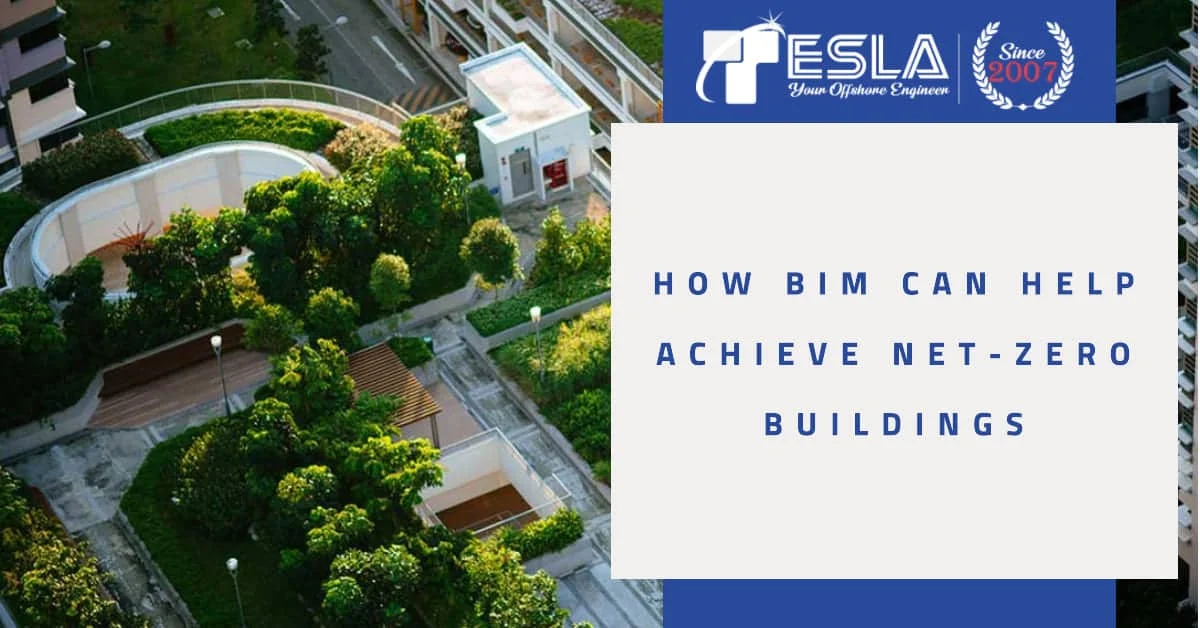
As our planet faces an escalating climate crisis, the need for sustainable practices in the construction industry has never been more crucial. Enter the concept of net Zero buildings, offering a transformative approach to significantly reducing our environmental impact. These buildings strive for a delicate balance where the energy they use, the carbon they emit, and the waste they produce are fully offset by renewable energy sources and responsible practices. In this realm of sustainability, one powerful tool emerges as a driving force behind achieving net-zero buildings: Building Information Modeling, or BIM. BIM has revolutionized how construction projects are designed, planned, and executed, playing a vital role in reaching our Net Zero goals. This article explores the essence of net-zero buildings, their importance in creating a greener future, and the critical role of digital construction in making them a reality. From enhancing energy efficiency to aiding material selection and life-cycle analysis, BIM empowers architects, engineers, and stakeholders to collaboratively create sustainable buildings that positively impact our planet.
Understanding Net-Zero Buildings:
Net-zero buildings are sustainable architectural marvels that balance energy consumption with renewable energy production to achieve zero net energy usage. These eco-friendly structures minimize carbon emissions and waste throughout their life cycle, prioritizing environmental preservation and occupant well-being for a greener future.
Benefits of Net Zero-Buildings:
Net-zero buildings play a pivotal role in combating climate change by drastically reducing greenhouse gas emissions and reliance on finite resources. Beyond environmental gains, they offer long-term cost savings through lower energy consumption and attract eco-conscious tenants, boosting property values.
The use of BIM in achieving net zero:
By seamlessly integrating data, design, and collaboration, VDC offers unique advantages that propel the creation of net-zero buildings. Construction companies around the world are collaborating with BIM Service Providers as it not only saves time and costs but also helps to achieve sustainability. In this article, we will explore four essential ways in which BIM facilitates the design process to help reach Net Zero goals:
-
Energy Analysis and Optimization:
Digital construction enables designers to conduct in-depth energy analysis during the early stages of the design process. By simulating and evaluating different energy-efficient strategies, such as passive design techniques and renewable energy integration, BIM helps optimize building performance, reduce energy consumption, and support the journey towards net-zero energy buildings.
-
Sustainable Material Selection:
BIM provides access to extensive databases containing environmental data about various building materials. Integrating this information into the design process empowers architects and engineers to make informed choices, select eco-friendly materials with lower carbon footprints and reduced environmental impact, and contribute to greener and more sustainable building designs.
-
Life-Cycle Assessment:
With BIM’s capabilities, teams can conduct comprehensive life-cycle assessments of the building. By analyzing the environmental impacts throughout its entire life, including construction, operation, and decommissioning, stakeholders can make informed decisions to optimize resource usage, reduce waste, and ensure the building’s compliance with Net Zero targets.
-
Adaptive Reuse:
Adaptive reuse is the practice of repurposing existing buildings for new functions. This practice significantly reduces the demand for new construction materials and minimizes the environmental impact, making it a vital approach towards achieving net-zero goals. Scan to BIM Services can be used in this process to facilitate precise retrofit planning and sustainable improvements, ensuring a more efficient, cost-effective, and environmentally friendly transformation.
-
Parametric Design for Efficiency:
BIM’s parametric design capabilities allow for the creation of intelligent, performance-driven design models. By setting parameters for energy performance and sustainability goals, BIM can automatically generate design options that meet Net Zero criteria, providing designers with more sustainable alternatives and supporting the creation of energy-efficient buildings.
Examples of net zero building designs:
-
The Venus, Manchester, UK:
The Venus, located in Manchester, UK, is a net-zero building that showcases sustainable practices and the use of BIM technology. It achieves its net-zero status by recycling or using 100% of its waste for energy recovery. The integration of BIM in the development of The Venus likely aided in efficient design and construction processes, improving coordination and simulation throughout the project lifecycle.
-
The Unisphere, Maryland, USA:
The Unisphere, situated in Maryland, USA, is another notable net-zero building that demonstrates the use of BIM technology. It utilizes innovative passive design strategies and on-site renewable resources to generate its own power.
Conclusion
The future outlook for digital construction in achieving net-zero buildings is promising. As the urgency to combat climate change intensifies, BIM’s role in sustainable construction practices becomes increasingly crucial. By incorporating sophisticated AI and machine learning and analyzing vast amounts of data to accurately predict building performance, the utility of BIM will continue to grow. Integration with emerging technologies like the Internet of Things and smart systems will enable real-time monitoring, optimizing Net Zero building operations. Overall, sustainable construction and net-zero buildings seem to be our best bet for combating climate change.