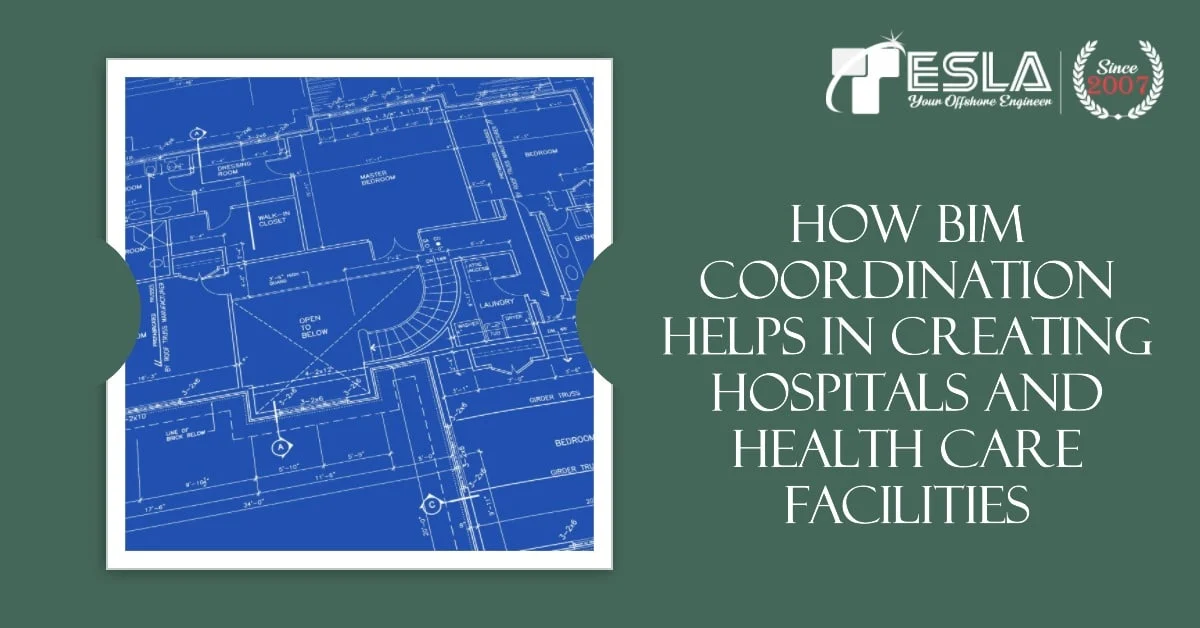
Hospitals and healthcare facilities are indispensable components of our communities, serving as critical infrastructure for the well-being of individuals. Unlike other construction projects, erecting these structures is a challenging feat that demands meticulous oversight. In this blog, we will unravel the complexities associated with healthcare facility construction and explore the instrumental role that BIM coordination plays in streamlining the process.
Constructing hospitals involves more than just bricks and mortar—it requires a fine balance of precision, efficient resource management, and collaborative efforts from various stakeholders. How can we navigate the challenges inherent in building structures that are not just buildings but life-saving institutions? The answer lies in the practical applications of BIM coordination.
Throughout this blog, we will dissect the ways in which BIM Services serves as a crucial tool, offering a comprehensive view of the final design, cutting down on waste and labor costs, providing precise control over construction processes, and fostering an environment of seamless collaboration. Join us on this exploration as we shed light on how BIM coordination is reshaping the landscape of healthcare facility construction.
What is BIM coordination and its role in building design?
BIM coordination is a collaborative process that utilizes Building Information Modeling to integrate and synchronize various aspects of building design and construction. It enables multiple stakeholders, including architects, engineers, and contractors, to work concurrently on a shared digital model. This digital representation encompasses the entire project, promoting better visualization, clash detection, and communication. BIM coordination serves as a centralized platform, ensuring seamless collaboration and enhanced efficiency throughout the building lifecycle.
The benefits of using BIM coordination for building hospitals and other health care facilities:
-
Enhanced Collaboration for Specialized Infrastructure:
BIM coordination facilitates seamless collaboration among architects, engineers, and medical planners to design and visualize specialized healthcare infrastructure. For example, when planning an operating room, BIM allows stakeholders to virtually simulate and optimize the layout, ensuring precision in equipment placement, lighting, and ventilation. This collaborative approach ensures that the specialized infrastructure meets regulatory standards while accommodating the needs of medical professionals, ultimately enhancing the functionality and efficiency of critical healthcare spaces.
-
Regulatory Compliance Assurance:
BIM’s ability to embed regulatory requirements into the digital model ensures that the construction of healthcare facilities aligns with stringent standards. By incorporating regulatory parameters into the BIM model, such as ADA-compliant layouts and infection control measures, potential design issues are identified and rectified in the virtual environment before construction begins. This proactive approach minimizes costly rework during construction, streamlining the process and guaranteeing that the final structure complies with all necessary regulations, from accessibility standards to healthcare-specific safety protocols.
-
Efficient Systems Integration and Coordination:
BIM coordination excels in managing the integration of complex systems within healthcare facilities. For instance, when incorporating HVAC systems into the BIM model, clashes with medical gas lines or electrical conduits can be identified and resolved digitally before installation by Clash Detection Services. This prevents conflicts that could arise during construction, reducing delays and ensuring the seamless integration of critical building systems. BIM’s 3D visualization aids in identifying potential clashes early in the design phase, fostering a more efficient construction process and minimizing the risk of system malfunctions post-construction.
-
Simulation of Emergency Preparedness Measures:
BIM coordination allows for the digital simulation of emergency scenarios, helping to refine and optimize emergency preparedness measures in healthcare facilities. For example, in the case of a fire evacuation, BIM can simulate the flow of patients and staff through various exit routes, identifying potential bottlenecks and optimizing evacuation procedures. This virtual testing ensures that the hospital’s design prioritizes the safety of occupants during emergencies. BIM’s ability to model and analyze emergency scenarios contributes to the creation of resilient healthcare structures, prepared to handle a spectrum of unforeseen events.
-
Adaptive Design for Future Expansions:
BIM enables healthcare facilities to plan for future expansions by creating a digital model that accommodates potential growth. For instance, when designing a hospital wing, BIM can simulate the addition of new patient wards, ensuring that infrastructure like electrical and plumbing systems can easily adapt to increased demand. This foresight helps hospitals avoid costly modifications during future expansions, as the BIM model serves as a roadmap for scalable and flexible design. By integrating future expansion considerations into the initial BIM model, healthcare facilities can evolve in tandem with the dynamic nature of healthcare delivery.
Conclusion
As the construction industry embraces BIM on a larger scale, the efficiency gains become increasingly evident. This holds particularly true for critical infrastructure such as healthcare facilities. BIM coordination offers a pathway to not only construct these vital structures better but also at an accelerated pace. With evolving use cases and widespread adoption, the synergy between BIM and healthcare facility construction promises a future marked by efficiency and precision. The trajectory is clear — BIM is not merely a tool; it’s a transformative force reshaping the landscape of construction, ensuring that essential structures are built better, faster, and with a keen eye on the evolving needs of society.