Introduction
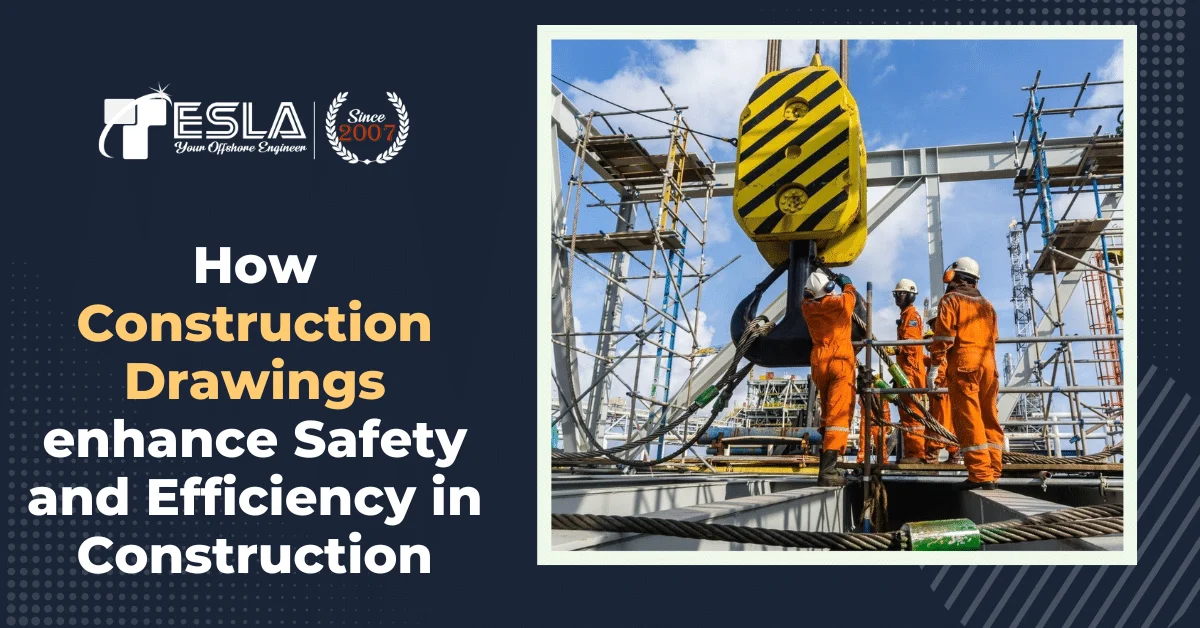
In the modern construction landscape, there is an unmistakable emphasis on enhancing safety and efficiency. As construction projects evolve in complexity and scale, the need to mitigate risks and optimize workflows has become paramount. Amidst this evolving paradigm, Construction Drawings play a pivotal role in shaping the success of projects.
These drawings act as a pre-emptive shield, providing a visual roadmap that guides professionals through potential hazards and challenges. By offering a crystal-clear depiction of design intent and execution specifics, Construction Drawings lay the groundwork for a secure working environment, reducing the likelihood of accidents and ensuring that safety protocols are seamlessly integrated into every phase of the project. Due to the benefits of construction drawings, many project managers hire dedicated CAD Outsourcing Services for their drafting requirements.
Simultaneously, the push for efficiency is met head-on by the precision embedded in these drawings. In a world where time is money, Construction Drawings stand as a beacon of meticulous planning. They facilitate a streamlined communication channel among diverse stakeholders, from architects and engineers to contractors and laborers, fostering a collaborative environment that minimizes misunderstandings and accelerates project timelines.
In the subsequent sections, we dissect the relationship between Construction Drawings and the twin pillars of safety and efficiency, illustrating how these visual blueprints serve as a catalyst for a construction landscape that values both the well-being of its workforce and the optimal use of resources.
Understanding the role of Construction Drawings
Construction Drawing Services for project documentation, comprise a diverse array of documents, each meticulously crafted to fulfill a specific role. Construction Drawings must be clear, concise, and adhere unwaveringly to industry standards. In the precision-driven world of construction, ambiguity is the adversary, making clarity and accuracy non-negotiable requisites.
- Architectural Drawings: Precision in Aesthetics and Safety Architectural drawings serve as the visual poetry of a construction project, outlining the aesthetic vision. However, their impact transcends beauty; they meticulously detail spatial arrangements and safety features. By providing a clear roadmap for design intent, these drawings facilitate precise execution, ensuring that safety measures align seamlessly with the architectural vision.
- Structural Drawings: The Blueprint for Stability Structural drawings, the silent architects of stability, delve into the bones of the construction. By detailing load-bearing elements and foundation specifications, they guide builders to construct a structurally sound edifice. The adherence to these drawings is critical, as it not only ensures stability but also prevents potential hazards, promoting a safer working environment.
- MEP Drawings: Orchestrating Systems for Safety and Efficiency MEP drawings are the conductors of the construction orchestra, harmonizing mechanical, electrical, and plumbing systems. These drawings ensure that systems are installed with precision, reducing the risk of malfunctions or accidents. The clarity they provide enhances efficiency, allowing seamless coordination between different teams involved in the installation process.
- Detailed Drawings: Navigating the Nuances Detailed drawings zoom in on specific components, guiding craftsmen through intricate details. By leaving no room for guesswork, these drawings prevent errors in execution. Whether it’s a complex junction in structural elements or a unique architectural feature, detailed drawings act as a compass, steering the construction process with finesse and accuracy.
- Shop Drawings: Shop drawings bridge the gap between design and execution, providing detailed plans for the fabrication and installation of components. By offering a granular understanding of materials, dimensions, and assembly methods, shop drawings minimize errors in fabrication, ensuring that the final product aligns seamlessly with the design intent. This not only enhances efficiency but also contributes to the overall safety of the construction process.
Construction drawings have many benefits in terms of enhancing safety and efficiency in construction projects such as:
- Risk Mitigation: Construction drawings act as proactive measures against potential hazards by providing clear visual guidance on safety protocols and structural integrity. By adhering to these drawings, construction teams can identify and address safety concerns before they escalate, minimizing the risk of accidents and injuries on-site.
- Streamlined Communication: Construction drawings serve as a universal language that facilitates effective communication among project stakeholders. Clear and detailed drawings ensure that everyone involved, from architects to contractors, understands the project requirements and safety measures. This streamlined communication reduces misunderstandings and errors, promoting a safer and more efficient working environment.
- Enhanced Planning and Execution: Utilizing construction drawings enables meticulous planning and precise execution of construction activities. By following the detailed instructions provided in the drawings, construction teams can optimize workflows, allocate resources effectively, and adhere to safety guidelines throughout the project lifecycle. This strategic approach to planning and execution enhances efficiency while prioritizing safety at every stage of the construction process.
Conclusion
In conclusion, construction drawings stand tried and tested in the pursuit of safety and efficiency within the construction industry. By providing a clear roadmap and fostering streamlined communication, these drawings mitigate risks, enhance collaboration, and optimize project execution. Embracing the precision and clarity offered by construction drawings ensures not only the well-being of the workforce but also the successful realization of construction projects in an increasingly complex and dynamic environment.