Level of Development (LOD) has been a fundamental concept of Building Information Modeling (BIM) over many years. It provided an easy method of describing the extent to which each component of a model is to be detailed at each stage of the project. LOD was a general language that architects, engineers, contractors, and owners followed to understand the extent to which they could rely on a BIM model during the design, coordinating, and construction.
However, the AEC industry is different now. BIM models are no longer images of buildings they are data-rich and assist in decision-making at any point in a project. Connecting designs to the running of facilities and digital twins, people require a lot out of BIM models than old LOD rules were intended.
Model Development Specifications (MDS) to a broader extent of defining rules for geometry, info, data structure, and life-cycle requirements within the model are now being considered by many firms. MSD does not intentionally want to abandon LOD, the organization would simply like to revise the process of establishing and managing BIM deliverables by teams.
Mastering BIM Deliverables: LOD, BEP, and ISO 19650 Compliance (2026)
Read NowIn this article, Tesla Outsourcing Services explore why the traditional LOD framework is being questioned and how the industry is transitioning toward more advanced model specification methods.
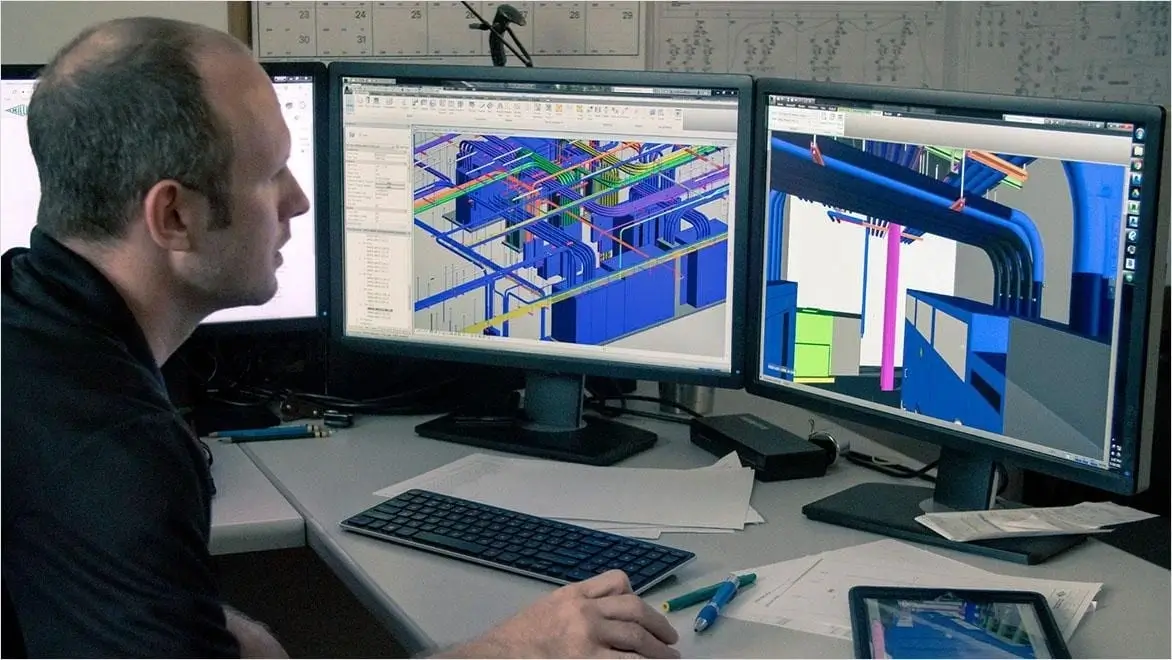
Evolution of Models as per LOD
Origins of LOD
LOD was the creation of a concept that was needed to address a huge issue that existed when BIM was initially applied. After 3D modeling became common especially in the architecture and engineering field, it was difficult to determine the accuracy or reliability of a section of a model. Without a clear rule, one group may believe that they have completed a part but another group may still regard it as an idea.
LOD created a structured system to clarify these expectations. By defining progressive levels of model development, it helped teams understand how detailed and reliable a model element should be at specific project milestones.
The Traditional LOD Levels
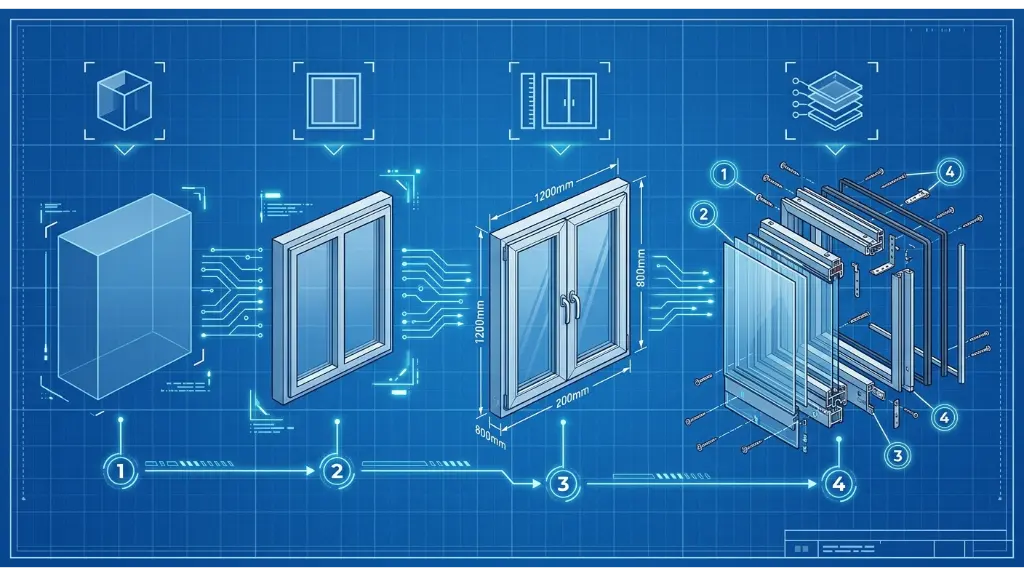
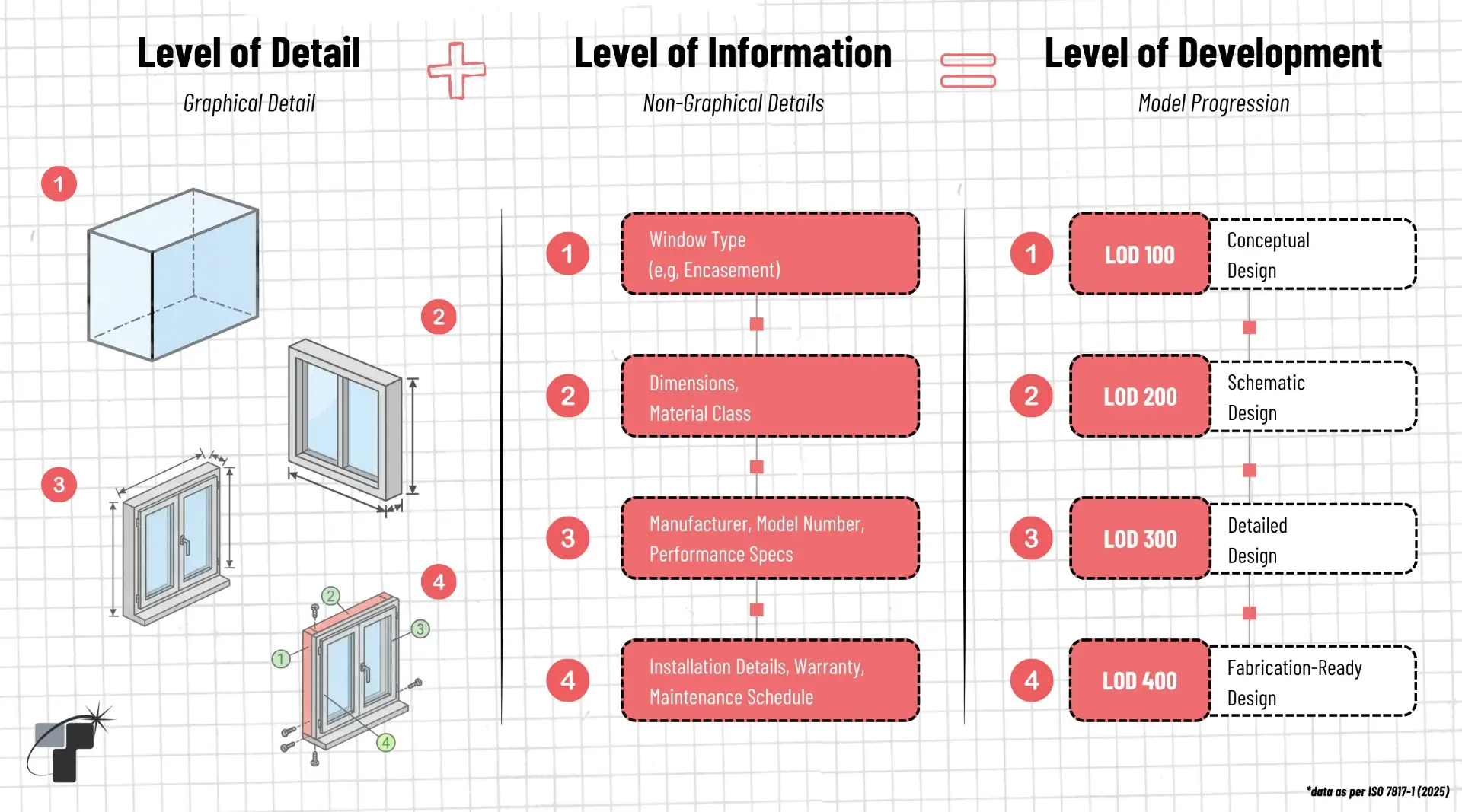
LOD rules tend to establish a series of procedures detailing how model components improve during a project. The more steps, the more accurate, detailed, and reliable the model is. These establish a shared understanding of how models mature throughout the design and construction process.
LOD levels
LOD 100 – Conceptual Design
Basic massing and approximate geometry are represented. The model provides general building form and scale but lacks precise detail.
LOD 200 – Approximate Geometry
Elements begin to represent recognizable systems with approximate quantities, sizes, and locations.
LOD 300 – Precise Geometry
Model elements become accurate representations suitable for coordination and documentation.
LOD 350 – Detailed Coordination
Includes interfaces between building systems, allowing clash detection and coordination.
LOD 400 – Fabrication Level
Elements contain fabrication-level detail for manufacturing and installation.
LOD 500 – As-built Representation
Represents verified field conditions used for facility management.
Importance of LOD in BIM Workflows
As BIM became global LOD soon became a major component of the project delivery process. It provided specifications in an area where individuals tended to anticipate alternative characteristics of digital models.
Setting clear levels of maturity, LOD enabled teams to work more closely and reduce the number of misunderstandings regarding the level of accuracy to which the model should be implemented. It also assisted companies with the same modeling rules on many projects.
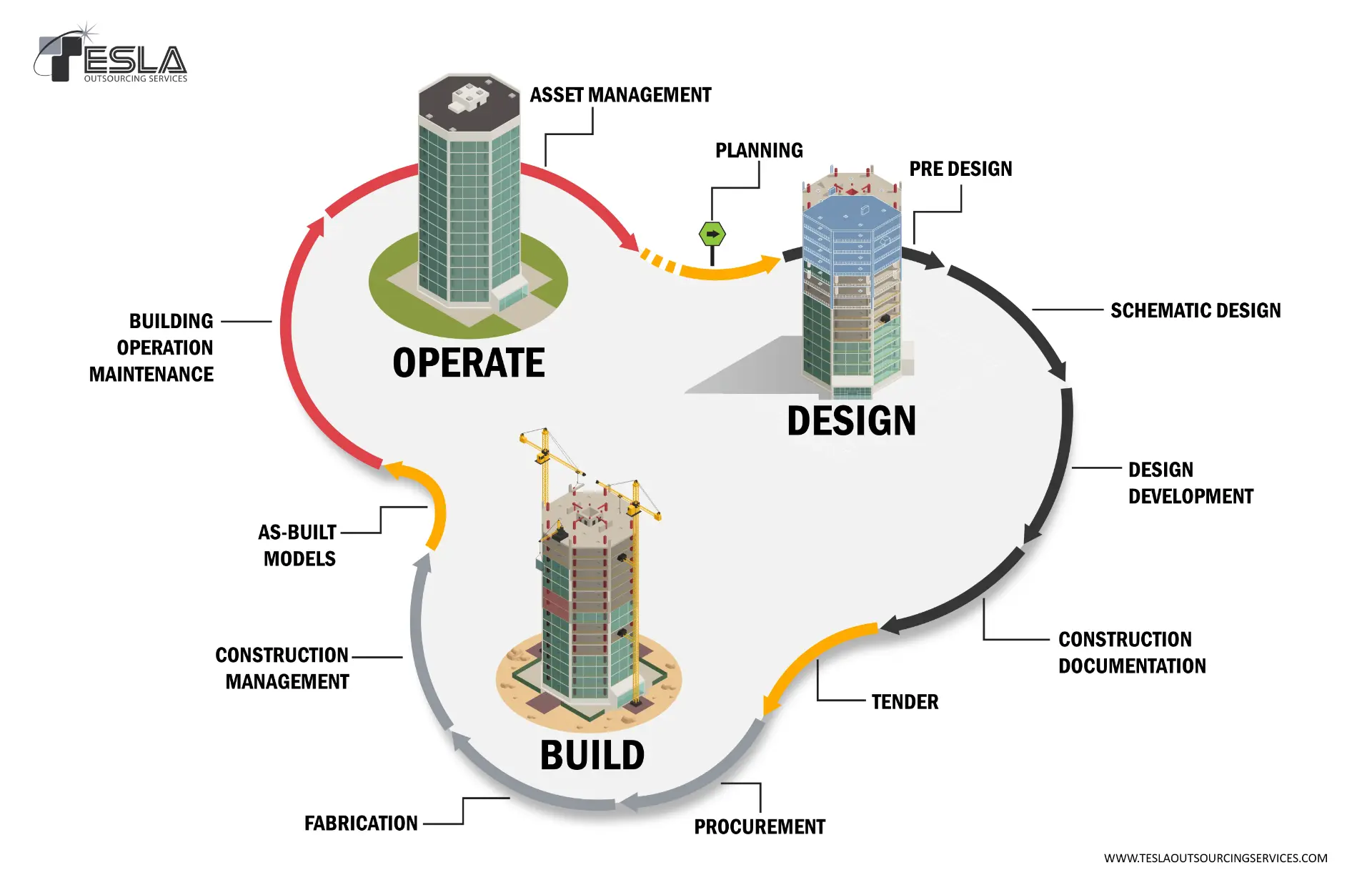
Lifecycle of BIM
Clear Modeling Expectations
LOD helped project teams understand what level of detail was expected at each stage. This avoided unnecessary modeling effort during early stages.
- Early design models remain lightweight
- Coordination models become more detailed
- Fabrication models contain precise data
Improved Coordination between Disciplines
With defined model maturity levels, coordination meetings became more efficient and fruitful. This reduced conflicts between architectural, structural, and MEP systems. Teams could rely on models for:
- Clash detection
- Spatial coordination
- Design validation
Better BIM Execution Planning
LOD also played a critical role in BIM Execution Plans (BEP). This allowed stakeholders to track progress more effectively. Project teams used LOD definitions to determine:
- Modeling responsibilities
- Model handover stages
- Deliverable requirements
Reduced Project Risks
By clearly defining model reliability, LOD reduced misunderstandings between project participants. This improved decision-making throughout the project lifecycle.
- Contractors could trust LOD 400 fabrication details
- Facility managers could rely on LOD 500 models
Limitations of Traditional LOD
Although LOD possesses advantages, it was not designed to deal with the full complexity of BIM processes today. With the new technologies and data-driven processes applied in the industry, most of the limitations of LOD were becoming evident.
These boundaries are primarily since LOD revolves around shape and size and not the detailed information.
As soon as BIM began to do more than merely coordinate designs, the gap increased.
Geometry-Centric Framework
LOD mainly describes geometric detail, but BIM models today carry much more information. Traditional LOD does not clearly define these data requirements.
Modern BIM includes:
- Asset data
- Performance information
- Product specifications
- Maintenance data
- Operational parameters
Lack of Data Consistency across Projects
Two models may be referred to as LOD 300 and completely different data is contained in them. This creates inconsistencies across projects. This lack of consistency can create problems when models are shared between organizations or integrated into asset management systems,
One model might include:
- Manufacturer details
- Material properties
- Installation instructions
While another model contains only geometry.
Misinterpretation by Different Stakeholders
LOD is usually viewed differently in different companies. Things are confusing as there is no common rule.
- Architects may define LOD differently from contractors
- Owners may expect data not defined by LOD
- Consultants may apply their own interpretation
Excessive Modeling and Wasting of Workflows
The other issue is over-modeling. There is a tendency to develop very detailed models too quickly in teams. In many cases, that extra detail is never actually used.
This leads to:
- Larger file sizes
- Slower workflows
- Increased modeling time
- Reduced project efficiency
Industry discussions on popular forums highlight that pushing for LOD 400 when LOD 300 is sufficient can increase model file sizes by up to 300%, significantly degrading cloud performance and leading to frequent sync conflicts in Common Data Environments.
The Industry Shift towards BIM
The AEC sector is rapidly shifting towards information-based projects. BIM is no longer 3D models but now is a platform through which information about a building is managed across the entire life.
Today’s projects integrate BIM with:
- Digital twins
- Facility management systems
- Asset management databases
- IoT building systems
- Smart city infrastructure
This transformation means that information accuracy is often more important than geometric detail.
What Modern BIM Requires, instead of just asking: “How detailed is the model?”
A growing “hot take” among BIM managers on LinkedIn is that “LOD is a geometric trap.” Consequently, many top-tier firms are now pivoting strictly to Level of Information Need (LOIN) as defined in ISO 19650 to prioritize usable data over visual detail.
Project teams are now asking:
- What information does this model contain?
- Is the data structured correctly?
- Can the model integrate with facility management systems?
- Is the asset information usable after construction?
Traditional LOD frameworks struggle to answer these questions.
The Rise of Model Development Specifications (MDS)
To address the limitations of traditional LOD frameworks, many organizations are adopting Model Development Specifications (MDS). This approach expands the definition of model maturity by considering both geometry and information requirements.
This is a way of transforming the meaning of a mature model, and acts by considering both shape and data requirements. The detail of the visual representation of a situation in the model is not only visual, but MDS pays attention to the structure, completeness, and usability of data. This entails that it is more suitable in projects that require long term information management.
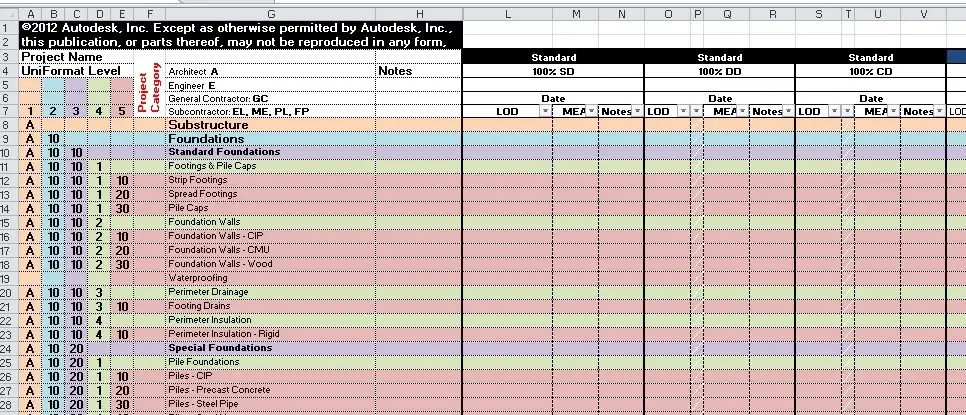
Model Development Specifications
Core Principles
Model Development Specifications typically define a broader set of requirements compared to traditional LOD frameworks. They describe not only how elements should appear in the model but also what information should accompany them.
Typical MDS requirements include:
- Geometry accuracy
- Required parameter data
- Classification standards
- Asset identification structures
- Lifecycle information requirements
By defining these aspects clearly, MDS helps ensure that BIM models remain useful beyond the design and construction stages.
Improving Model Definition
In old LOD rules, a wall may simply be labeled LOD 300, which means that it is sufficiently good-looking to coordinate paperwork. That tag does not indicate any additional information to accompany the wall. The idea behind this is that the element contains the information that will be required in future work.
With MDS, the specification may include multiple information requirements such as:
- Wall material composition
- Fire resistance rating
- Manufacturer details
- Installation method
- Maintenance information
Expands the Role of BIM Models
Model Development Specifications broaden the way project teams define BIM deliverables. Rather than only describing how detailed an element should appear, MDS focuses on what information should be included with that element. This ensures that BIM models remain useful beyond design and construction.
For example, MDS may define:
- Required parameters for model elements
- Asset identification information
- Classification standards
- Data needed for facility management
BIM Models Are Becoming Data Platforms
Today, BIM models are no longer used only for visualization and clash detection. They are increasingly becoming central information platforms that support various project processes.
Modern BIM models often contribute to:
- Cost estimation and quantity takeoffs
- Construction planning and scheduling
- Sustainability analysis
- Asset tracking and maintenance planning
Because of these expanded uses, the accuracy and consistency of model data have become just as important as geometric detail.
Digital Twins Are Driving New Model Requirements
Digital twins are more changing model rules. Digital twins require BIM models, yet they require specific data on system and equipment of the building.
To support digital twins, BIM models often need to include:
- Equipment asset IDs
- Maintenance data
- Performance parameters
- Operational information
Despite its popularity in contracts, a 2025/2026 industry sentiment survey suggests that only 12% of facility owners actually receive a verified LOD 500 model that is fully operational for asset management, with the rest cited as “too complex to maintain”.
The Impact of Global BIM Standards
The model specs are also influenced by global BIM rules. An example is ISO 19650 which emphasizes structured data throughout the life of a building. Correlation of BIM models with these rules assists the teams to work more collaboratively and maintain the data consistency. These standards encourage project teams to define:
- Information delivery requirements
- Data structures and naming conventions
- Classification systems for model elements
Practical Steps for BIM Teams
When new model frameworks emerge, BIM teams must modify their workflows to encompass shape and info requirements.
- The teams must determine the necessary data to coordinate, build and manage the facilities prior to initiating the model building.
- The model will be simple and the data precise by using the same names and parameters.
- Rather than including excessive detail of the shape, the teams ought to designate information that can assist in decisions and lifecycle control.
Conclusion
LOD has been able to influence the way that BIM operates in the past decade. The regulations of models must evolve as the industry transition to data-oriented and lifecycle projects. The second step is model development specs. They combine the specifics of geometry with the obvious demands of information.
The future of BIM is not to eliminate LOD, but to ensure that it is more data-rich, its rules are more explicit, and its lifecycle connections are closer. Soon, the finest BIM individuals will be concerned with not only accurate models, but also the quality of information.
BONUS! Interactive 3D Preview: Visualizing MDS vs. LOD
Want to see the difference between simple geometry and data-rich specifications? Use our interactive 3D visualizer to toggle between different maturity levels for columns and ducts. It’s a quick, hands-on way to see how Model Development Specifications (MDS) add the “Information” to your BIM models!