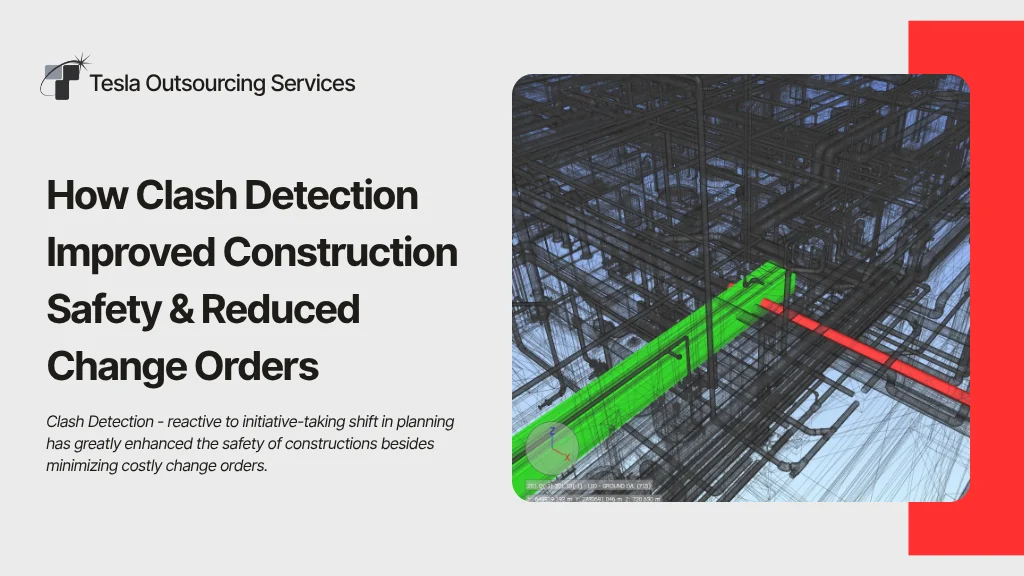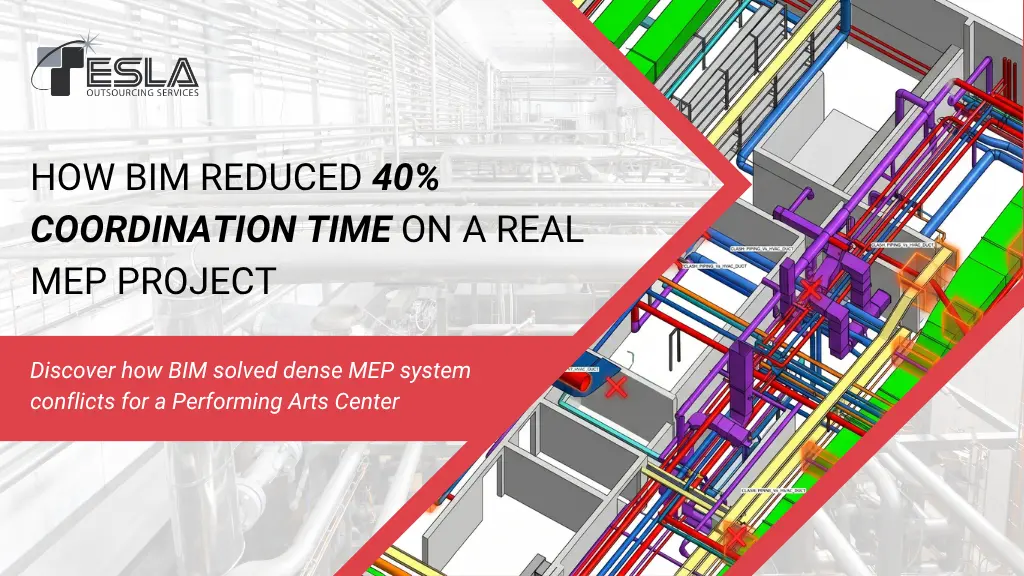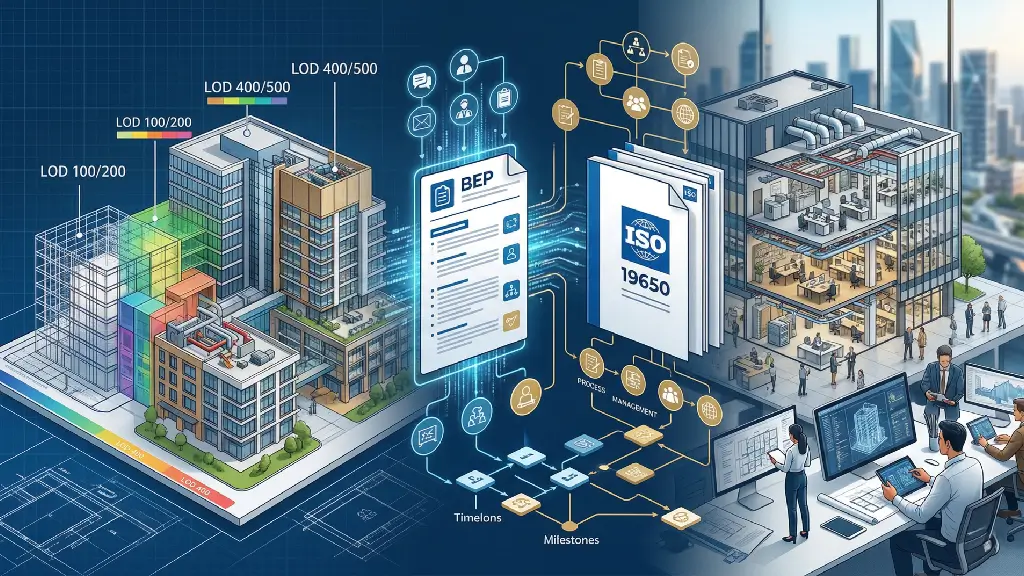

BIM is no longer a competition. ©Autodesk
In 2026, BIM is no longer a competition. It is an expectation. But here is the real shift projects are no longer evaluated by how detailed the model looks. They are evaluated by how structured, compliant, and reliable the information is.
Across infrastructure, commercial developments, smart cities, healthcare facilities, and industrial corridors, one truth has become clear: The success of a project depends not on the model, but on the quality of its BIM deliverables.
Today’s clients demand:
- Defined Levels of Development (LOD)
- Structured BIM Execution Plans (BEP)
- Full alignment with ISO 19650
- Traceable Common Data Environments (CDE)
- Clear responsibility matrices
- Audit-ready documentation
This is not just technical compliance. It is contractual protection. It is risk mitigation. It is operational clarity. Whether you are:
- A BIM Manager
- A Consultant
- An Outsourcing Partner
- A Design Lead
- Or a Contractor working on international projects
BIM in 2026
The BIM landscape in 2026 is more controlled and regulated in the accountability-driven way than ever before. What used to be considered “advanced BIM” five years ago is now simply expected. The industry has shifted from asking whether you use BIM to evaluating how mature your BIM deliverables are. Geometry alone no longer proves capability, structured data, compliance, and documentation now define expertise.
Clients do not just ask: Can you model this?
They ask:
- What LOD?
- What information standard?
- Is it ISO 19650 compliance?
- Where is it documented in the BEP?
According to the 2025 State of Design & Make report, 80% of AEC leaders identify improving data management and project collaboration through structured standards as their top strategic priority.
BIM deliverables have evolved from technical outputs into legal, operational, and strategic assets. Every submission now carries contractual weight.
If you are working with:
- International consultants
- Government infrastructure projects
- Design-build firms
- North American or European AEC clients
- Large-scale infrastructure projects
What is LOD Really?
LOD identifies how confident the stakeholders can be in a model element. It is not just descriptive; it is a measure of consistency and preparedness to decide. To summarize, LOD identifies reliability and maturity of an element.
It answers:
- How detailed is the model?
- How accurate is the information?
- Can it be used for costing?
- Can it be used for fabrication?
- Can it be used for facility management?
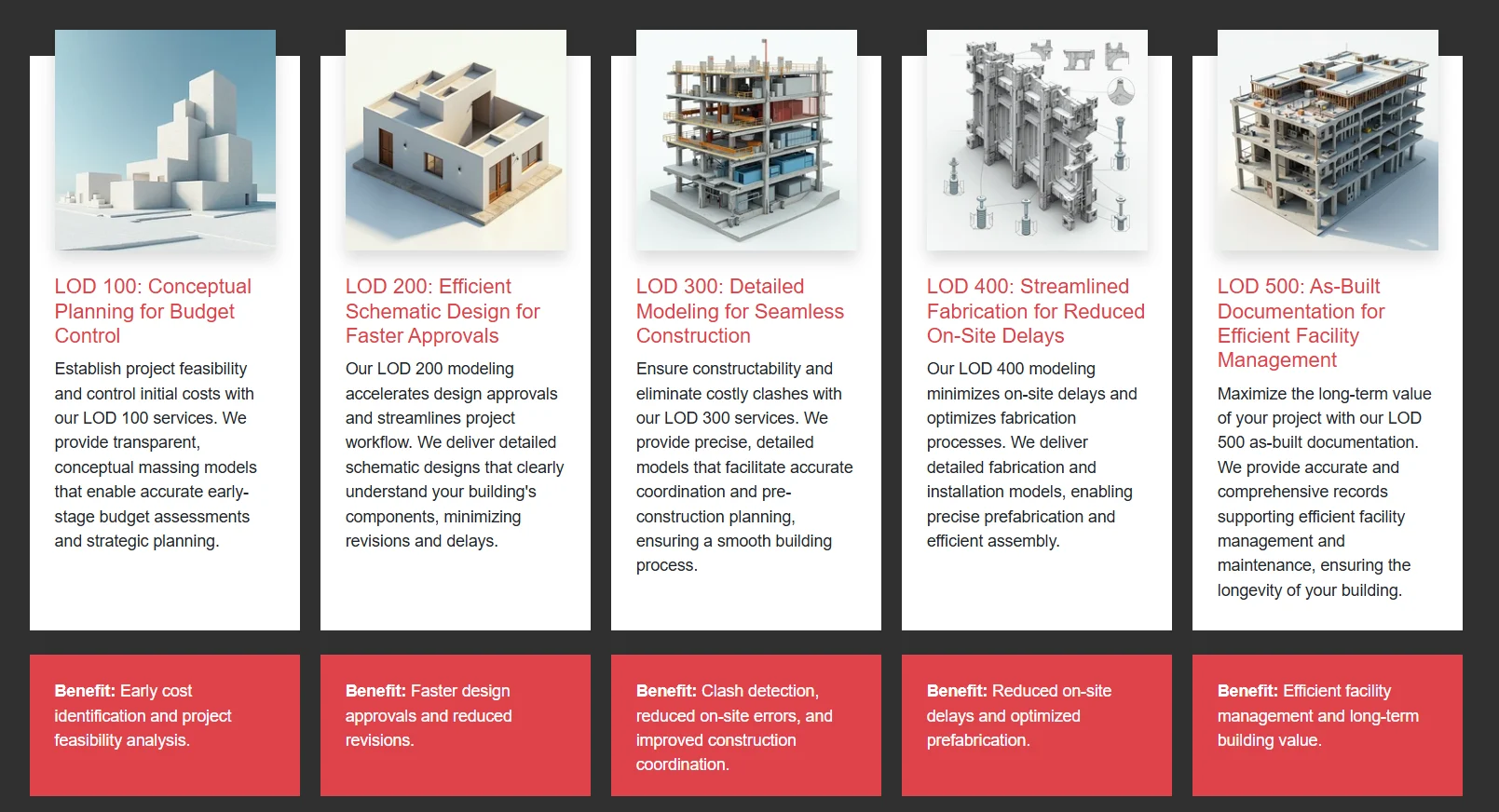
Progression of LOD
The Standard LOD Framework
There was the introduction of standard LOD definitions to create uniformity in the industry. They are harmonious among owners, consultants, and contractors.
The most widely referenced LOD framework comes from: BIM Forum
They define LOD in structured levels:
| LOD | Meaning | Use Case |
| LOD 100 | Conceptual | Massing studies |
| LOD 200 | Approximate geometry | Design development |
| LOD 300 | Accurate geometry | Construction documentation |
| LOD 350 | Interface coordination | Clash detection |
| LOD 400 | Fabrication-ready | Shop drawings |
| LOD 500 | As-built | Facility management |
LOD vs LOI
In today’s information-driven environment, geometry alone does not satisfy asset owners. The digital twin conversation has pushed non-graphical data to the forefront.
Here is something many teams still mix up:
- LOD = Level of Development (geometry + reliability)
- LOI = Level of Information (non-graphical data)
ISO-based workflows separate geometry from information.
Example:
An AHU may be: LOD 300 geometrically
- But LOI includes:
- Manufacturer
- Capacity
- Power rating
- Maintenance cycle
- Asset ID
In 2026, owners care more about LOI than geometry. Because they operate buildings, not 3D models.
Practical Strategy: How to Define LOD Properly
Defining LOD effectively requires planning, collaboration, and alignment with milestones. It cannot be decided in isolation by one discipline.
Instead of generic wording, use:
- Element breakdown structure (EBS)
- Matrix-based LOD mapping
- Milestone-based LOD progression
Example milestone structure:
- Concept Stage → LOD 200
- Detailed Design → LOD 300
- IFC Issue → LOD 350
- Construction Support → LOD 400
- Handover → LOD 500 + Asset data
This staged method secures designers and contractors and provides deliverables that are equivalent to the maturity of the project.
Building Practical LOD Matrix
An LOD matrix should not sit in a PDF untouched after kickoff. It must function as a live control document guiding every modeling milestone.
Generic LOD charts often look structured but lack project-specific intelligence. They do not reflect scope complexity or discipline interdependencies. If it does not connect to real deliverables, it becomes decorative documentation rather than a management tool.
Many firms download standard LOD charts and attach them to proposals. But those charts often remain disconnected from the actual project workflow.
A usable LOD matrix must:
- Reflect project phases
- Reflect discipline responsibilities
- Align with contractual milestones
- Define both graphical and non-graphical data
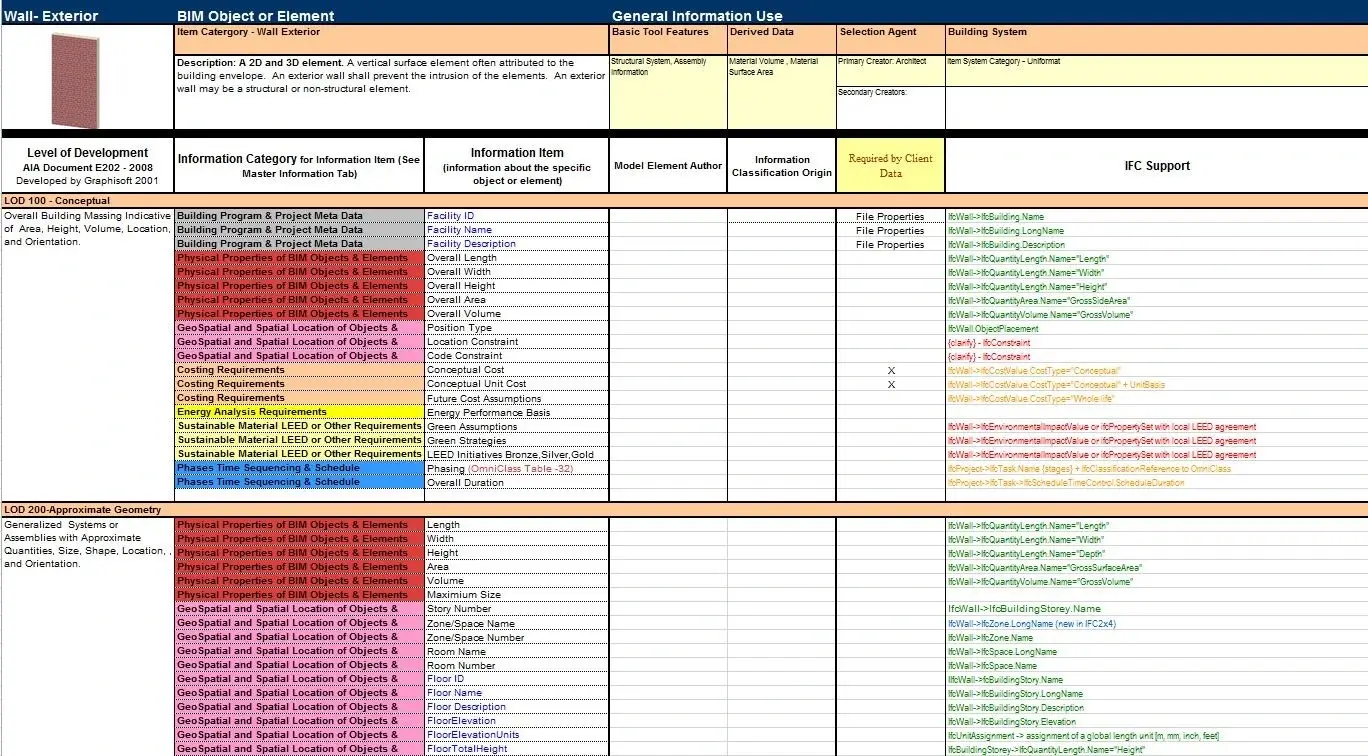
LOD Matrix
Step 1: Break Down the Model by Systems
Breaking down the model by systems ensures accountability. It forces each discipline to take ownership of its deliverables rather than hiding behind a global LOD statement.
Instead of thinking in terms of “whole model LOD,” break the project into systems:
- Architectural
- Structural
- Mechanical
- Electrical
- Plumbing
- Civil
- Landscape
- Infrastructure
Step 2: Assign LOD by Milestone
Milestones represent decision points. LOD progression must support those decisions instead of overwhelming early design stages.
Rather than assigning LOD globally, connect it to Information Delivery Milestones (IDM). This prevents over-modeling early and under-modeling later. In 2026, controlled progression is more valuable than unnecessary detailing.
| Element | DD Stage | IFC Stage | Construction |
| Columns | LOD 300 | LOD 350 | LOD 400 |
| Slabs | LOD 300 | LOD 350 | LOD 400 |
| Steel Connections | LOD 200 | LOD 300 | LOD 400 |
| HVAC Equipment | LOD 300 | LOD 350 | LOD 400 |
Step 3: Integration of LOI
Without integrating information requirements, LOD remains incomplete. Modern BIM deliverables must serve operations, not just construction. LOD without LOI creates incomplete asset data.
For example:
HVAC Equipment at LOD 400 should also include:
- Manufacturer
- Model number
- Power load
- Maintenance data
- Warranty period
- Asset tagging code
Align this with asset handover requirements. Because remember, geometry supports construction. Information supports lifecycle management.
Why Many BEPs Fail During Execution
A BEP that does not align with ISO becomes disconnected from project governance. Alignment ensures that documentation translates into structured action. The biggest gap between planning and reality appears during project execution. Teams revert to old habits under pressure.
A BEP often looks impressive on submission, structured headings, charts, and workflows.
But during execution below points are important because BEP and ISO processes are not integrated into daily workflows.
- Naming conventions are ignored.
- Status codes are misused.
- Revision tracking becomes inconsistent.
- Files are shared outside the CDE.
Mapping BEP Sections to ISO 19650
Alignment requires deliberate mapping; each BEP section should reference a specific ISO requirement. ISO 19650 requires structured information management across the project lifecycle. To align BEP with ISO:
Link BEP to Information Requirements
The BEP must not be standalone. It should respond directly to client information expectations. Without this, BEP becomes generic and disconnected from contractual obligations.
Your BEP must directly reference:
- Employer’s Information Requirements (EIR)
- Asset Information Requirements (AIR)
- Exchange Information Requirements
Define Information Delivery Milestones
Milestones create checkpoints. They ensure information maturity matches project progress. This transforms informal coordination into structured governance. Your BEP must clearly define:
- When models are submitted
- What status code they carry
- Who reviews them
- Who approves them
- What criteria determine acceptance
Define Appointing Party and Lead Appointed Party
Role clarity prevents accountability gaps. ISO explicitly defines responsibilities to avoid overlap. Your BEP must mirror this structure. Without role clarity, coordination inefficiencies multiply. ISO 19650 clarifies roles:
- Appointing Party (Client)
- Lead Appointed Party (Main Consultant/Contractor)
- Task Teams (Sub-consultants)
Why the CDE Is the Heart of ISO Compliance
The CDE is where theory becomes operational. It is the digital backbone of information governance. A structured CDE ensures information does not move randomly across platforms. It centralizes control. The Common Data Environment is not just a folder system. It is a controlled information ecosystem. If your CDE discipline fails, ISO compliance cannot be sustained.
Every file movement must be:
- Traceable
- Status-coded
- Logged
- Reviewed
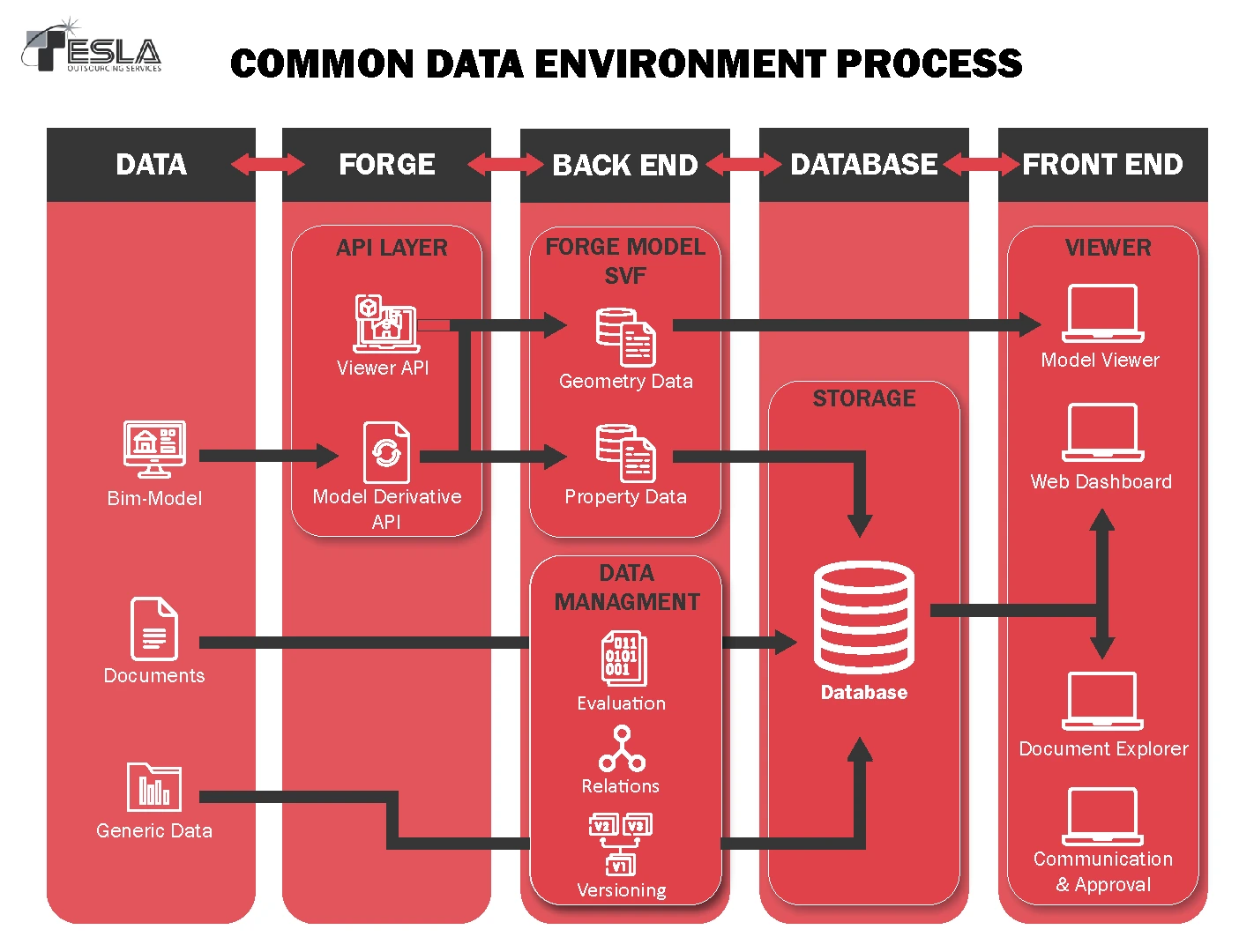
Common Data Environment Process
Standard ISO Workflow inside CDE
Information flow must follow a predefined path. Unauthorized shortcuts weaken traceability. Under ISO, information moves through controlled states:
- Work In Progress (WIP)
- Internal team access
- No external distribution
- Shared
- For coordination
- Visible to other disciplines
- Published
- Approved for construction or tender
- Archived
- Historical record
Naming Convention Discipline
Consistent naming help to make the information searchable, sortable, and auditable. Also, the most important thing to know is that ISO 19650 requires structured file naming.
Typical components:
- Project code
- Originator
- Volume/System
- Level/Location
- Type
- Role
- Classification
- Revision
Example structure:
Project-Originator-Volume-Level-Type-Role-Number-Revision
Without naming discipline:
- Files become unsearchable.
- Revisions become unclear.
- Audit trail collapses
Industry analysis from early 2026 reveals that firms strictly adhering to ISO 19650 naming conventions and status codes reduce information retrieval time by up to 45% during construction.
Quality Assurance and Quality Control
Quality control must be introduced into the workflow from day one. Reactive quality checks create delays and redesign. QA/QC ensures that deliverables meet defined standards before submission. It reduces coordination conflicts. Quality control in BIM is not only clash detection. In 2026, QA/QC directly impacts payment milestones and client satisfaction.
It includes:
- Naming compliance
- Parameter completeness
- Level consistency
- Work set management
- Model health
- Revision accuracy
- Data integrity
Multi-Layer QA Strategy
A layered QA approach distributes responsibility and reduces risk concentration.QA must be proactive and scheduled not reactive to issues.
Layer 1: Model Health Check
- Purge unused families
- Audit warnings
- Check duplicate elements
- Verify coordinates
Layer 2: Information Audit
- Parameter completeness
- Asset tagging
- Classification codes
- Consistency checks
Layer 3: Coordination Review
- Hard clashes
- Clearance clashes
- Workflow clashes
Automation in QA
Manual checking becomes inefficient as model size increases. Automation enhances consistency and speed. Modern firms use:
- Rule-based model checking
- Automated parameter validation
- BIM dashboards
- Data validation scripts
Managing BIM Deliverables in Outsourced Projects
Outsourced BIM introduces additional complexity due to geographic, cultural, and procedural differences. The most significant risk is misaligned expectations between client and delivery team.
Common issues:
- Different interpretation of LOD
- Inconsistent naming standards
- Time-zone approval delays
- Missing asset data
- Incomplete BEP adoption
How to Protect Outsourced BIM Deliverables
Preventive planning reduces downstream disputes. Transparency ensures deliverable maturity aligns with expectations.
- Demand LOD matrix before modeling begins
- Align BEP with ISO structure
- Confirm CDE access and workflow
- Define submission schedule clearly
- Establish weekly compliance review
Documentation Is Your Shield
In outsourced environments, documentation becomes legal and operational protection. Because in cross-border projects, documentation safeguards accountability.
- Every submission must be logged.
- Every revision must be traceable.
- Every change must be documented.
Preparing for ISO 19650 Audits
Audit preparedness is an action involving theory and responsibility. It tests whether your documented processes truly reflect how your team works. Compliance is not proven when you write a BEP. It is proven when your workflows can survive an audit.
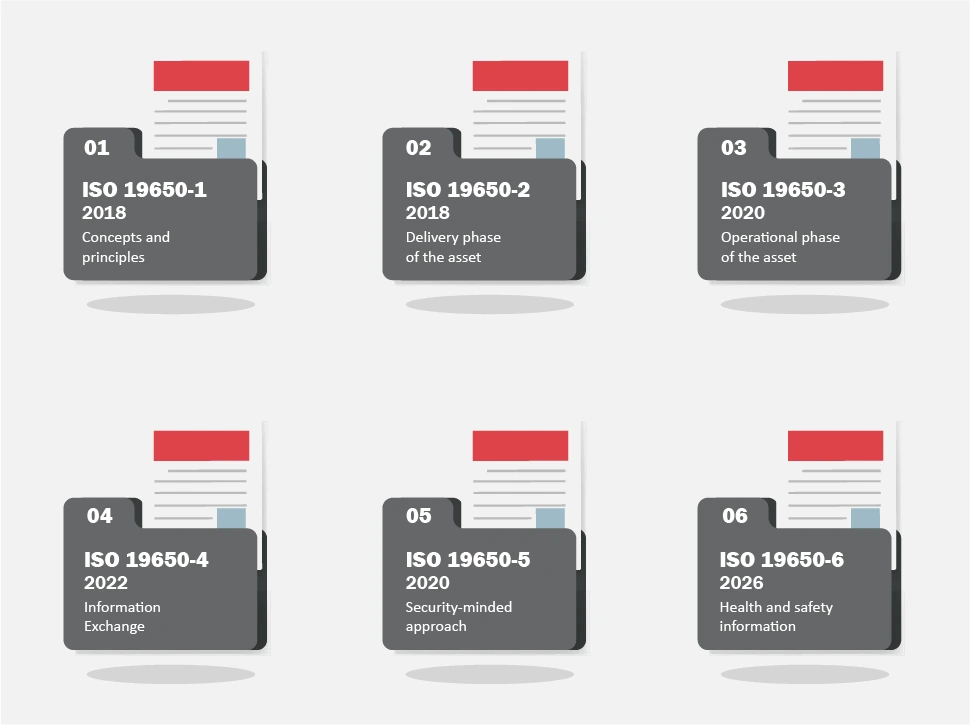
Understanding of ISO 19650
What Does an ISO Audit Actually Check?
Many professionals assume audits focus on software or modeling capability. Audits focus on structured information control. An ISO audit does not examine your 3D model aesthetics. According to ISO 19650, documents are equally material to an accomplished work. In case you are unable to trace your process, noncompliant.
It checks:
- Information management procedures
- CDE compliance
- Naming convention discipline
- Status code usage
- Approval workflows
- Role clarity
- Revision traceability
- Information delivery against milestones
Common Audit Failures in BIM Projects
Audit failures rarely happen due to technical incapability. They occur due to inconsistency between written procedures and actual practice. Common audit failures include:
- Files bypassing CDE approval steps
- Inconsistent revision coding
- Missing approval signatures
- Informal coordination outside the documented workflow
- Incomplete audit trail
Building an Audit-Ready Culture
Audit readiness must be proactive. It should be embedded into routine workflow instead of being treated as a last-minute exercise. To create audit-ready BIM delivery:
- Schedule internal ISO reviews monthly
- Assign an Information Manager
- Document deviation logs
- Maintain version tracking dashboards
- Train teams on workflow discipline
What Is a Digital Twin in Practice?
The evolution of BIM into digital twins has shifted focus from static deliverables to dynamic data ecosystems. In 2026, BIM deliverables are increasingly expected to support intelligent asset systems. A digital twin is not a picture, but it is a running data set that it duplicates the actual asset throughout its existence. The digital twin will not be efficient when the BIM information is not organized.
It integrates:
- Real-time sensors
- Maintenance schedules
- Asset performance data
- Energy monitoring
- Lifecycle analytics
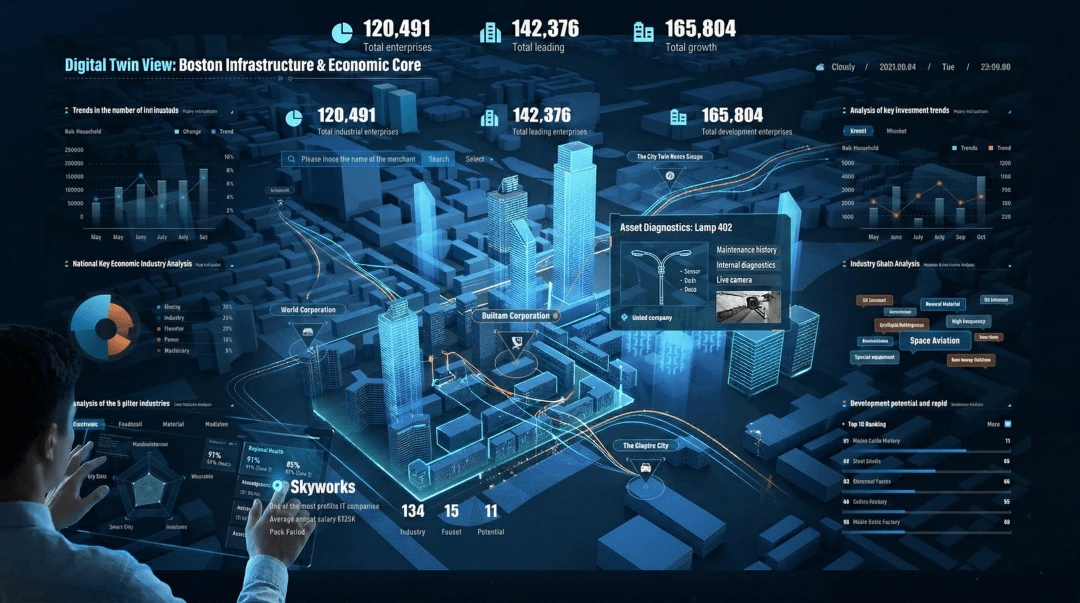
Digital twins rely on structured BIM Data
Why LOD and LOI Matter for Digital Twins
Digital twins rely heavily on structured asset information. Even a geometrically accurate model becomes useless if the data layer is incomplete. Many firms now embed digital twin readiness into their BIM execution strategy from day one.
- Asset parameters are incomplete
- Equipment tags are inconsistent
- Classification systems are missing
- Warranty data is absent
Asset Information Requirements (AIR)
Asset Information Requirements define what information the client expects at handover for operational use. They provide clarity before modeling even begins. Asset owners increasingly define AIR during project kickoff. If BEP and LOD matrix do not align with AIR, handover becomes inefficient and fragmented.
These requirements define:
- Which assets must be tracked
- Which parameters must be filled
- Which maintenance data must be embedded
- Which formats must be delivered
BIM Deliverables for Facility Management (FM)
Facility management is where BIM maturity is truly tested. The value of the model is determined after construction, not before. The real test of BIM maturity appears at handover. Despite extensive modeling efforts, many BIM models are not used by facility teams due to information inconsistency.
Why? Because:
- Parameters are inconsistent
- Asset data is incomplete
- Files are not structured properly
- No clear export strategy exists
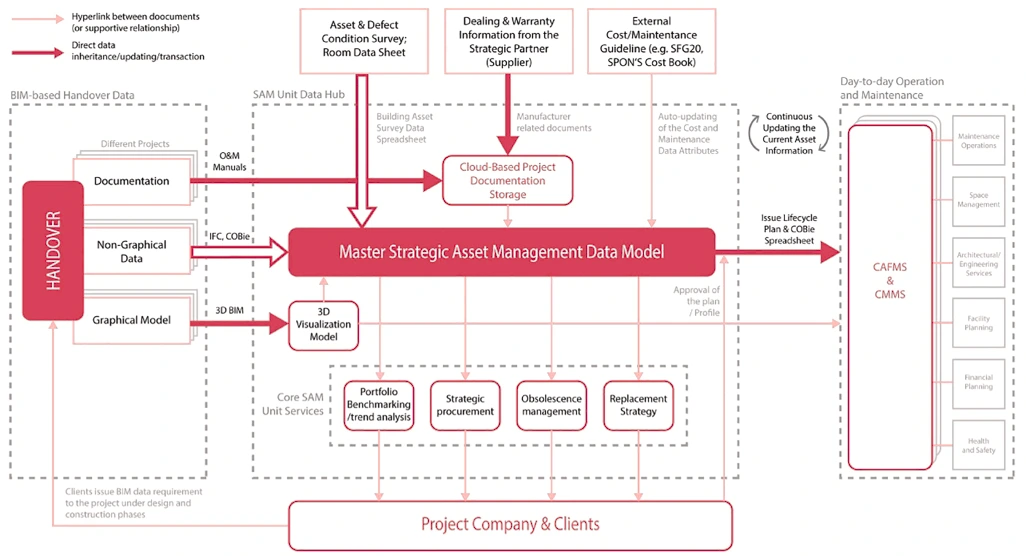
Facility Management and BIM
Integrating FM Strategy Early
Facility management integration should not wait until the final stage. Early coordination ensures data reliability at handover. FM is not a post-project add-on. It is a lifecycle-driven objective.
Strategies include:
- Early AIR definition
- Equipment tagging consistency
- Parameter validation during QA
- Clear asset naming standards
- Test exports before final submission
Deliverables for FM in 2026
Modern BIM handover deliverables are structured to integrate with asset management systems and digital platforms. Structured information ensures operational clarity long after construction ends.
Typical deliverables include:
- As-built federated models (LOD 500 where required)
- Asset data sheets
- Classification mapping
- Linked O&M manuals
- Digital asset registers
A 2026 Digital Twin Market Outlook highlights that 72% of infrastructure owners now mandate LOD 500 for project handover to ensure operational data integrity for facility management.
Legal and Contractual Implications of Non-Compliance
BIM deliverables are increasingly embedded into contracts. Non-compliance is no longer just a technical issue; it is a legal one. In high-value projects, information governance carries financial implications.
LOD definitions define expectation boundaries. The behaviors that do not have clear Level of Detail (LOD) may lead to fight of who does what. Where a contract states LOD 400 but the model is LOD 300 only:
- Claims may arise
- Fabrication delays occur
- Responsibility disputes escalate
BEP as a Contract Document
The BEP often becomes a binding project governance document after approval. It is enforceable. In many international projects, the approved BEP becomes part of the contractable is governance formalized.
This means:
- Deviating from BEP workflow can be considered breach
- Missing approval stages can invalidate submissions
- Incorrect status coding can affect milestone payments
ISO Non-Compliance and Financial Exposure
ISO compliance is often mandatory in infrastructure and public sector projects. Non-compliance can directly impact commercial standing. Information mismanagement is no longer tolerated at strategic project levels.
Failure can lead to:
- Payment delays
- Audit penalties
- Disqualification from future bids
- Reputation damage
BIM Governance Future outlook after 2026
Change is a constant in BIM rules now that technology is involved in projects. It is currently shifting towards smart systems rather than simplicity of adherence. Leaders of BIM tomorrow should be ready with such change.
AI-Driven Model Validation
AI applications alter the process of checking models and ensuring that they do not break rules. Robotization assists in maintaining superior maneuvers as well as reducing errors.
They can:
- Detect parameter gaps
- Identify naming inconsistencies
- Flag LOD mismatches
- Predict coordination conflicts
Data-Centric Project Delivery
The industry is transitioning from visual modeling focus to structured data integration across platforms. Data integration across procurement, construction, and facility systems is becoming standard practice.
The question is no longer: Is the model detailed?
It is: Is the information structured, validated, and interoperable?
BIM Leaders as Information Strategists
Technical modeling skill remains important, but strategic information orchestration defines leadership. The role of BIM leadership is evolving toward governance and strategic data control.
The BIM Manager of 2026 is:
- A governance expert
- A compliance strategist
- A workflow architect
- A data quality controller
- A lifecycle thinker
For more than ten years, we’ve been a trusted global partner in BIM excellence. Whether you need expert coordination-clash detection, Scan to BIM, or 2D-to-3D transitions for architectural or MEPF systems, our depth of experience ensures project success. Learn more about our specialized BIM verticals.
BIM ServicesSumming Up!
There is one thing that 2026 has made clear though, and it is that BIM is not simply about making 3D models any more. It is concerned with provision of credible, organized, and useful information.
The complexity of projects nowadays is higher than ever before. Teams are global. Deadlines are tighter. The clients do not want misunderstanding. And within this environment, undefined LOD, ineffective BEP execution, or uneven ISO workflow does not only cause technical issues, but poses a financial and contract risk.
This is the reason BIM deliverables should be mastered. With a clear or precise definition, the teams will be aware of what will be modeled and what will not. In cases where the BEP needs to be viable and consistent with actual working processes, coordination is not a response but an organized process. With information that is discipline followed under ISO 19650 processes it becomes traceable, audit ready and trustworthy.
The future of BIM is also heading in the direction of digital twins, lifecycle asset management, automation, and intelligent data systems. Geometry is not sufficient in that future. Structured information is what is valuable. It is not the companies and designers that produce the flauntiest models who will spearhead the industry. It is they who provide transparent, conforming, and trustworthy information at all the project stages.
The delivery of BIM deliverables is not a technical achievement. It is a mindset. And in 2026 and beyond, he or she is that kind of mindset that allows the difference between those who merely use BIM and those who are leaders in it. Point is that to remain relevant you should concentrate on this:
- Define expectations early.
- Document workflows clearly.
- Manage Common Data Environment
- Validate before you deliver.
Is your project truly audit-ready? Contact us today to ensure your BIM deliverables meet the highest ISO 19650 and LOD standards, turning your project data into a powerful, lifecycle-ready asset!
Contact Us