Introduction
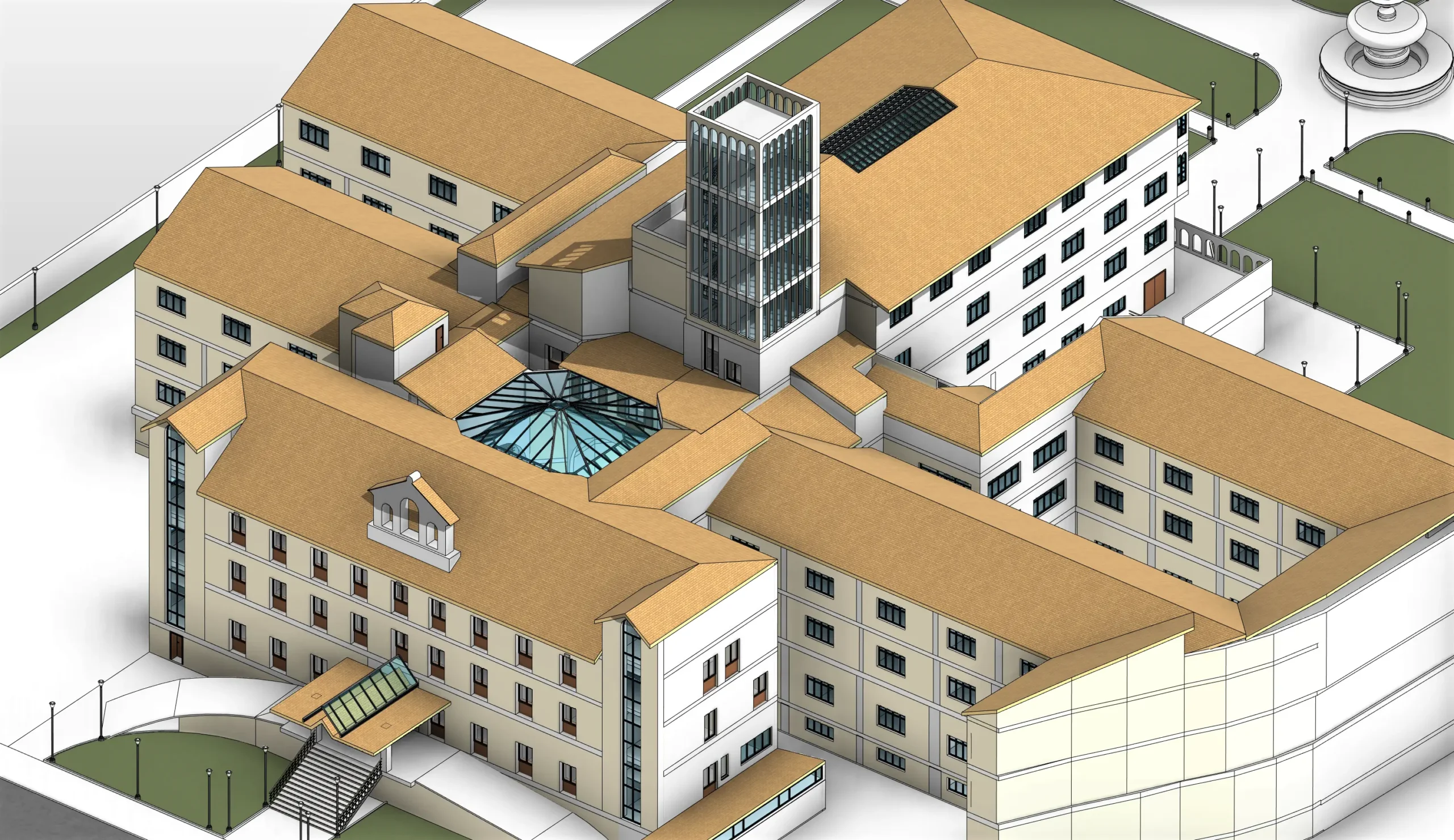
If we talk about restoration of historical buildings, it is a challenging task that requires balancing structural integrity, authenticity, and compliance. BIM has emerged as a game changer by providing digital solutions for creating, documenting, analyzing, and restoration planning. The integration of advanced scanning technologies with BIM has revolutionized the way architects, engineers, and conservationists approach the restoration and preservation of historic buildings.
Scan to BIM, also known as point cloud to BIM, is a process in which laser scanning scans an existing structure to create point cloud data. This data is then fed into BIM tools to create 3D representations.
This blog explores the pivotal role of Scan to BIM in historic preservation and restoration projects.
Challenges in Historic Building Preservation
- As the buildings are older, aging and deteriorating materials require careful restoration.
- No proper records and documentation as they were built before modern solutions.
- Conservation efforts must adhere to strict limitations for modification to maintain authenticity.
- High cost and need proper analysis of a building.
How does Scan to BIM support Historic Preservation?
In the following, the importance of Scan to BIM in the renovation of historic buildings is presented, exploring the benefits, applications, and transformative impact on the preservation of our architectural heritage.
What is Scan to BIM
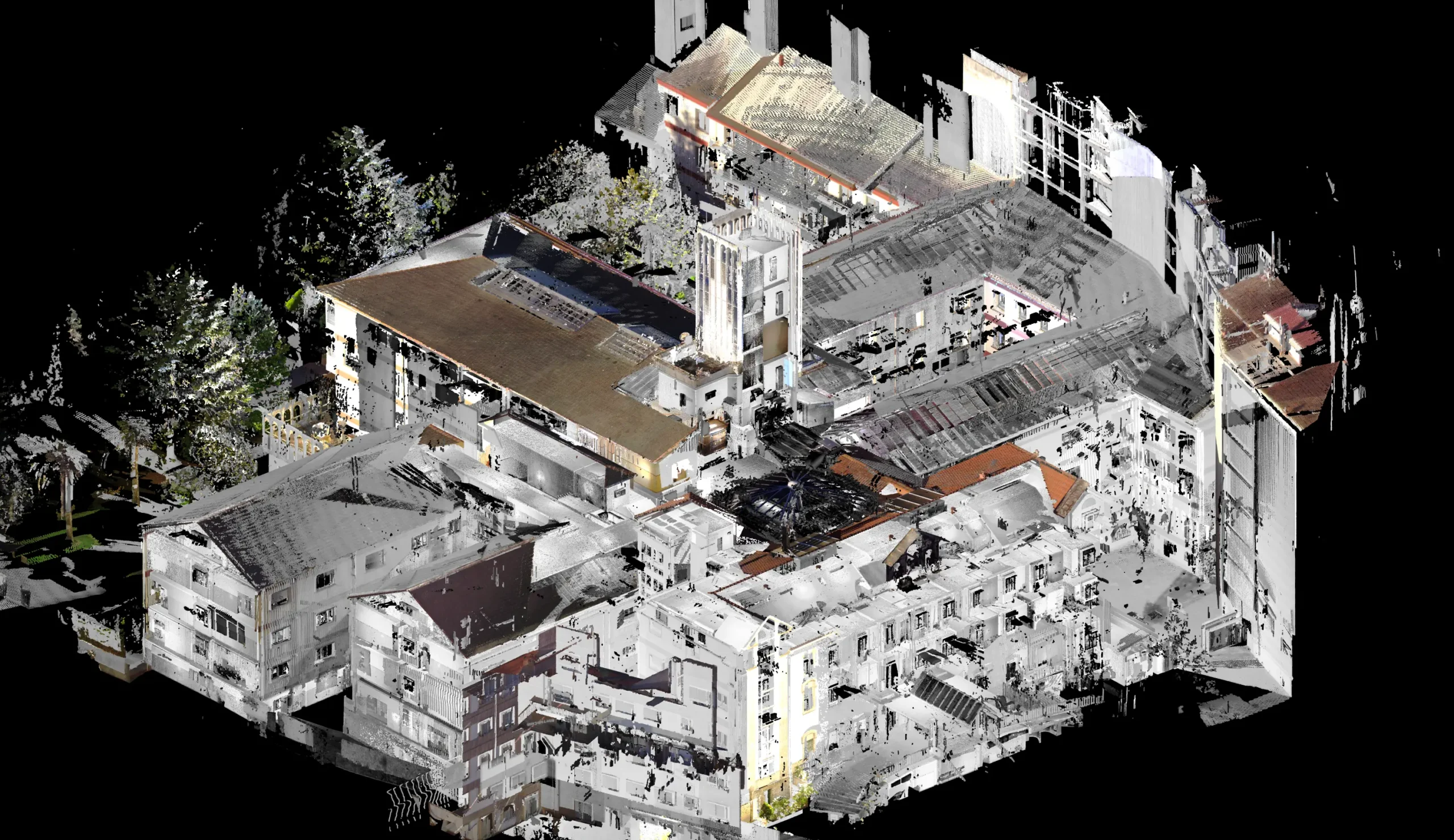
Scan-to-BIM (Scan to Building Information Modeling) refers to the process of digitally capturing the as-built conditions of a physical structure using technologies like 3D laser scanning (LiDAR) or photogrammetry, and converting that data into a detailed BIM model.
The process begins with the use of advanced laser scanning techniques, such as LiDAR (Light Detection and Ranging), to capture accurate and detailed data of existing spaces. The laser scanner collects millions of spatial data points that correspond precisely to the geometry of the site. This point cloud data is then imported into BIM, where it is converted into a detailed, digital 3D model. The resulting model offers a comprehensive, accurate, and interactive representation of the physical environment. With this precise data and representation of physical elements, restoration, renovation, and other architectural projects can be carried out with significantly greater confidence and accuracy.
Benefits of Scan to BIM in Historical Buildings
Why should conservationists and architects adopt BIM? These are some persuasive explanations.
Accurate Documentation
Historical buildings often lack updated and accurate documents and frequently undergo numerous changes and renovations. Scan to BIM provides detailed information and documentation of existing projects using As-Built documentation by taking precise measurements of existing buildings. Every surface and curve of the structure is precisely reflected in the point cloud created by 3D laser scanning, which gathers millions of data points every second. The data is captured precisely, which is impossible with hand surveys, regardless of asymmetrical archways, uneven floors, or twisted columns.
Efficient Planning and Decision Making
Scan to BIM facilitates data-driven decision-making by simulating different preservation techniques to determine the best approach. Decisions are made regarding repair or replacement, which helps in understanding the proper planning. By integrating historical documentation with real-time data, Scan to BIM enhances planning efficiency, minimizes unforeseen challenges, and ensures that preservation efforts maintain the authenticity and integrity of the structure. This technology ultimately supports sustainable conservation by optimizing resources, improving accuracy, and preserving architectural heritage for future generations.
Enhanced Accuracy and Precision
Scan to BIM provides accuracy and precision, which improves design quality. It ensures critical details are not missed and presents a visual representation of a building. Using BIM for renovation projects increases accuracy by taking precise and meticulous measurements of existing structures. BIM creates detailed 3D models, which capture digital replicas and minute intricacies.
Cost and Time-Saving
Scan to BIM reduces reworks and errors through accurate information. This reduces costly errors, and projects stay within budget while controlling costs. It minimizes the need for repeated site visits, enabling virtual inspections before physical work starts, detecting design clashes early, and providing accurate quantity take-offs and cost estimates for better planning and budgeting.
Better Visualization and Simulation
Scan-to-BIM services utilize advanced technologies like laser scanning and photogrammetry to capture precise spatial data of existing structures. This data is then used to generate highly detailed Building Information Models (BIM). These BIM models offer significant advantages by enhancing visualization and simulation capabilities for architects, engineers, and clients. Instead of simply scanning to BIM, these services create BIM models from scan data. This provides a realistic and immersive digital representation, allowing stakeholders to thoroughly explore a project in a virtual environment, improving understanding and decision-making even before physical construction commences.
Collaboration
Restoration often involves multiple stakeholders—architects, engineers, structural consultants, conservation experts, and government bodies. BIM provides a centralized platform where all stakeholders work together and share information seamlessly which leads to smoother project execution.
Real-World Examples
BIM has been used in many heritage projects some of which are:
Angkor Wat Cambodia
BIM has been used to create this UNESCO World Heritage site by aiding in the conservation of its ancient temples and intricate carvings.
Notre-Dame Cathedral, Paris
After the devastating 2019 fire, prior laser scan data collected by preservationists was used to reconstruct precise 3D models for the rebuilding process.
Palace of Westminster, UK
BIM is used in repairing, restoring, and renovating the effects of this UNESCO landmark.
Conclusion
The integration of Scan to BIM is a groundbreaking advancement in the field of historical building preservation. By combining cutting-edge technologies like 3D laser scanning, point cloud modeling, and intelligent BIM workflows, professionals are now equipped to restore and conserve our architectural heritage with unparalleled accuracy and efficiency.
Scan to BIM not only addresses the unique challenges associated with aging structures and lack of documentation but also empowers architects, engineers, and conservationists to make data-driven decisions that preserve the authenticity of these treasured sites. From improved planning and reduced costs to enhanced collaboration and long-term digital archiving, the benefits are both immediate and far-reaching.


