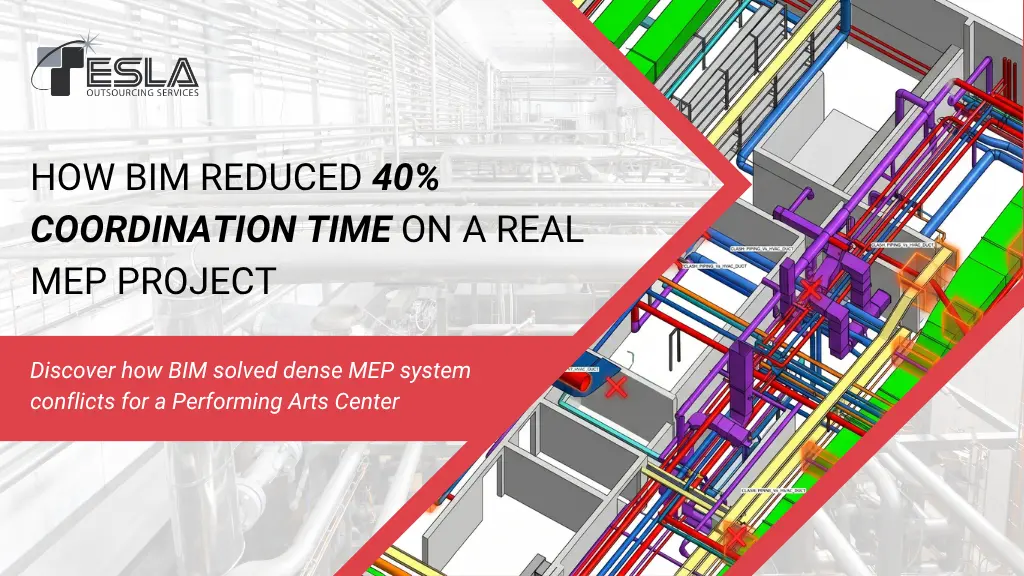
Architectural Design Workflow domains in recent years have been influenced by the emergence of +Building Information Modeling. Indeed, this platform has changed how people go about with design, collaboration, and project delivery. One needs to fully understand traditional architectural design workflows to understand BIM’s impact.
Traditional Architectural Workflows
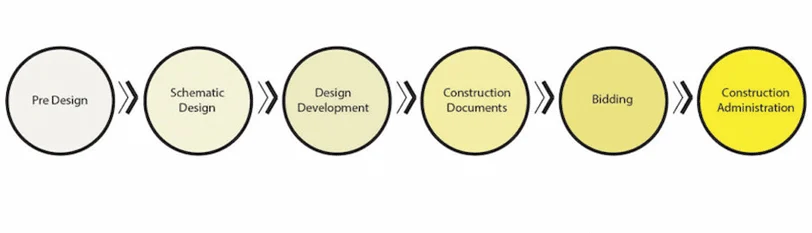
The three phases comprise – Schematic Design (SD), Design Development (DD), and Construction Documents (CD) – the traditional architectural design processes. Each of these phases, when executed differently, sets off issues that often impede the effectiveness and communication of a project, which BIM has attempted to overcome.
By examining the limitations of these traditional workflows, we can better understand how BIM has optimized workflows, enhanced efficiency, and improved resource allocation in the industry.
The Role of BIM in Modern Design and Construction Processes
Building Information Modeling offers an integrated response to most of the issues known to characterize traditional workflows. At the level of BIM implementation, it is clearly required to have a well-thought-out BIM Execution Plan (BEP), that’s been tailored to meet the specific needs of each project type in its scale and typology.
Integration of BIM in Architectural Design Workflow Phases
Schematic Design with BIM
Schematic Design phases often struggle to effectively incorporate site context due to limitations in traditional design methods, leading to inaccurate representations of the project environment. A primary challenge is integrating complex site data, such as terrain and contours, into the design, which can be cumbersome and prone to errors with manual processes. However, with Building Information Modeling (BIM) you can significantly conceptualize the Schematic Design phase of the building with a 3d presentation of the model.
This provides a more accurate representation of the project environment, facilitating precise mapping of terrain and contours, enhanced site analysis, and informed design decisions. Moreover, BIM allows for comprehensive documentation and analysis of relevant case studies, informing the conceptual design process and ensuring a more holistic approach to project development. By leveraging BIM Services, designers can overcome traditional limitations and create more responsive, context-driven designs.
Design Development with BIM
It facilitates clear delineation of project phases within the model, aiding in planning and execution. The integration of performance analysis plugins for factors such as solar heat gains, lighting, sustainability features, and carbon footprint provides valuable insights for informed decision-making. Additionally, the utilization of clash detection software like Navisworks and Solibri allows for early identification and resolution of spatial conflicts.
Construction Documents with BIM
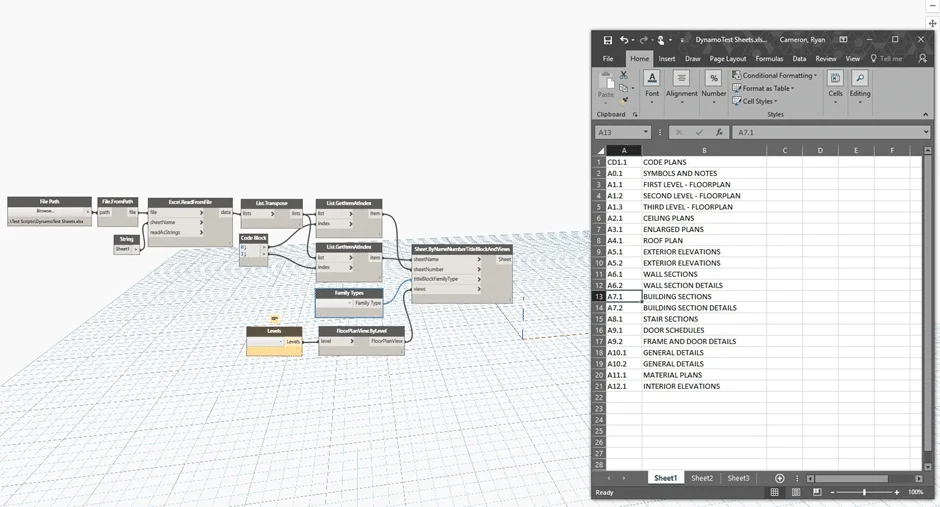
BIM revolutionizes the Construction Documents phase by consolidating all project documents within a single, cohesive model. Platforms like BIM 360 facilitate seamless collaboration and data management. The integration of advanced rendering plugins enhances visualization capabilities, while the utilization of Dynamo scripting enables efficient creation of sheets and viewports.
Challenges in Traditional Architectural Design Workflows
In the Schematic Design phase, architects often struggle with effectively conveying complex ideas and achieving comprehensive visualization. Various design alternatives are hampered by time and resource constraints, limiting the exploration of design alternatives and complicating coordination between various disciplines. The Construction Documents phase is particularly susceptible to human errors, necessitating extensive documentation and frequent revisions.
Enhancing Efficiency through BIM Workflow Optimization
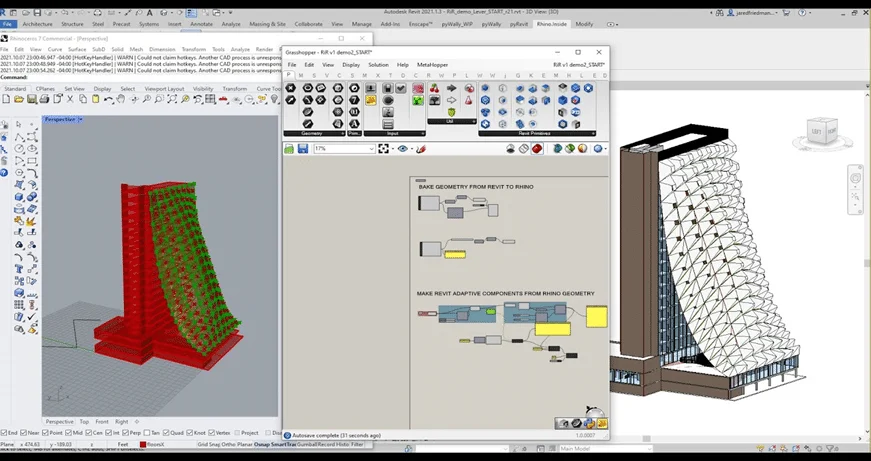
To maximize the benefits of BIM implementation, it is crucial to analyze the workflow and identify areas for optimization. This process involves determining repetitive tasks suitable for automation, evaluating parameters for classification as type or instance, and identifying project phases prone to frequent changes. These decisions should be incorporated into the BIM Execution Plan to ensure consistent application throughout the project lifecycle.
BIM Implementation in a Large-Scale Commercial Project
A recent commercial development project in an urban center demonstrates the efficacy of BIM implementation. The 50-story mixed-use tower utilized a fully integrated BIM workflow from conceptual design to construction documentation. Key outcomes included a reduction in design iteration time by 30%, coordination issues during construction by 45%, and an improvement of 20% in energy efficiency through early-stage performance analysis.
Optimizing Resources through BIM Integration
The integration of BIM in architectural design workflows significantly enhances resource optimization. According to a study published in the Journal of Construction Engineering and Management, BIM implementation can lead to a 20-30% reduction in project duration and a 10-15% decrease in overall project costs. This optimization is achieved through several mechanisms:
Enhanced Collaboration and Communication
BIM facilitates real-time collaboration among project stakeholders, reducing miscommunication and minimizing rework. A study by the National Institute of Standards and Technology (NIST) found that improved interoperability through BIM can save the U.S. capital facilities industry approximately $15.8 billion annually.
Automated Quantity Take-offs and Cost Estimation
BIM enables automated quantity take-offs and cost estimation, significantly reducing the time and resources required for these processes. Research published in the Automation in Construction journal indicates that BIM-based quantity take-offs can be up to 80% faster than traditional methods.
Improved Energy Analysis and Sustainability
BIM integration allows for early-stage energy analysis and sustainability assessments. A study in the Energy and Buildings journal reported that BIM-enabled energy analysis could lead to energy savings of up to 30% in building operations.
Reduced On-Site Conflicts and Change Orders
The clash detection capabilities of BIM significantly reduce on-site conflicts and speed up construction. The Construction Industry Institute estimates that effective use of BIM can reduce change orders by up to 40%.
Future Trends: AI Integration in BIM Workflows
The integration of Artificial Intelligence (AI) in BIM workflows represents the next frontier in architectural design workflow and design optimization. AI has the potential to revolutionize various aspects of the design process:
Automated Design Generation:
AI algorithms generate multiple design options based on parameters and constraints; reducing design time by as much as 50%.
Predictive Analysis:
Machine learning models can predict potential issues in the design and construction phases, enabling proactive problem-solving and potentially reducing project risks by up to 30%.
Natural Language Processing:
AI-powered systems can interpret and generate building codes and regulations, streamlining compliance processes and potentially reducing the time spent on code compliance by up to 60%.
Optimizing Resources:
AI can analyze the project data to optimize resource allocation and scheduling, potential improvements and enhance efficiency through BIM Architectural Design Workflow giving an overall efficiency in the projects of up to 20%.
Conclusion
The integration of BIM in architectural design workflows addresses many of the challenges inherent in traditional processes. By utilizing advanced software tools and methodologies, professionals can achieve higher levels of efficiency, collaboration, and design quality. The transition to BIM-centric workflows, while initially challenging, offers substantial long-term benefits in terms of project efficiency, cost reduction, and enhanced client satisfaction. Tesla Outsourcing Services can help you with this transition with our bespoke BIM Consulting Services.
As the industry continues to evolve, the fusion of BIM with emerging technologies like AI promises to further revolutionize the field of architectural workflow design and construction. For firms seeking to optimize their preconstruction and Architectural Design Workflow processes, adopting a comprehensive BIM strategy is no longer optional but essential for maintaining competitiveness in the global market.