Scan to BIM is a revolutionary approach used in construction, and maintenance of buildings and infrastructure. By using point cloud data generated through advanced laser scanning techniques, we can create accurate 3D models that are a comprehensive digital representation of the actual building. While the technology offers immense potential, maintaining accuracy and consistency through robust quality assurance (QA) is essential for delivering reliable and usable results.
Quality Assurance in Scan to BIM projects
Quality Assurance (QA) in Scan to BIM projects involves a series of checks and validations to identify and rectify any errors or discrepancies that may arise during the scanning, processing, and modeling stages.
1. Verifying data accuracy
Verification that the captured point cloud data is accurate and representative of the existing conditions.
2. Ensuring model integrity
The verification of the 3D model to make sure it meets the required structural and design expectations.
3. Validating measurements
This ensures that dimensional data meets real-world specifications.
4. Adhering to standards
Complying with established BIM standardization and industrial protocols.
Key areas of focus in Scan to BIM QA
Data Acquisition
Data acquisition is the foundation of the Scan to BIM process.
- Scanner Calibration: Laser scanning devices are subject to periodic calibration, as it is important to work with precision and avoid probable inconsistencies in data.
- Field Conditions: Scanning in a controlled environment, such as very good lighting and fewer hindrances, enhances the quality of the data.
- Registration & Alignment: The proper alignment of multiple scan datasets ensures a cohesive point cloud, building the foundation for reliable modeling.
Data Processing
After acquisition, raw scan data undergoes processing to prepare it for model creation. This step involves filtering, refining, and validating the data.
- Point Cloud Filtering: Noise and redundant points are removed in order to make the dataset more distinctive and user-friendly.
- Colorization & Geo-referencing: Color and spatial coordinate attribution to the point cloud give meaning to its geometric context.
- Feature Extraction: It represents the identification and isolation of important features from the point cloud to make sure all the key factors are included.
- Model Creation: Verifying the accuracy of the generated 3D model against the actual site conditions is a crucial QA checkpoint.
Model Verification
Verification ensures that the 3D model meets accuracy, geometric, and functional requirements.
- Dimensional Accuracy: Comparing the model’s dimensions with the scanned data guarantees alignment with the original structure.
- Geometric Inconsistency: Identifying and resolving anomalies, such as overlapping or missing geometries, enhances reliability.
- Feature Completeness: Ensuring all relevant structural and design elements are included in the model reduces the risk of oversights.
- Functional Verification: Testing the model’s usability for intended applications, such as clash detection or asset management, is a final layer of validation.
Level of Detail (LOD)
The LOD in a Scan to BIM model varies depending on the project’s purpose and stage. QA processes ensure that the model’s LOD aligns with its intended use.
- LOD Requirements: Defining the appropriate LOD for various phases of the project avoids under- or over-modeling.
- Verification: Validating that the model meets predefined LOD criteria enhances its usability.
- Model Creation: Ensuring the model adheres to specified LOD requirements supports smooth integration with downstream workflows.
Scan to BIM services can reduce costly rework by up to 30% in renovation and restoration projects. By leveraging precise point cloud data and robust quality assurance protocols, errors are detected early—saving both time and money for building owners and contractors.
BIM Standards and Best Practices
Adherence to established BIM standards and protocols is fundamental to maintaining quality and ensuring interoperability.
- Adherence: Following industry standards, such as IFC (Industry Foundation Classes) and COBie (Construction-Operations Building Information Exchange), ensures consistency.
- Interoperability: Confirming that the model is compatible with various software platforms and tools supports seamless collaboration.
- Data Quality: Regular checks for data integrity, completeness, and accuracy ensure the reliability of the final deliverables.
Why QA is Crucial
QA in Scan to BIM workflows plays an integral role that cannot be undermined. Key benefits:
1. Standard Adherence
Ensuring compliance with industry standards minimizes errors and facilitates seamless collaboration.
2. Error Detection & Elimination
Early detection and resolution of errors prevent expensive rework.
3. Geometry Accuracy
The precision in geometric representations maintains the model’s reliability for use in different applications.
4. Requirement Fulfillment
Meeting project-specific requirements ensures the model is fit for its intended use.
From 3D Laser Scanners to Point Clouds to Quality Assurance

QA Process
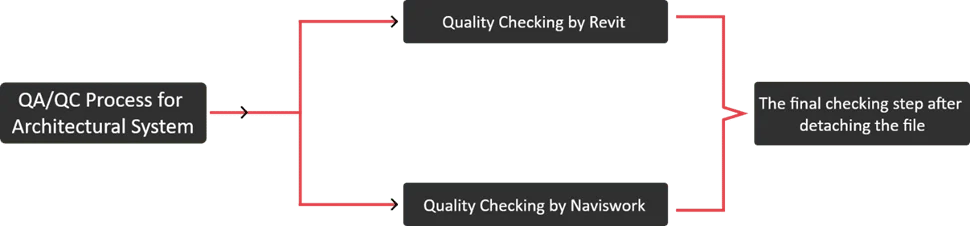
A structured QA process will help maintain quality throughout the Scan to BIM workflow. Key steps include:
1. Clear Project Scope & Standards
- Define Project Goals: Clearly outline what the objectives and deliverables of the project are.
- Establish Scope: Outlining the boundaries and requirements of the Scan to BIM workflow.
- Create QA Plan: Develop a detailed plan that outlines specific checks, procedures, and responsibilities.
2. Data Quality Control
- Verify Data Accuracy: Verify that the captured point cloud data is accurate and reliable.
- Scan Quality & Data Cleaning: Noise and other imperfections in raw scan data need to be removed.
- Check Registration: This tool allows checking the alignment and coherence of many scan datasets.
- Evaluate Point Density: For accurate modeling, confirm that the captured point cloud has sufficient resolution.
3. Modeling Accuracy & Consistency
- Verify Geometry Accuracy: This stage checks the model’s geometry against the original scan data.
- Validate Attributes: The attributes also need to be validated that they are correctly represented by materials, finishes, or spatial relationships.
- Check Consistency: There should be consistency in everything in the model.
4. BIM Standards & Best Practices
- Adherence to Standards: Follow-established BIM protocols and guidelines.
- Best Practices: Include industry-recommended practices that enhance model reliability and use.
5. Clash Detection & Coordination
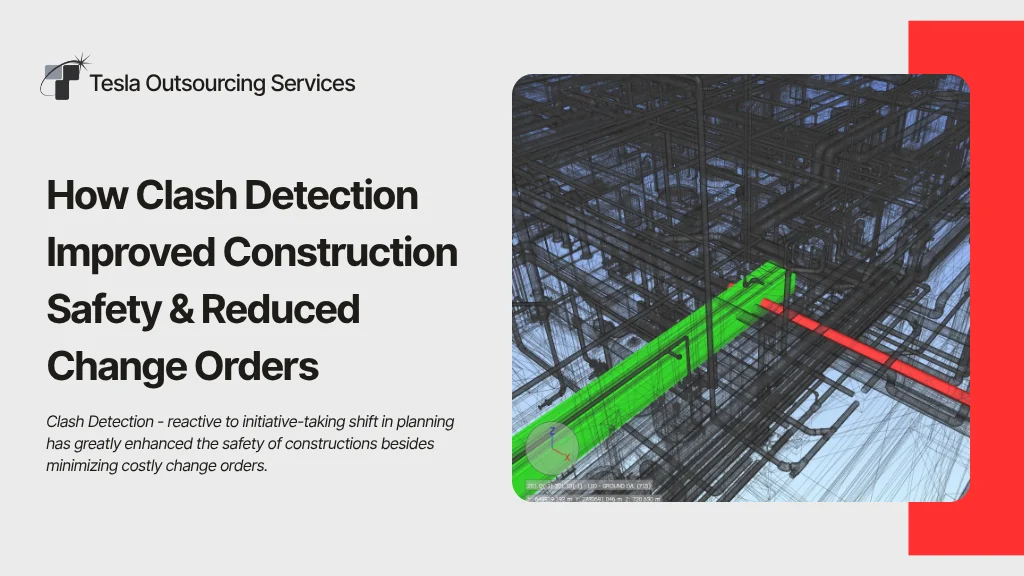
- Identify Clashes: Detect clashes in the model using special software.
- Resolve Clashes: Address and fix the identified clashes to ensure model integrity.
6. Regular Reviews & Feedback
- Conduct Periodic Reviews: The QA checks should go on regularly during the projects.
- Milestone Reviews: Review of progress and quality at critical stages in the project.
7. Documentation & Reporting
- QA Documentation: Record methods, results, and corrective actions taken during QA.
- Maintain Records: Keep records in detail for future reference and compliance.
8. Utilize QA Tools & Technologies
- Leverage Software: Avail of sophisticated QA tools that help speed up the process of quality checking.
- Consider Automation: Consider automating repetitive QA tasks to improve efficiency.
9. Continuous Improvement
- Stay Updated: Be aware of the latest trends and technologies in Scan to BIM QA.
- Feedback Loop/Process Optimization: Use feedback to refine and improve QA processes.
- Data Analysis: The process of finding patterns in project data to inform future QA practices.
A Brief of projects by Tesla Outsourcing Services
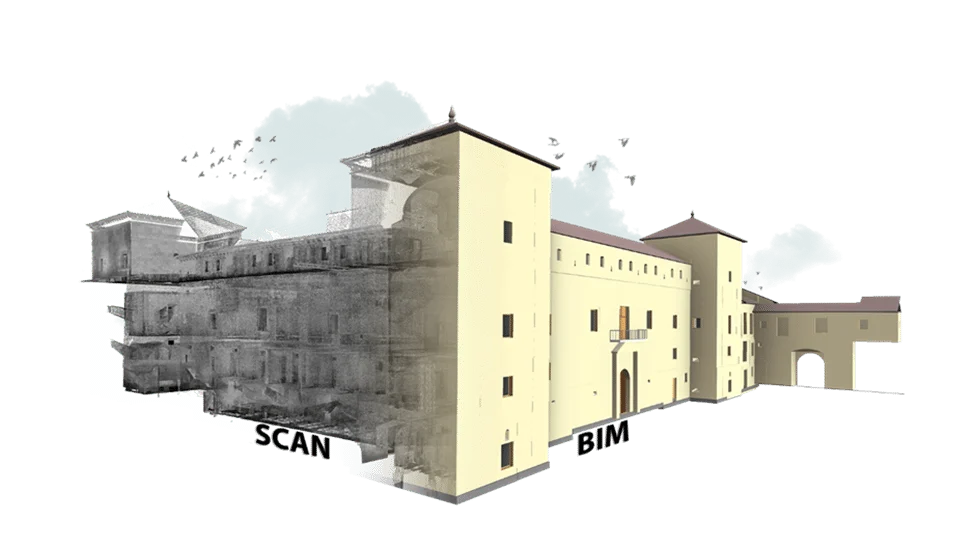
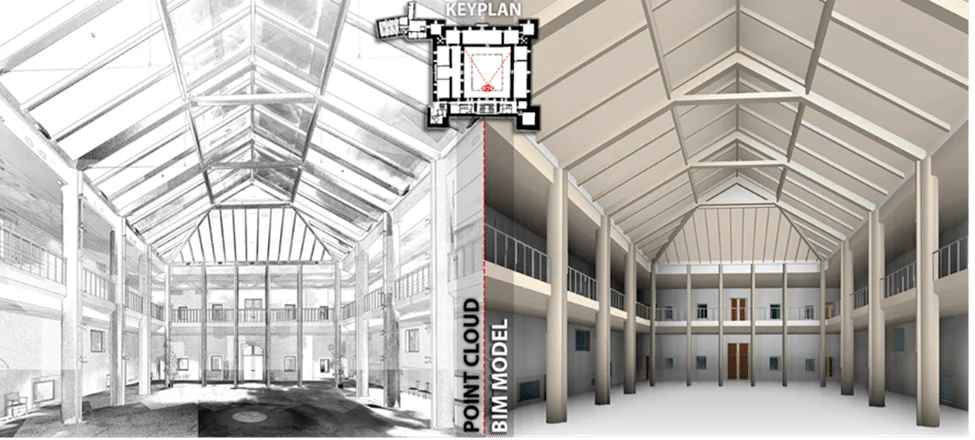
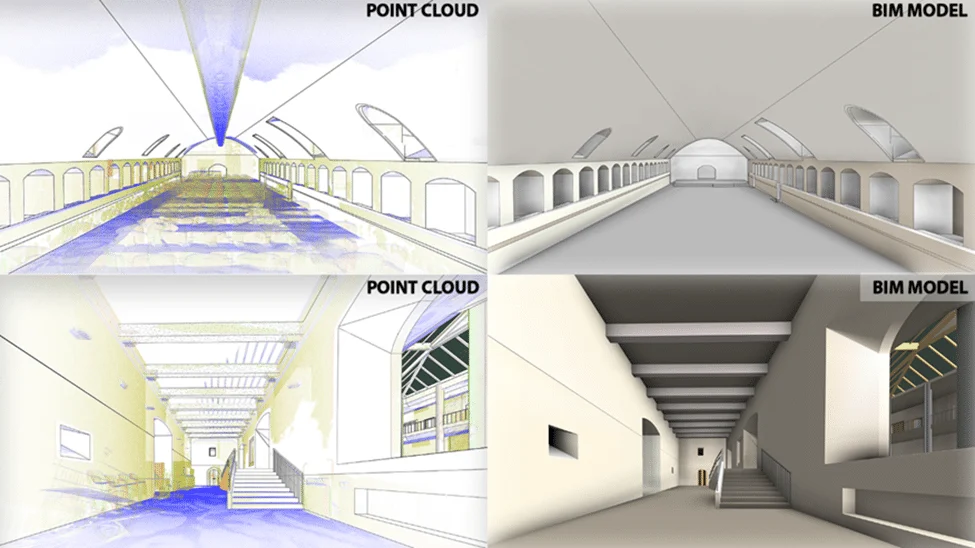
Palace of Pastrana
- Type: Heritage Restoration
- Disciplines: Architecture & Structural Engineering
- LOD: 300
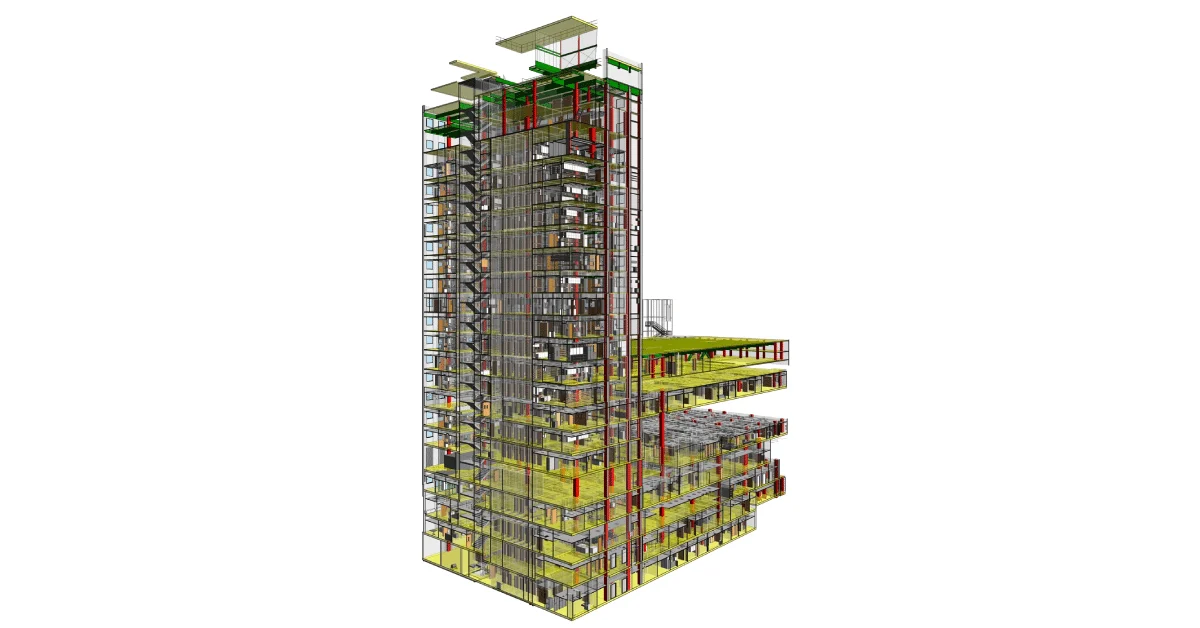
The restoration project of the Palace of Pastrana is a paradigm of the vital role of Quality Assurance in the preservation of the integrity of the historical heritage. The team made use of laser scanning and BIM to accomplish an accurate digital model, which guarantees both precision and heritage security. The implementation of LOD 300 was adequate to provide both the design and the workflow analysis without any over-complication in the whole process.
Tesla Outsourcing Services has successfully delivered over 5,000 BIM and CAD projects across 25+ countries since 2007. Their global reach and adherence to international standards like ISO 19650 and IBC ensure your project meets the highest benchmarks for quality and compliance.
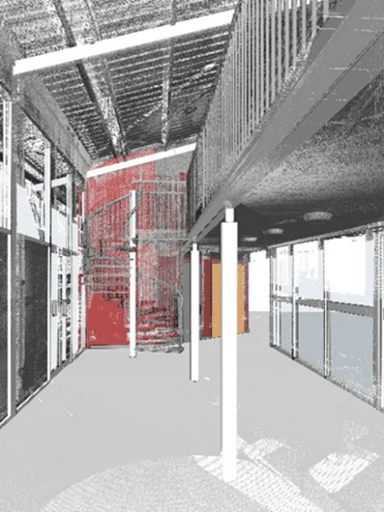
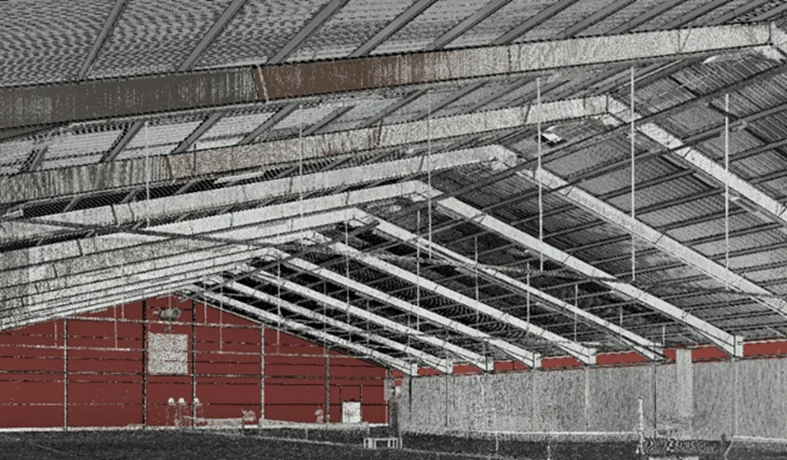
Cyncoed Sports & Wellbeing Hub
- Type: Building Renovation
- Disciplines: Architecture & Structural Engineering
- LOD: 400
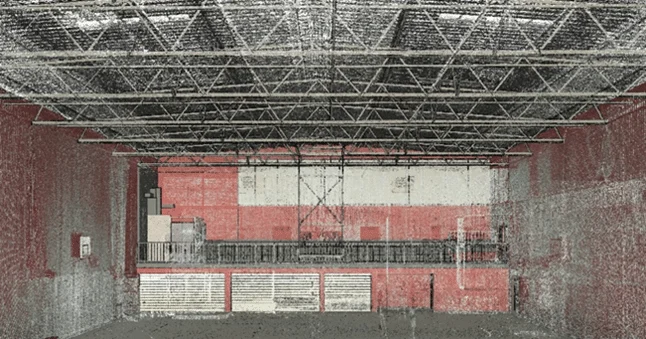
Cyncoed Sports & Wellbeing Hub’s development illustrates QA’s part in managing complicated workflows. LOD 400 was the core area for the team to make every part of the building and the structure visible, thus, the success of the program is the result of the process through which this information is represented, thus the execution is set. QA was responsible for error detection and resolution, which was key to the smooth running of the project.
Outsourcing BIM services to experienced providers like Tesla Outsourcing Services allows architectural firms, contractors, and consultants to access specialized expertise, advanced technology, and scalable resources—helping you optimize project efficiency and maximize profit margins.
Conclusion
Quality Assurance brings valuable functionality to successful projects that utilize Point Cloud to BIM Services. The use of quality control and the desire for constant improvement guarantees models that are accurate, consistent, and reliable. The combination of best practices and the use of the best tools and technologies allows stakeholders to Scan to BIM workflows, thus, the construction and maintenance industry is very innovative and effective. We have already catered to over 25+ countries and as such we are offering project-specific BIM solutions to the end-users namely architectural houses, general contractors, engineering consultants, and HVAC contractors. Through our expertise in engineering and architecture, we make sure that every detail is observed. By eliminating redundancy and reducing costs, through operational excellence, the project efficiency and profits can be increased. If you want to be updated with the industry, then follow us for more information.