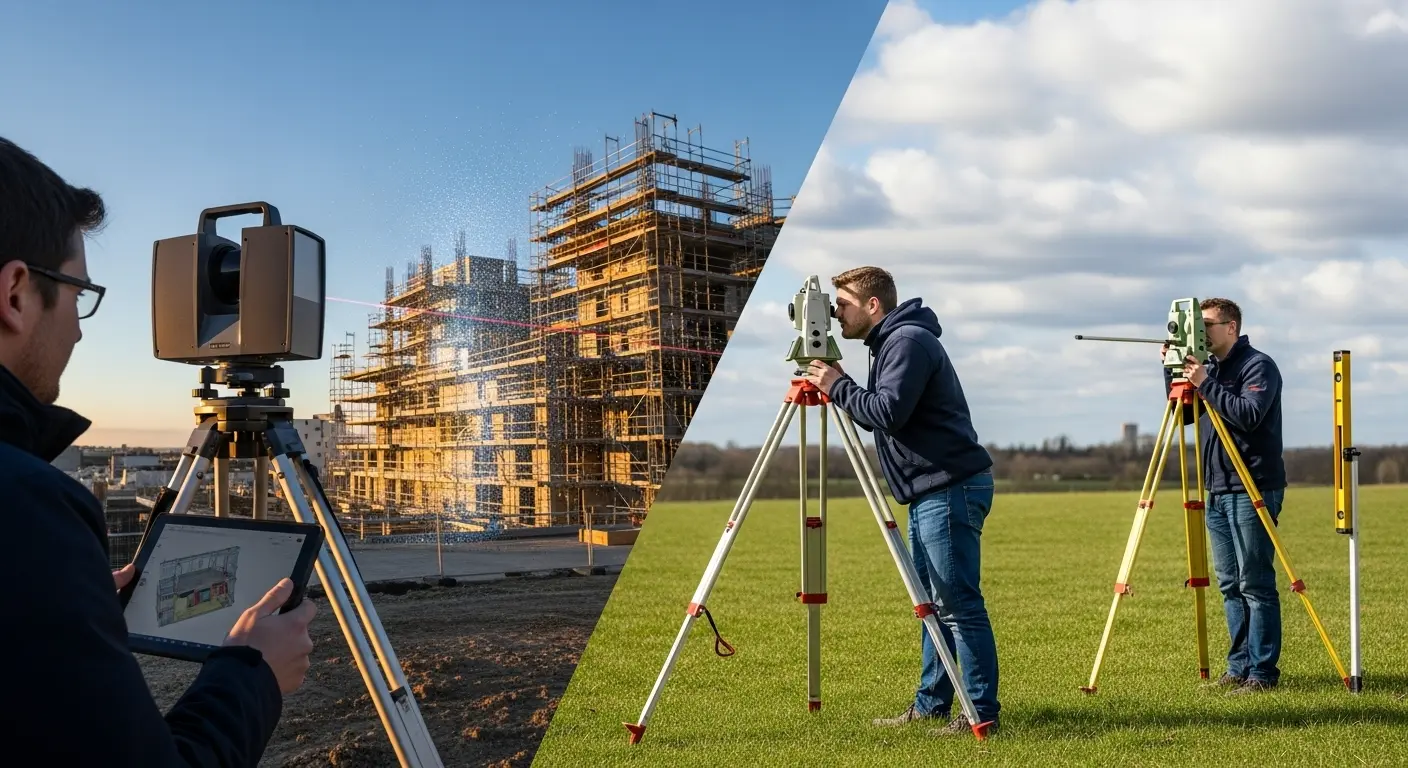
Surveying has been required in construction, architecture, and engineering. Since being laid out or drawing complicated renovations, accurate measurements of a site are important for the success of a project. Traditionally, surveyors were provided with measures of tapes, laser levels, and theodolites to record the dimensions and create 2-D drawings. Although dependable over the decades, these methods were restricted in accuracy, were time-consuming, and did not work with complex structures because of human error and manual data acquisition.
The surveying has been revolutionized by technology today. The laser scanning is used to record the physical world in 3D, accurate detail, and this generates dense point clouds that can be directly converted to BIM models. The new workflow is more accurate, faster, and provides architects, engineers, and contractors with a richer data set.
In this article, it is compared to the traditional surveying and laser-based scanning, and Scan to BIM is proven to provide more accurate and faster turnaround, and provides better information to current projects. We will discuss all the workflows, evaluate advantages and disadvantages, and discuss real-life case studies that can show the practical positive results of laser surveys. Regardless of whether you are renovating, constructing a commercial project, or restoring a heritage building, being aware of these differences will make the difference between a successful and a not-so-successful project.
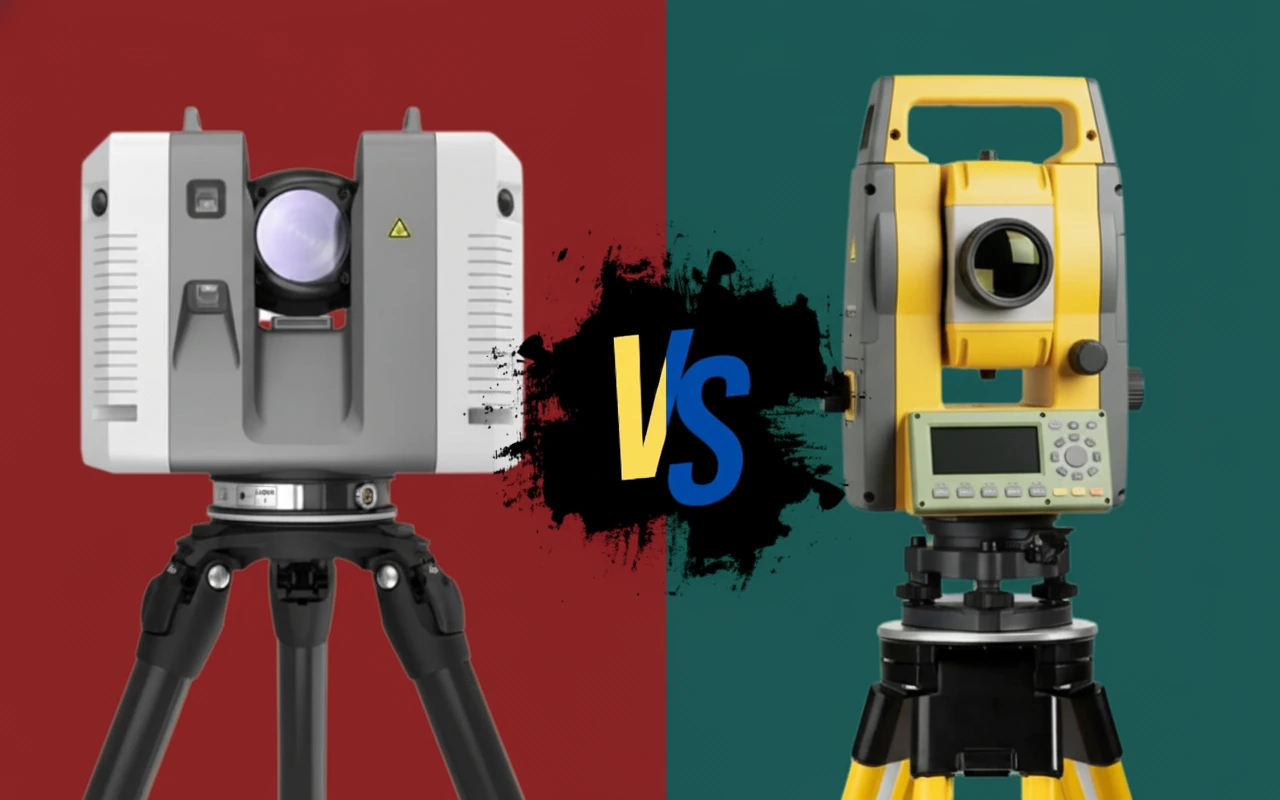
Laser VS Traditional Surveying
What is Traditional Surveying?
Construction and architectural works have been backed by the traditional surveying throughout centuries. The physical world is measured by the surveyors using tape measures, levels, theodolites, total stations, and, in the case of bigger sites, GPS devices may also be used. With that information, they then develop two-dimensional drawings, floor plans, site plans, elevations, and sections upon which the design and construction are based.
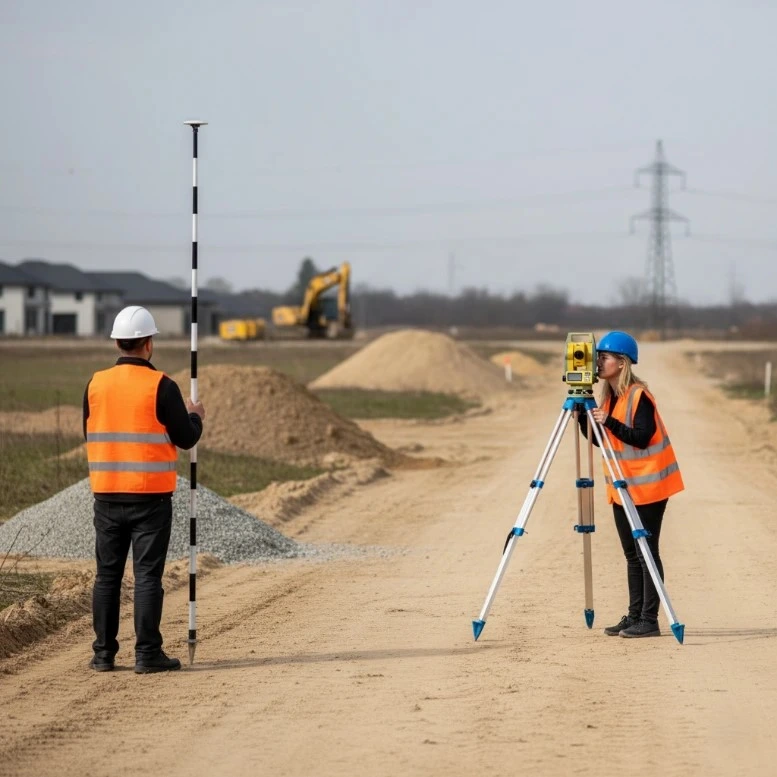
Traditional Surveying
Typical Workflow
- Surveyors visit the site and take measurements of dimensions, elevation, and other areas of significance.
- Data are recorded in field books or digital forms.
- The data is entered into CAD or hand-drawn plans to create 2-D drawings.
- Surveyors can go back to the site to compare data or make sure that the drawings are accurate.
Challenges
Even though it is reliable in small projects, traditional surveying can have various challenges:
- Manual measurement and drafting may require days or weeks, particularly on large or complicated sites.
- Recording manually may result in errors that cause rework or construction errors.
- Curved walls or other irregular or detailed images, such as complex interiors, are very difficult to capture with precision.
- 2D images do not have the same level of spatial intelligence or interactive capabilities as current 3D models, which restricts the level of collaboration and further application.
The greater risk of making mistakes in traditional surveying can result in expensive field corrections, whereas fewer errors with laser surveys enable correct BIM models to reduce the amount of rework.
Common Applications
Traditional surveying can be helpful in:
- Smaller-scale construction projects where the precision requirements are moderate.
- Reforms with easy designs or with limited alterations.
- Perflated identification of sites determines the necessity of a more sophisticated approach.
- Historical projects that are yet to have digital tools.
What are Laser Surveys?
Laser surveys are an important advancement in surveying that integrates extreme accuracy with state-of-the-art digital modeling. The key to this technology is laser scanning or LiDAR (Light Detection and Ranging). Laser scanners record millions of points in the 3D space; unlike the traditional manual techniques used, a dense and high-quality representation of the built environment is created.
Laser scanning is capable of high precision at the millimeter level, which is way beyond the normal manual surveying—SOURCE
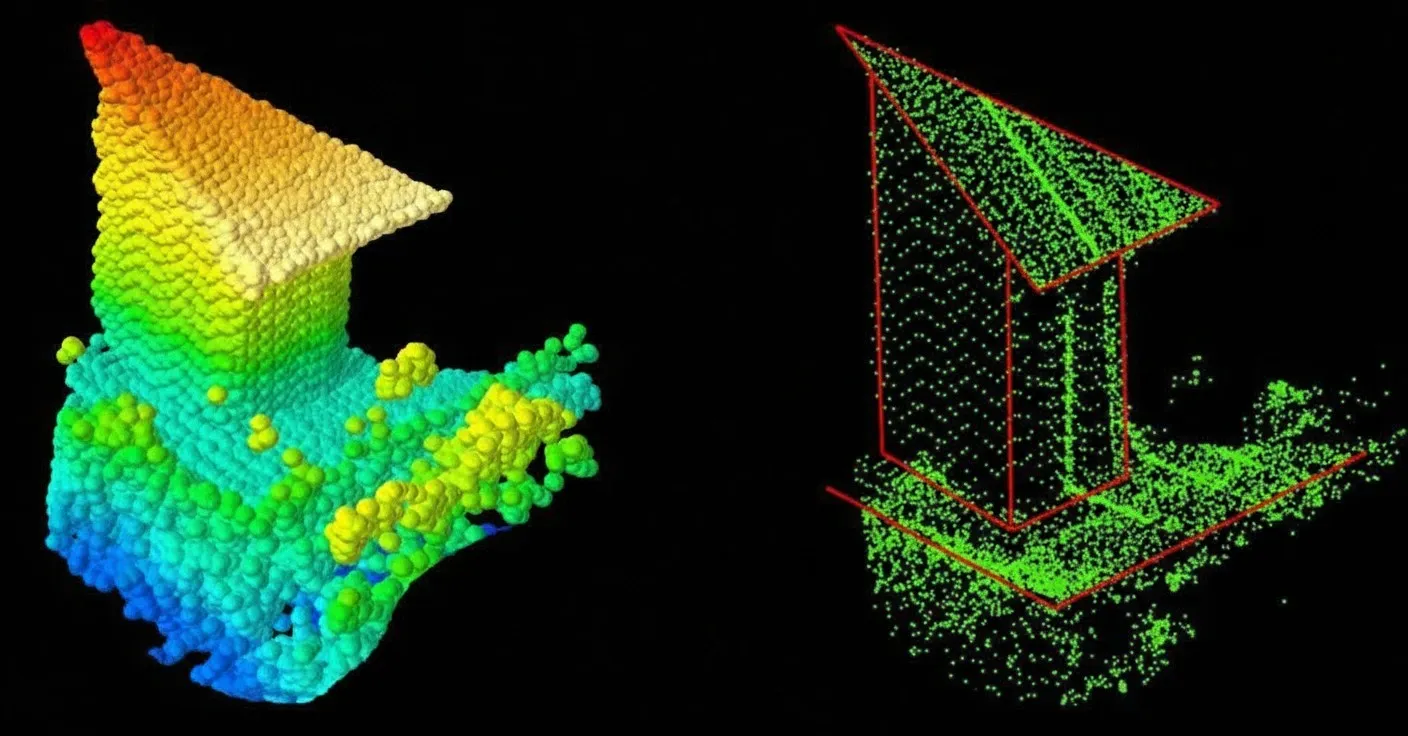
Point Cloud Surveys and 3D Laser Scanning
How Laser Scanning Works
Beams are released into an area by using a laser scanner. Upon hitting surfaces such as walls, floors, ceilings, or furniture, these beams come back to the scanner. The device is used to measure the duration of the rebound of the light. This information is turned into a point cloud, a set of points in three-dimensional space, which displays the actual geometry of the space. Various scans at various positions are commonly used to span the whole location.
Using point clouds to scan to BIM
The actual strength of laser surveys is revealed when point cloud information is incorporated in the BIM software. The point cloud is used in a Scan to BIM workflow as a reference to generate smart 3D models that not only replicate the physical structure but also provide metadata like materials, dimensions, and spatial relationships. This allows architects and engineers to deal with the highly accurate and interactive digital models as opposed to the 2D drawings, which are not moving.
Accuracy and Detail
Laser scanning is capable of high precision at the millimeter level, which is way beyond the normal manual surveying. It includes complicated geometries, irregular shapes, fine details, moldings, columns, curved staircases, and other aspects that are sometimes hard and time-consuming to measure by hand.
Applications
Laser surveys find their use especially in:
- Complex renovations or retrofits whereby the prevailing conditions are documented.
- Preservation of historical buildings or other heritage sites, whereby all details count.
- Commercial projects of large scale where time and accuracy save time and money, respectively.
- Clash detection and design validation, since the models can be simulated and planned in 3D models.
Laser Surveys vs Traditional Surveying
Traditional surveying is adequate for simple projects, but laser surveying is more precise, consistent, and richer in data and is the best choice to support the current construction and complex architectural processes.
| Features | Traditional Surveying | Laser Surveys |
| Precision | The accuracy depends on manual measurements; the error can be in the range of millimeters to centimeters. | Millimeter-level accuracy; measures accurately with very little human error. |
| Complex Geometry | Often has trouble with curves, irregular shapes, and detailed geometry. | Seamlessly handles complex geometries, curved walls, decorative moldings, and irregular layouts. |
| Type of Data | 2D drawings and plans; minimal detail | 3D point clouds with detailed content; they have dimensions, textures, and metadata. |
| Impact on Rework | Greater risk of making mistakes that will result in expensive field corrections. | Fewer errors enable correct BIM models to reduce the amount of rework. |
Efficiency of Laser Surveying – A Major Turnaround
Time has been considered a critical factor in any construction or renovation project. Quick capture and processing of data may save a lot of time and money. In comparing traditional surveying to laser surveys, the level of efficiency is impressive.
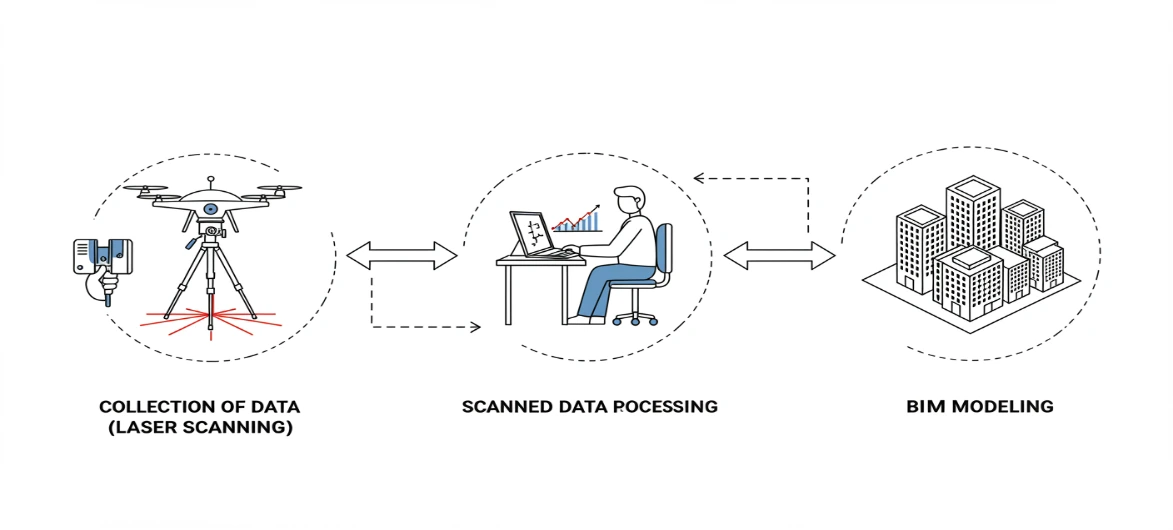
Efficiency of Laser Scanning
Speed of Data Capture
A Laser scanner can record millions of data points in a few hours. It is possible to rapidly scan many scans to scan large areas, interiors, or complicated geometries without visiting the site multiple times. This severely cuts down field time.
In Big or Complex Buildings, laser scanning can offer saving up to half to three-quarters of the time on a survey, which is a great save in terms of cost and time.
Data Processing
Using Scan to BIM, it is possible to directly import point-cloud data into the BIM software. True 3D models are created using automated tools, and the designers and engineers can begin work on the design almost instantly. This simplifies the work process and reduces time wastage due to human error during drafting.
Comparison Examples
In Small Projects, traditional surveying can be effective; laser scanning offers a quicker documentation process and eliminates the possibility of mistakes.
In Big or Complex Buildings, there is the benefit of saving up to half to three-quarters of the time on a survey, which is a great save in terms of cost and time.
Practical Benefits
- Less travel to the site and less expenditure on labor.
- Quickened approvals on projects and design cycles.
- Rapid communication between the architects, engineers, and contractors.
Rich Data: More than 2D Drawings
Laser surveys provide much more information than traditional methods. The Traditional surveying only provides 2D drawings, which consist of plans, sections, and elevations, indicating a flat perspective of a site or a building. Laser scanning, along with Scan to BIM, will provide full 3D data that is applicable at all levels of a project.
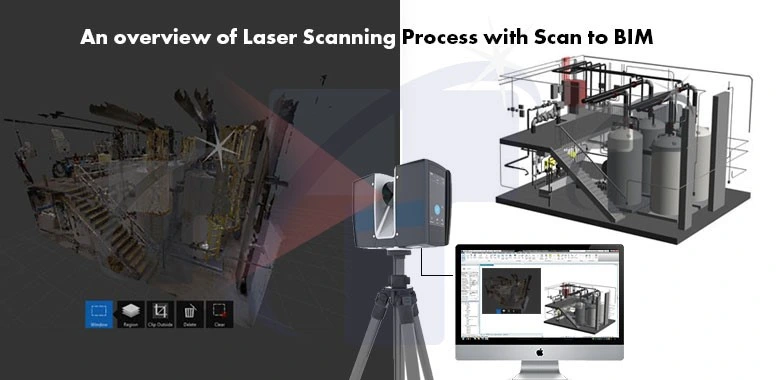
Laser Scanning: More than 2D Drawings
Traditional Survey Data
- Generates immobile 2D representations of the site.
- Unable to express depth, space, and finer shape.
- Dimensions, type of material, and the context have to be manually annotated.
- Not very convenient to simulate, clash detect, or do an iterative design.
Laser Survey Data
- Records thick 3-dimensional point clouds of millions of points to a few millimeters.
- Contains metadata such as the type of material, surface texture, and precise measurements.
- Allows developing the smart 3D BIM models of design, construction, and facilities management.
- Uses innovative systems like clash, virtual walkthrough, and renovation simulation.
Visualization Benefits
Laser survey data enables the architect and engineers to come up with accurate renderings and interactive models that improve communication between them and the clients and stakeholders. It develops an online replica of the site it currently occupies, which may be updated and consulted during the construction and subsequent renovations. The richness of the data promotes the improvement of the planning, the reduction of the design conflict, and the construction process that remains faithful to the actual site.
Practical Example
Suppose you were having to remodel an old house with complex molding and asymmetrical walls. Old-fashioned surveying may overlook minute details or wrong measurements, leading to construction errors. Laser surveys give a 3D model, which is fully detailed and therefore enables one to make proper replication and modify designs without visiting the same site several times.
Cost Considerations
Although Traditional approaches might seem less expensive in the short-term, laser surveys can save dollars throughout the project life cycle due to less error, shorter schedule, and rich and reusable data. In large-scale and complex projects or projects that demand high precision, laser scanning usually pays off its high initial cost.
Traditional Survey Expenses
- A manual survey involves simple equipment -tape measures, levels, and theodolites, which do not need a large investment.
- Fieldwork will take more time, and manual drafting will increase labor hours.
- Due to mistakes or oversights, the construction may require expensive rework.
- Small or simple projects that have moderate accuracy requirements and where the budget constraint is low.
Laser Surveys / Scan to BIM Costs
- Laser scanners, specialized software, and trained operators have a higher initial price.
- There are time savings through the swift data capture and automated 3D modeling, which minimize the hours spent on labor, physical visits to the site, and project delays.
- High precision eliminates expensive mistakes and leads to improved coordination of teams.
- The 3D BIM model that has been developed can be reused on future renovations, facility management, and digital documentation, which is an additional long-term value.
Future Trends in Surveying
Surveying is changing fast. Technology accelerates the working processes, making them more precise and data-heavy. AI and machine learning automate point-cloud processing, identify clashes, and cut manual tasks. AR/VR and digital twins enable professionals to view and experience 3-D models at the site or remotely, as they make better design decisions and enhance management of facilities.
Surveying is efficient because drones and robotic scanners carry out remote and automated surveying of large or hazardous sites. The connection of these tools to the IoT and smart building systems provides real-time monitoring, a more refined coordination, and predictive maintenance. Sustainable construction is also benefiting from these developments as it reduces errors, material waste, and energy consumption.
Surveying will be digital, automated, and connected. The move to laser scanning and Scan-to-BIM today places the projects in a position to have faster, smarter, and more efficient workflows.
Conclusion
The decision to use the Traditional surveying method or the laser-based Scan to BIM may significantly affect the outcome of the construction and renovation projects. Simple and small tasks that are low-scaled need the use of traditional methods due to their lower initial cost and familiar workflow. Nevertheless, they are often time-consuming, erroneous, and offer minimal data.
Laser surveys, however, provide millimeter accuracy, are fast, and provide detailed 3D data that directly feeds into the BIM modeling. These advantages minimize re-work, accelerate schedules, and facilitate enhanced decision-making. This technology benefits particularly projects that have intricate geometries, heritage structures, or massive business premises. With more construction and architectural processes going digital, laser scanning and Scan to BIM are not only an upgrade in one of the technologies, but also a better strategic step towards higher efficiency, accuracy, and long-term value.
By adopting these sophisticated approaches, professionals can make sure that their projects are carried out with accuracy, speed, and exhaustive information that can sustain all processes undertaken in it, including designing and managing the facility.
Frequently Asked Questions (FAQ’s)
Are laser surveys more costly than the conventional approaches?
Yes, laser surveys have increased the initial expenses of equipment, software, and trained personnel. Nevertheless, they save time, minimize errors, and give reusable 3D models, which are cost-saving overall and give higher ROI to complex projects.
Can the laser surveys capture complicated or irregular structures accurately?
Absolutely. Laser scanning has the capability of scanning complex geometries, curved walls, ornamental moldings, and irregular layouts with precision of millimeters, which is usually not so easy with traditional surveying.
What is the efficiency Scan to BIM brings to the project?
Scan to BIM transforms the point cloud data into intelligent 3D systems that is used to carry out design cycles easily, detect clashes, and provide more efficient coordination among the architect, engineers, and contractors. It minimizes the rework and accelerates the delivery of the project.
In what situations do I prefer traditional surveying to the use of laser surveys?
Traditional surveying is appropriate when projects are small, simple, and moderate in quality and have low budget. Laser surveys are more useful in accuracy, speed and richness of data; particularly when it comes to complex, large-scale and high-precision projects.
Ready for millimeter-level accuracy and a faster project turnaround? Contact us to upgrade your projects with Scan to BIM!
Expert Consultation

