Find out how operations outside of construction are being transformed by BIM for facility management. Find out about digital twins, sustainability, increased efficiency, and cost savings.
Using BIM to Manage What’s Constructed
Building Information Modeling (BIM) has already completely changed the way projects are planned and completed in the construction industry. However, it doesn’t end when the last brick is put in place, or the last inspection is approved. Construction professionals have now started realizing that BIM’s true worth is in its ability to be used for long-term facility operation and maintenance and not just construction.
Digital models are only one aspect of BIM for facility management (FM). It’s about changing how buildings are run, cared for, and maximized over many years of use. Let’s examine the tangible, long-lasting effects that BIM has on facility managers and owners.
Up to 80% of a building’s lifecycle cost is frequently attributed to maintenance, making it the costliest component of facility management. —SOURCE
From Project Finalization to Long-Term Operations
Owners used to receive a stack of drawings, manuals, and binders full of data after a project was completed. Frequently, this data was dispersed, lacking, or challenging to locate when needed. The outcome? Facility managers devoted a lot of time to tracking down information regarding warranties, maintenance plans, and systems.
This dynamic is entirely altered by BIM. A centralized digital database with precise details about each system, component, and piece of equipment is made available by a BIM-enabled facility handover.
The Power of Digital Twins
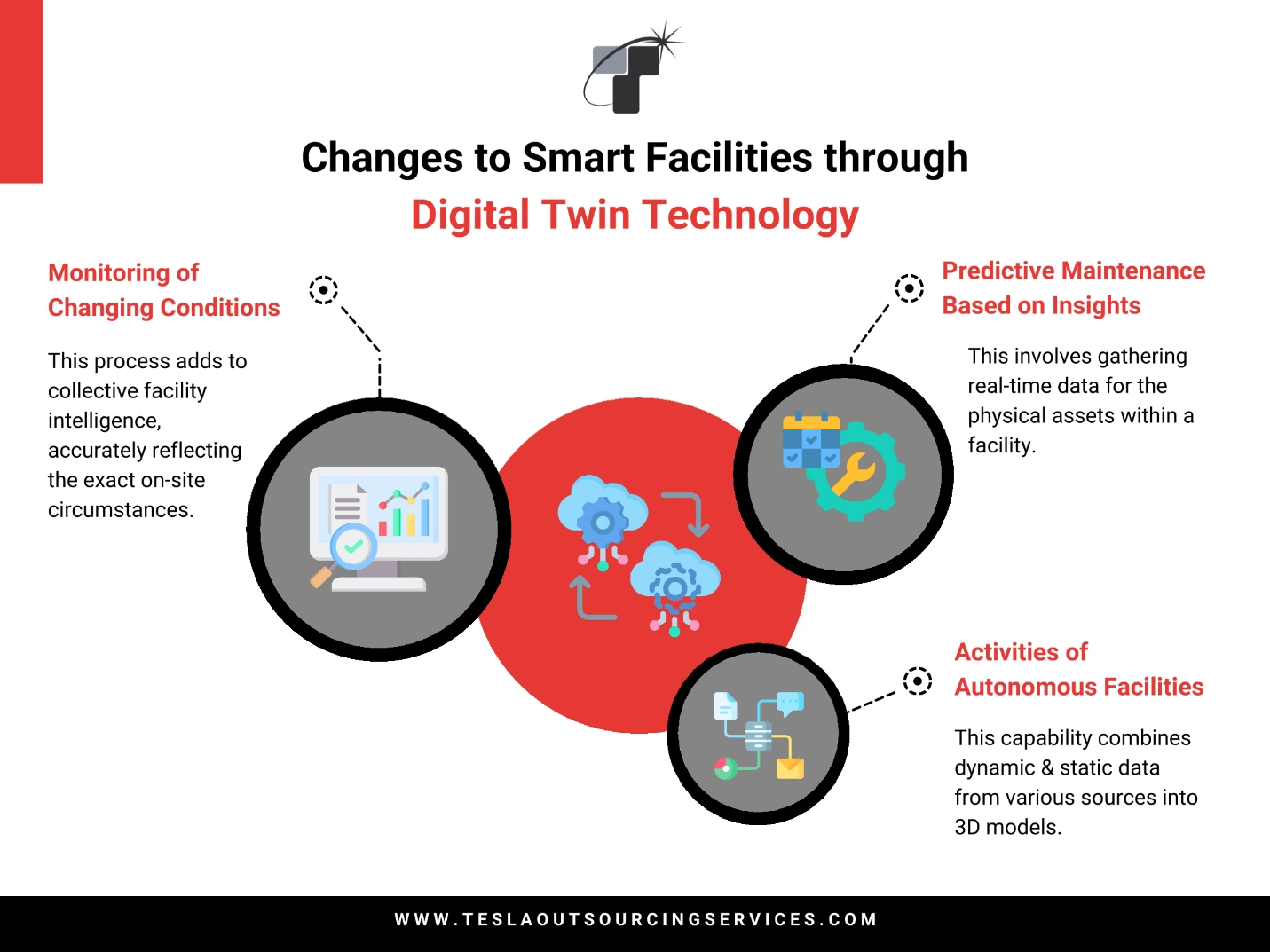
The emergence of the digital twin is among the most fascinating developments associated with BIM in facility management. A live, real-time virtual model of an actual structure is called a digital twin. It provides prompt and real time insights on building performance through linking sensors, IoT devices, and analytics tools with BIM data.
A live, real-time virtual model of an actual structure is called a digital twin. It provides prompt and real time insights on building performance through linking sensors, IoT devices, and analytics tools amalgamated with BIM data. —SOURCE
For instance, a digital twin can monitor HVAC systems live, track energy consumption and forecast when equipment might go obsolete. Because of this foresight, facility managers can reduce downtime and save money by employing proactive maintenance strategies in place of reactive ones.
Cost Savings through Smart Maintenance
Up to 80% of a building’s lifecycle cost is frequently attributed to maintenance, making it the costliest component of facility management. By giving comprehensive details about every system and component, BIM makes maintenance more intelligent.
Here’s how it works:
- Preventive Maintenance: Rather than using general schedules, managers can base maintenance scheduling on actual usage data.
- Faster Repairs: BIM reduces repair time by making it simple to find equipment and comprehend its connections.
- Inventory management: Managers can prevent needless purchases by using accurate data on parts and materials.
The result is prolonged equipment lifespans and measurable cost savings, thereby raising the facility’s total return on investment.
Energy Efficiency plus Sustainability
These days, sustainable development is more than just a trendy term—it’s a requirement. There is never-ending pressure on facility owners to adhere to green building standards and cut down on their carbon footprints. This is made achievable by BIM, which permits energy analysis and optimization over the span of a building’s lifecycle.
BIM enables managers to:
- Monitor energy usage in real time.
- Identify areas for efficiency, model HVAC and lighting operations.
- Use accurate info to plan modifications and retrofits.
Other than curtailing operating costs, these features help achieve certifications like LEED or BREEAM, that strengthen the facility’s credibility and market value.
BIM helps organizations achieve certifications like LEED or BREEAM that strengthen the facility’s credibility and market value.
Enhancing Safety and Compliance
Every manager places a high premium on maintaining a facility’s safety and regulatory compliance. This is made simpler by BIM, which centralizes all safety-related data. The BIM model offers access to routes for evacuation, fire safety designs and system inspection records.
Additionally, comprehensive, accurate, and visually appealing documentation allows for compliance audits. BIM helps companies to avoid penalties and legal problems by eliminating the threat of missed inspections or bypassed regulations.
Changes to Smart Facilities through Digital Twin Technology
Improved Collaboration and Communication
Managers, service technicians, contractors, along with customers are frequently involved in managing a facility. Ineffective communication between these groups could contribute to costly oversights and inefficient operations. By acting as a universal point of truth, BIM fills in those voids.
Everyone uses the same current setup rather than several spreadsheets or outdated documents. BIM assures that everyone has access to the same information, fostering cooperation and transparency whether a manager handles renovations or a contractor fixes a broken cooler.
Future-Proofing Facilities
Given the standards of tomorrow’s world, the structures we design today must evolve. Adaptability is crucial when evolving to changed laws, user habits, or innovations in technology. Facilities managers may secure the future of their spaces with the help of BIM’s robust arsenal of resources.
With BIM data, managers can:
- Use a precise impact analysis when planning renovations or additions.
- Examine hypothetical situations for tweaks to the design.
- Keep informed of any new compliance requirements.
This flexibility makes sure that buildings will continue to be affordable, efficient, and practical for a very long time.
BIM for Facility Management
Humanizing the Benefits of BIM in FM
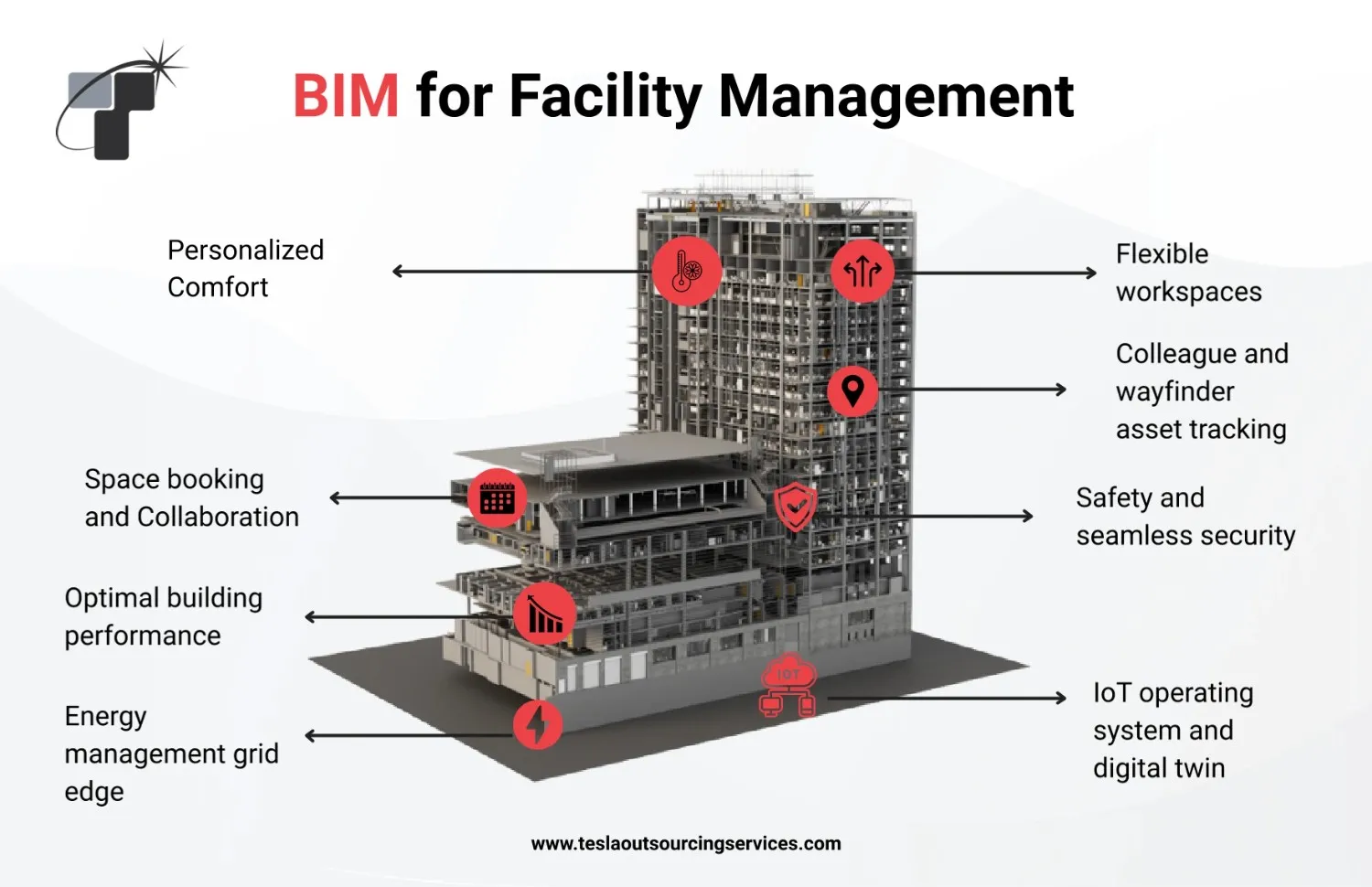
Even though BIM is constantly commended for its technological prowess, its proves that its true impact is human. Building managers don’t have to waste time going through outdated files or binders any longer as now with BIM by their side, they can access accurate and current information instantly and as a result, BIM helps foster an environment where staff members can be more comfortable, focused, and productive by intelligently adjusting the lighting, temperature, and air quality.
Hence, BIM goes over and beyond its merits of cost-cutting and efficient operation. It elevates standard of workplace safety, health, and sustainability, thus benefiting all those who use the building daily.
FAQs
What is the primary role of digital twins in management of the facility?
Digital twins connect BIM models with real-time info, enabling forecasted maintenance, energy monitoring as well as optimized performance.
Can BIM cut down operational costs in facility management?
Absolutely. Through improved maintenance scheduling, curtailed repair time, and curbed energy waste, BIM allows for significantly lower long-term operational expenses.
Is BIM useful for smaller facilities or is it only good for only large-scale projects?
BIM is flexible and scalable according to size and requirements of the project(s) and can thus benefit facilities of all sizes. Even small buildings gain value from centralized data and improved efficiency.
How does BIM do its part towards to sustainability goals?
BIM supports energy simulations, real-time monitoring, and planning for upgrades that reduce environmental impact, thereby supporting green certifications.
Ready to future-proof your facility and slash lifecycle costs? Contact us to transform your operations with a strategic BIM for FM solution!
Expert Consultation

