A BIM Manager does much more than manage a team of modelers who produce models, plans, schedules and other information. The BIM Manager creates the management system for the information that is produced by the outsourced BIM team, which enables the information to be coordinated, traceable and can be used by the client.
Why the BIM Manager Matters in Outsourcing
Even though others can produce work faster, there is a risk of losing control due to the separation of the client from the design team, and also of the design team from the people producing the information. The Information produced can have small amounts of uncertainty around the scope, the information requirements, who approves things, how files will be transferred etc., with the potential for rework further down the line if not addressed.
While supervisors would also oversee such work, the role of the BIM Manager goes far beyond the simple monitoring of subtasks. As the point of contact for all information related to a project, BIM Managers take on tasks related to information management, the technical governance of the BIM process, as well as the tasks of a co-ordinator, quality manager and communications expert. ISO 19650-aligned appointments therefore should define the scope of work of the BIM Manager (under whatever title he or she works) rather than simply allocating him or her under a title.
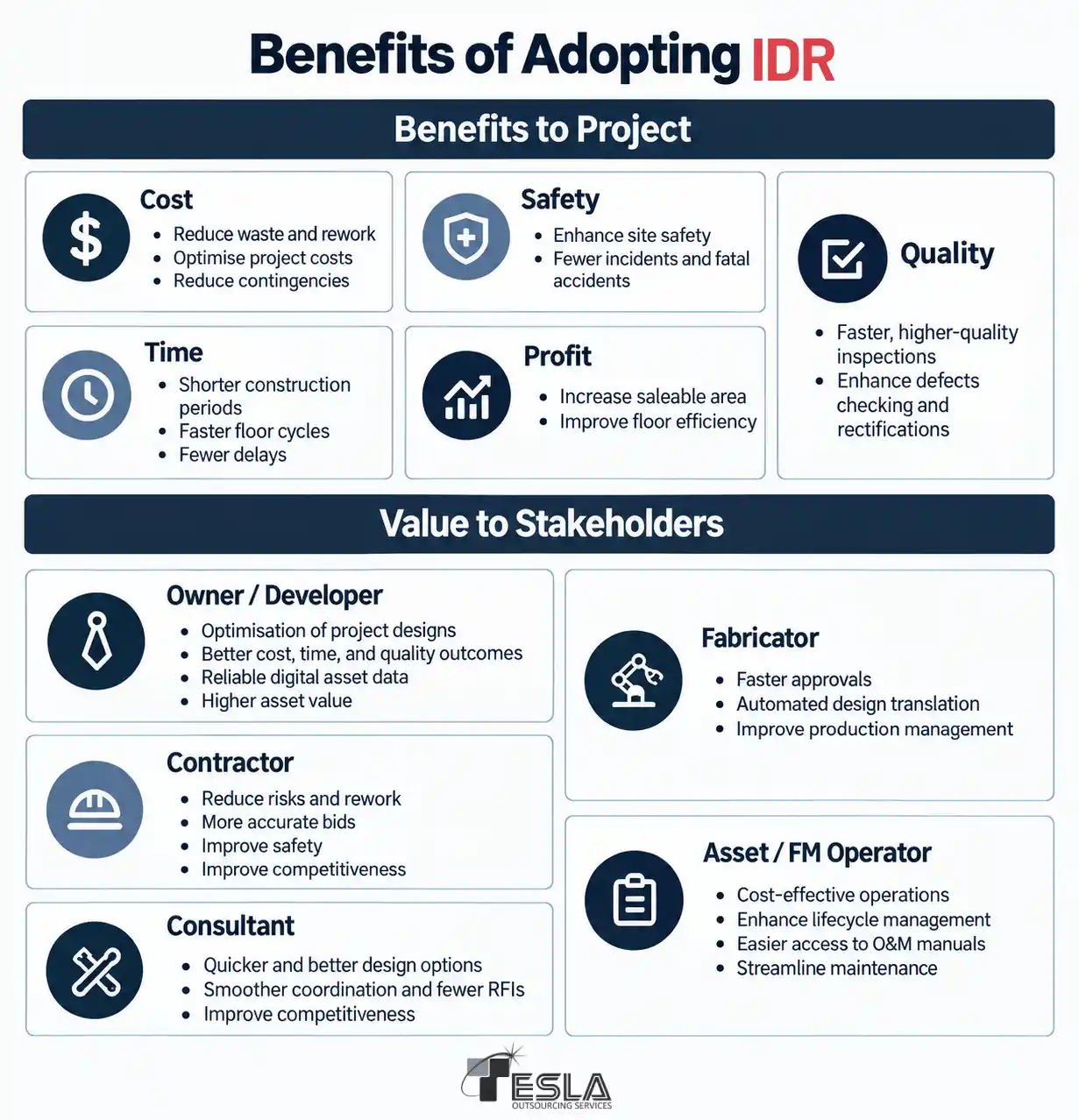
Industry benchmarks show unplanned rework can account for 10-15% of total project costs, which on a large-scale job can add up to millions of dollars in lost profit. This is exactly the kind of cost the BIM Manager’s review gates and acceptance criteria are designed to prevent-SOURCE
Core Responsibilities of the BIM Manager
Translating Client Requirements into an Executable Plan
The BIM Manager who mobilizes an outsourced BIM team starts to translate the information requirements of the client into a workable action plan. He reviews:
- The appointment documents
- The BIM execution plan (BEP)
- The information requirements
- The model production and the model data
- The required level of information (LOD)
- The responsibility matrix
- The naming conventions
- The coordinates (under which UDC the project is started)
- The software and the versions that will be used
- The required exchange formats and the corresponding delivery dates.
The identification of any missing or unknown requirements, as well as any conflicting requirements and their resolution, is critical in the mobilization phase of a project. These are simple but critical questions: What do you need to model? Who is responsible for what elements? What additional information is required and in what format? What are the contractual documents? Who signs off on what information? What constitutes formal acceptance of information?
Establishing the BIM Delivery Framework
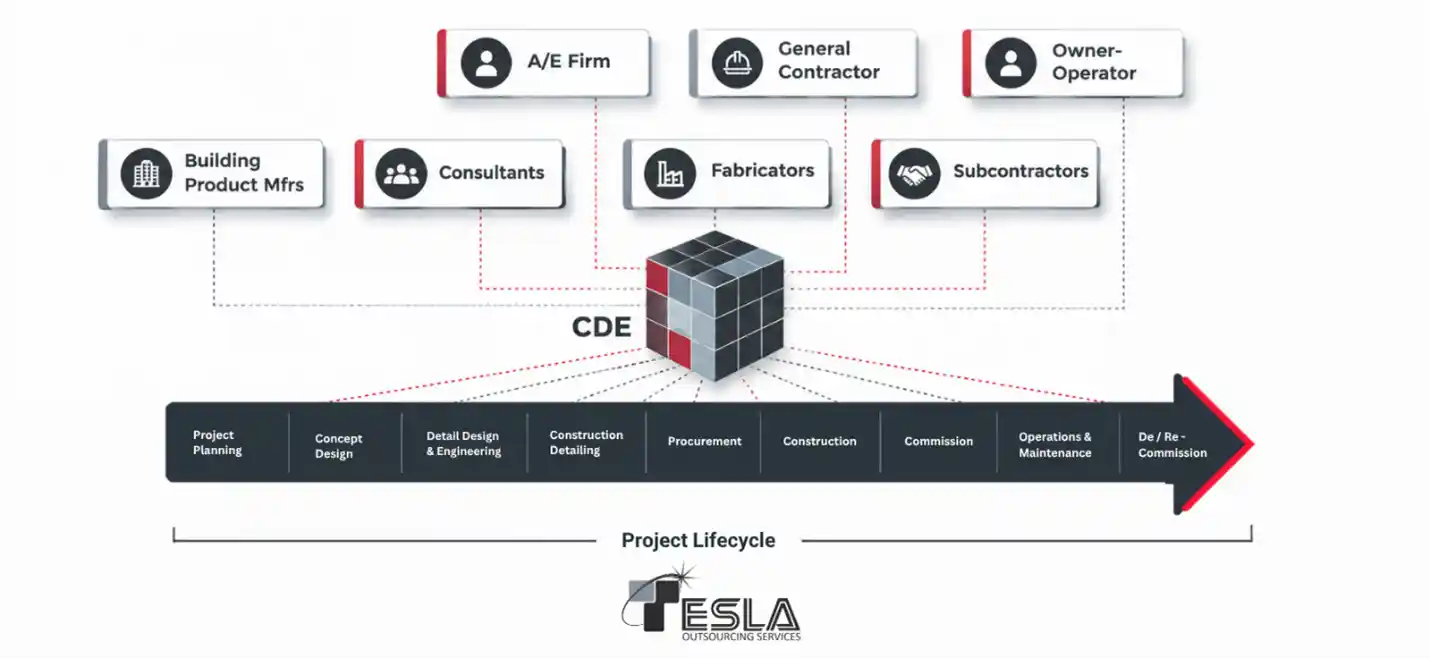
BIM Managers establish the working framework to meet the client’s requirements set out within the scope. The framework is comprised of the following elements: project templates, shared parameters, classification systems, model breakdown, worksets, file federation, clash matrices, issue workflow, and Common Data Environment (CDE) process.
In addition, the BIM Manager must ensure that the Master Information Delivery Plan (MIDP) is aligned to the Task Information Delivery Plans (TIDPs), Model Submissions, Review Periods and Decision Dates of the Client.
Managing Communication and Interfaces
Throughout the life of an outsourced service, the BIM Manager acts as the primary technical interface between client-side teams and the outsourced service providers. Decisions are logged, input and assumptions are clarified, blockers are escalated and changes to the scope of work are confirmed. Meetings focus on decisions, ownership, timelines, and impact on delivering the project information required by the client.
In a more complex project with several outsourcing partners involved, this responsibility is even more critical. The BIM Manager must establish the correct way in which the architectural, structural, MEP, specialist, fabrication and construction models have been combined, and who has decided on any interface between disciplines.
Controlling Model Quality and Compliance
Quality assurance of information delivered within the model is an obvious responsibility of the BIM Manager; however, there is more to quality assurance than opening a file. Establishing repeatable review gates and clearly defined acceptance criteria before the information is distributed to others is a critical function of the BIM Manager.
- Must check for Model health: warnings, file size, links, worksets, unused content, corruption risk, and performance.
- Geometric quality: coordinates, levels, grids, interfaces, clearances, constructability, and discipline coordination.
- Information quality: parameter completion, classification, asset data, naming, status, and revision accuracy.
- Documentation quality: views, sheets, annotations, schedules, references, and consistency with approved design information.
- Delivery compliance: agreed file formats, naming, suitability or status codes, metadata, approvals, and CDE workflow.
Automated checks can identify many problems quickly and precisely. In addition, the BIM Manager must be able to distinguish between serious project problems and mere ‘clickbait’ generated by the software. Evidence of review of each submitted model part, including the date and by whom it was reviewed, the outcome of that review and how the submitted model part was changed as a result, must be recorded.
On the Malaysian Police Headquarters project, using BIM to catch conflicts before construction reduced rework significantly and cut material costs by 15%, a real-world example of what disciplined coordination and issue tracking can deliver-SOURCE
Leading Coordination and Issue Resolution
. The process for creating the federated model, including the rules for clash detection, clash tolerances, the frequency of testing, the classification and prioritisation of identified issues, and the criteria for their closure, shall be defined. Finding a clash is not an end in itself; it needs to be converted into actions that are accountable.
BIM managers can track issues throughout the project and highlight trends including frequency of clashes, late inputs to the model, unresolved design issues and differences found between the model and drawings. This type of information can allow the client to intervene early in the project development to prevent potential problems in procurement or construction.
Managing Change, Security, and CDE Governance
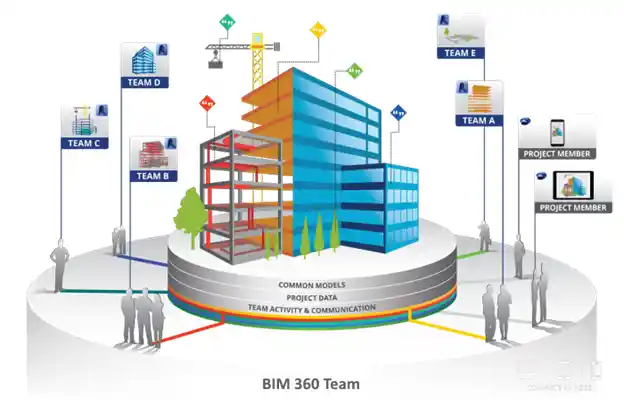
The work of the outsourced teams must be conducted using information that has been developed from controlled and up-to-date information. The outsourced teams must work with information that has progressed through shared, published and archived information and utilize a full revision history. Access rights, data segregation, the approval process and secure exchange of information must all be managed when information is being transferred between different countries and between different companies.
Although changes to the Client’s requirements occur from time to time, the BIM Manager will assess their impact on the models, resources, Programme, etc. of previous deliverables, and ensure that such changes are recorded and approved by the relevant parties prior to the production team proceeding with the updated work.
Reporting Progress and Preparing Handover
The BIM Manager’s reporting to the client should be simple so that the client does not have to manage production but has enough visibility of what is going on to make informed decisions. They should also report the quality of information delivered as well as any issues encountered during the coordination process.
Verify that final models, drawings, schedules, asset information, open-format exchanges and related records have been produced to the client’s required standards and can be tracked back to approved design information, recorded as-built information and used for operations.
A Clear Responsibility Split
| Party | Primary responsibility | Must not be assumed |
| Client / appointing party | Defines objectives, information requirements, approvals, contractual priorities, and timely source information. | That the outsourcing partner can infer business needs or approve its own deliverables. |
| BIM Manager | Translates requirements, governs workflows, coordinates parties, controls QA, reports risk, and verifies delivery readiness. | That the title automatically includes design authority, commercial authority, or approval rights. |
| Outsourced production team | Produces and self-checks models, drawings, schedules, and data in accordance with approved requirements. | That production ownership transfers responsibility for late client decisions or incomplete inputs. |
| Design leads/specialists | Own design decisions, calculations, technical compliance, and discipline sign-off where appointed. | That the BIM Manager becomes the designer merely by coordinating the model. |
What Clients Should Confirm Before Appointment
- That the BIM Manager has the authority to reject information and to escalate any risk to a problem that cannot be solved.
- The necessary software, with corresponding versions, for exchange of models and other documents as well as access to the Client Data Environment (CDE) including hosting of information and data security measures.
- Who is responsible for providing deliverables, to whom, and by when; what review meetings will take place and when and against what criteria items shall be accepted; and, most importantly, how many rounds of revision shall be permitted.
- Who makes design decisions, who creates models, who resolves clashes, who checks off on what, who needs to approve things off and who are the various specialists involved.
- Reporting frequency; agreed KPIs; agreed change-control process; client requirements at handover.
Common Misunderstandings to Avoid
BIM Manager responsibility for errors.
The BIM Manager manages the process of BIM delivery and verifies information for compliance against the client’s requirements. The designers and appointed authors of the building information model, however, are responsible for errors within their specific models and technical decisions.
Clash-free models
Construction-ready models. Models that have no detectable clashes against other models still can contain inadequate or missing information, inadequate access to the information, incorrect sequence of information delivery and errors in design intent.
Client Need
The client does not need to get involved as the production has been outsourced. The BIM Manager needs the client to make timely decisions and to provide information required by the BIM Manager for production of deliverables.
According to the McKinsey Global Institute, global construction labor productivity grew just 1% a year over two decades. McKinsey points to poor design processes and inadequate information management as key factors, the same territory the BIM Manager is responsible for governing-SOURCE
Conclusion
The BIM Manager is the link between the client’s requirements and the rest of the project. The main function of the BIM Manager is to set up BIM parameters, coordinate tasks, verify information quality, manage interfaces between stakeholders, and keep the client updated on progress and potential risks.
For clients, it is essential that, from the start of the appointment with the outsourcing production service, clear authority is given, all required tasks are defined, all required deliverables are detailed, the acceptance criteria for each deliverable are clearly defined and all communication routes are detailed. This way, the client knows what to expect from the BIM Manager and the production service and the BIM Manager and production service know what is expected of them. As a result, the production service functions as an extended arm of the client’s project team.
Getting this right starts well before the BIM Manager is even appointed. It begins with how you approach outsourcing in the first place. If you’re exploring what that process should look like, start with our guide to choosing the right outsourcing partner.