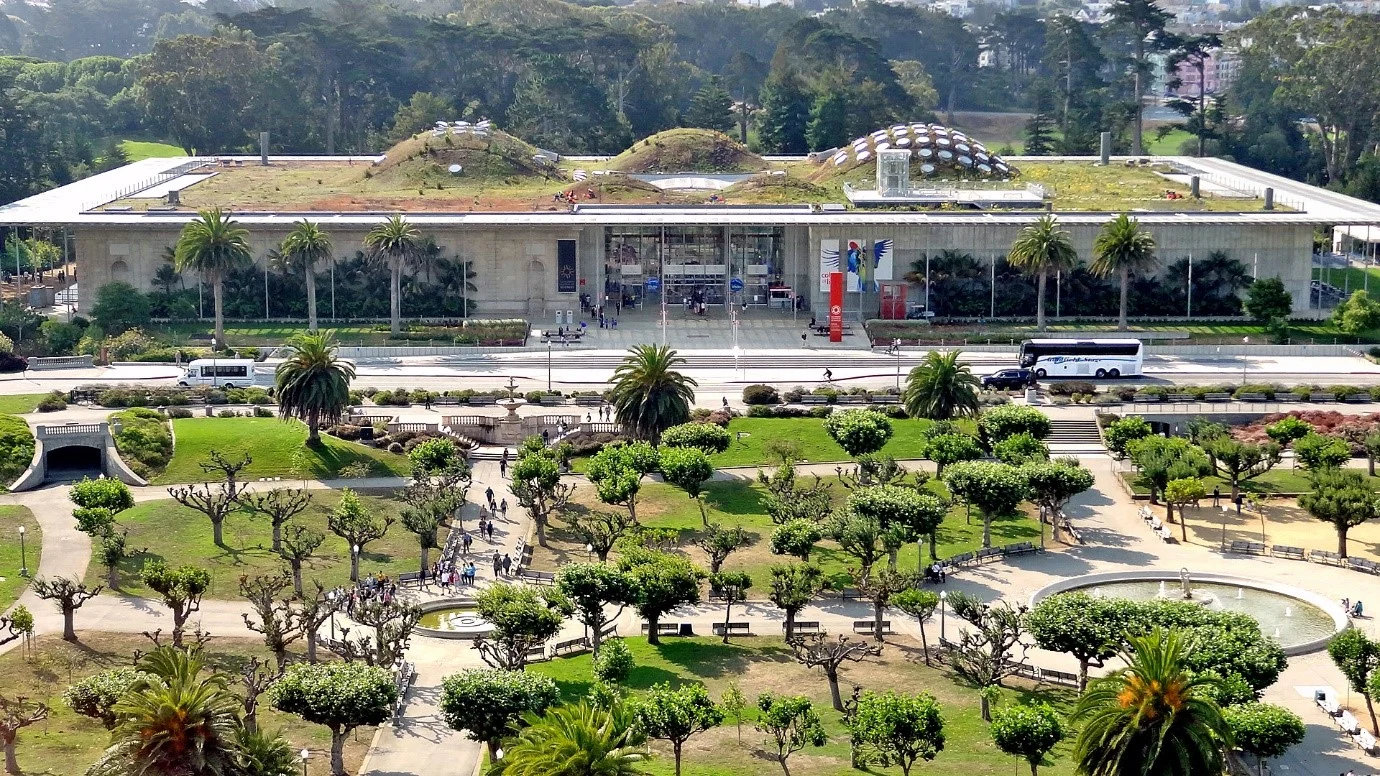
The California Academy of Sciences in San Francisco is one of the few projects in sustainable design that truly shines. Nestled in a quiet corner of Golden Gate Park, this museum celebrates not only science but also nature. It is an example of sustainable architecture in the flesh, however, living and breathing. At the core of its success? The birth of a powerful partnership between Building Information Modelling (BIM) and LEED certification.
That’s not just pretty eco houses, but using digital technology to make smarter and greener decisions, with potential applications from how a building breathes to how that building uses every drop of water. Let’s dive right into the how’s of this awesome project when it comes to that PLATINUM LEED status – and how BIM enabled it.
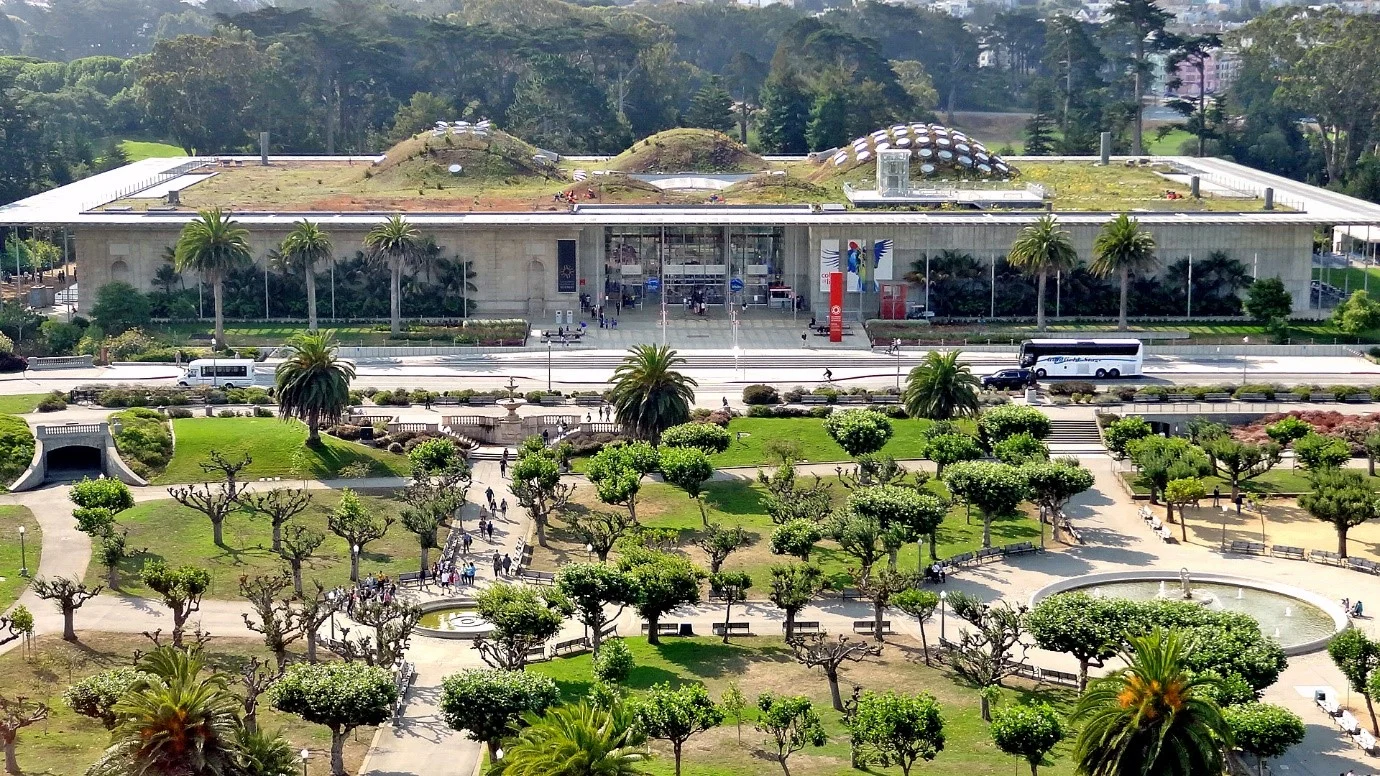
By Dennis G. Jarvis – California-06239 – California Academy of Sciences, CC BY-SA 2.0
Source :https://commons.wikimedia.org/w/index.php?curid=66982739
Why BIM and LEED Matter in Sustainable Architecture
Before we get into the nuts and bolts of this amazing journey, let’s quickly break down what we’re talking about.
What is BIM?
BIM is an advanced intelligent process with a 3D digital representation encountered in AEC sector activities such as construction and product design. It provides not only data on how the building will look, but also on its performance, the assembly and systems integration, and potential conflicts. This way, it can be viewed as the digital twin high on livingness impinged by the building. BIM enables architects, engineers, and contractors to work together. It improves coordination, reduces wastage, better analysis and monitoring of energy performance, water use, and material impact, all of which are critical for green building design.
What is LEED?
LEED (Leadership in Energy and Environmental Design) is a globally recognized green building certification system, developed by the U.S. Green Building Council (USGBC). It awards points across categories like:
- Energy and Atmosphere
- Water Efficiency
- Sustainable Sites
- Materials and Resources
- Indoor Environmental Quality
- Innovation in Design
The total score determines the certification level: Certified, Silver, Gold, or Platinum. The California Academy of Sciences hit the highest bar—Platinum.
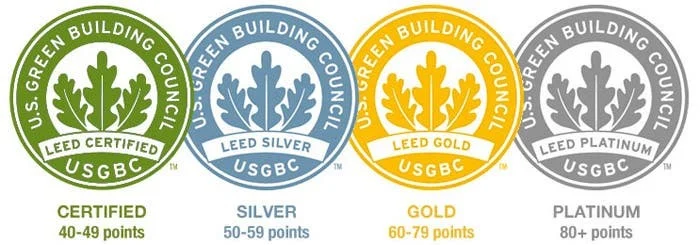
LEED Certification System ©
Source :https://gba.org/resources/frameworks-and-certifications/leed-rating-system/
Build greener, healthier spaces—start your LEED certification journey today!
What is LEED?Meet the California Academy of Sciences
Designed by world-renowned architect Renzo Piano, the Academy was rebuilt in 2008 with a bold vision: to house an aquarium, a planetarium, a natural history museum, and a rainforest—all under one incredibly green roof.
Some of its most impressive sustainable features include:
- A 2.5-acre living roof covered in native plants
- 60,000+ photovoltaic cells (solar panels)
- A massive glass canopy for maximum daylighting
- Recycled steel and low-VOC materials
- Rainwater collection and greywater reuse systems
- Intelligent natural ventilation strategies
The challenge? Coordinating all these complex systems in a way that works seamlessly and efficiently.
Designing for Nature: BIM-Driven Sustainability Strategies
From the start, the project team used BIM not just as a modelling tool, but as a platform to achieve sustainability goals.
Natural Ventilation and Daylight Optimization
The Academy’s showcased use of natural ventilation in the automated skylights and louvres that open and close depending on internal CO₂ levels, temperature, and expanding external conditions.
The team utilized their BIM to simulate airflow and daylighting relative to the skylights and the ajar/window configurations, to optimize the local for the skylights and automated louvers and provided a method for the building to stay cool without utilizing any mechanical cooling and serve to minimize any energy usage in a city that would rarely surpass 75 degrees, like driving around in San Francisco.
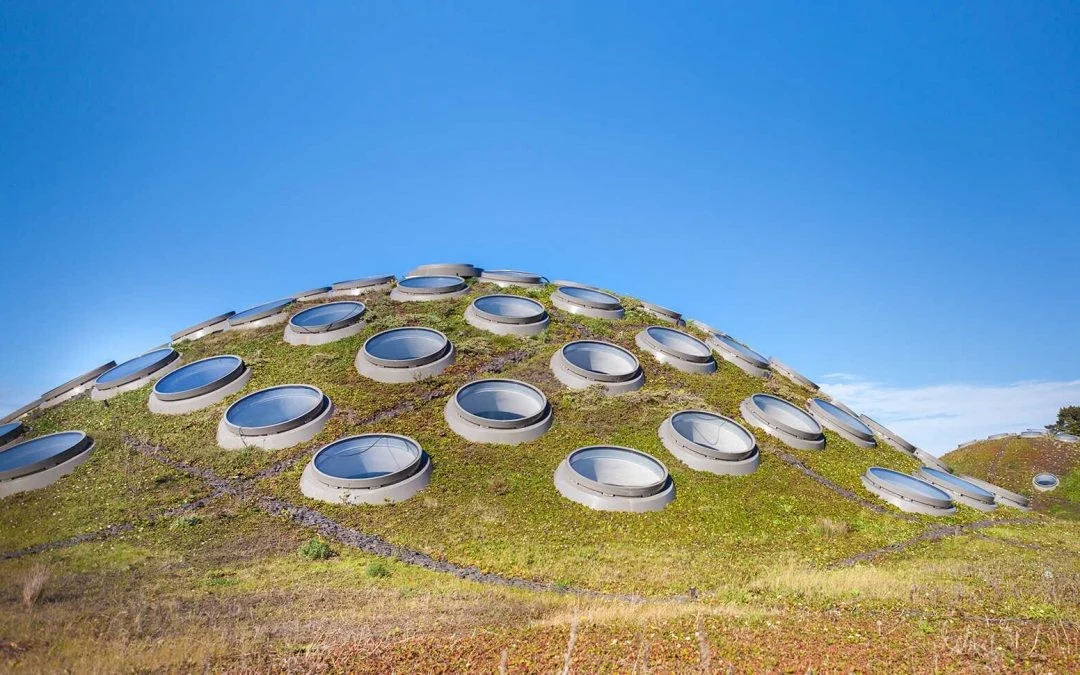
Automated Skylights ©
Source : https://www.calacademy.org/exhibits/living-roof
Both of those illustrations added points to the LEED criteria in Energy Optimization and Indoor Environmental Quality.
Thermal Performance Modelling
BIM helped the design team model thermal performance throughout the building. This meant analyzing insulation, solar heat gain, and thermal mass based on material choices and building orientation.
By digitally simulating energy flows, they made data-driven decisions that reduced reliance on artificial heating and cooling, helping them gain more LEED credits in Energy & Atmosphere.
Smarter Water Systems
The Academy collects rainwater and treats it on-site for irrigation and reuse. Inside, ultra-low flow fixtures drastically cut down on potable water use.
Through BIM, the plumbing and civil engineering teams were able to:
- Coordinate pipe routing to avoid costly clashes
- Visualize water reuse systems
- Ensure efficient design of rainwater harvesting infrastructure
Every drop saved helped score critical LEED points in the Water Efficiency category.
Material Selection & Modeling
The building uses over 90% recycled steel and other eco-friendly materials. With BIM, material specifications and quantities could be modeled and tracked accurately. This level of detail supported documentation for Materials and Resources LEED credits—especially when sourcing locally and using low-emitting finishes.
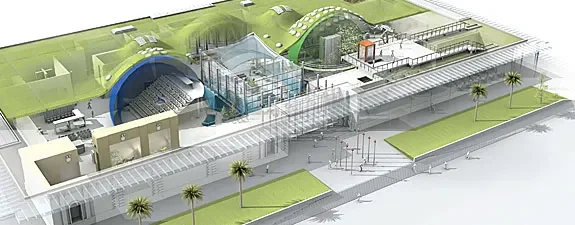
Sustainable Architecture at California Institute of Sciences © | Infographic by Bryan Christie Design
Coordinating MEP Systems: BIM in Action
Let’s face it, green buildings are complex. You’ve got mechanical, electrical, plumbing, and energy systems that all need to work in harmony.
At the Academy, BIM allowed MEP engineers to:
- Integrate their systems into a central shared model
- Run clash detection to catch problems before construction
- Adjust ductwork and piping in real-time with the architect’s updates
- Simulate HVAC performance for passive vs active systems
For example, the building uses displacement ventilation and radiant floor heating, both of which rely on precise planning. BIM helped the team balance performance with spatial limitations.
Explore how BIM clash detection software streamlines construction—read the full blog for insights.
Read MoreReal-Time Feedback Loop between Design and Analysis
A major advantage of using BIM in this project was the ability to connect design with analysis. The model wasn’t static—it evolved continuously based on feedback from simulations and engineering reviews.
The design team used BIM-compatible tools like:
- Green Building Studio for energy modeling
- Ecotect for daylight analysis
- Navisworks for clash detection and 4D sequencing
This approach allowed the team to validate their sustainability strategies early, reduce errors, and increase LEED performance predictability.
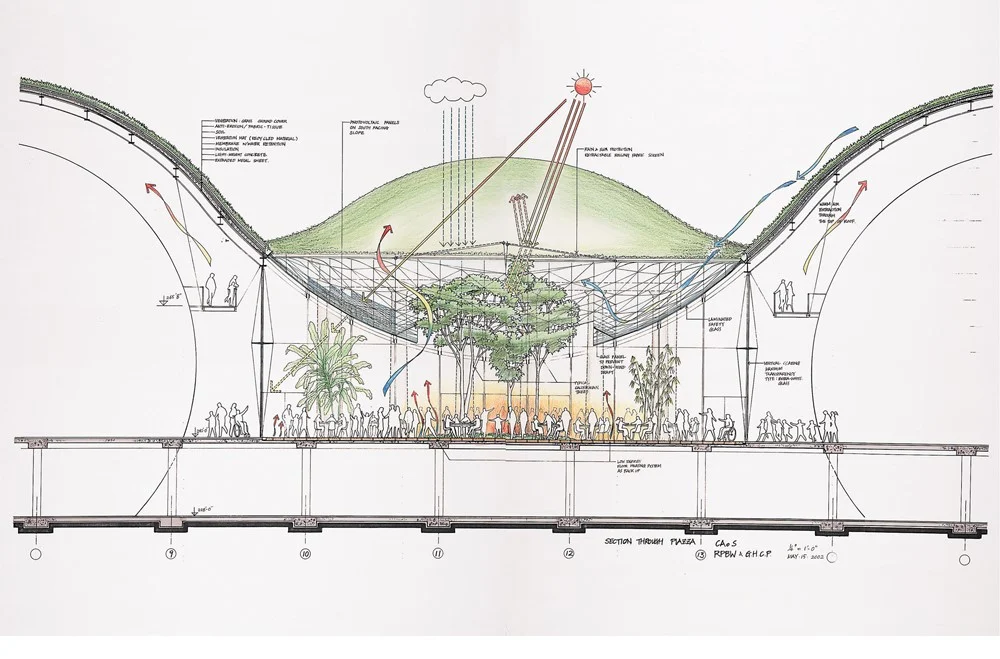
Use Of Sunlight and Green Building Features ©
How BIM helped in LEED compliance:
Energy & Atmosphere (EA) Credits:
In short, the credits in the energy category of LEED are earned from initiatives that decrease energy use and greenhouse gas emissions. BIM proved insightful in verifying the reduction of energy consumption through energy modelling tools. Simulation runs showed the different energy-saving strategies tested by the group: passive heating, different cooling techniques, and the incorporation of solar energy. The results from these simulations were the foundation upon which the applications for EA credits were made.
To do so, the museum’s natural ventilation system and displacement ventilation largely reduced energy requirements. BIM helped model airflow patterns to ensure optimal operation of such systems with minimum dependency on traditional HVAC systems.
Water Efficiency (WE) Credits:
The Academy’s collection and re-use of rainwater, low flow fittings and greywater re-use are beyond just maximizing water savings. BIM was able to do extremely precise hydraulic modelling of both rainwater and greywater systems, optimizing collection and distribution while also using the data to add weight to the water-use reductions attributable to the building for LEED purposes.
Rainwater harvesting is done through collection from the roof into underground cisterns, for later use in irrigation and cooling systems. BIM assisted in coordination between the size and placement of the cisterns while ensuring efficient integration with other building systems.
Materials & Resources (MR) Credits:
Over 90% of the metal in this institute structure was recycled. It had incorporated sustainable, less environmentally harmful raw materials. Because of the ability of BIM to track all materials from design up to construction, the project team could generate reports showing the percentage of recycled contents and that of locally sourced materials. Such detail was crucial during submission of documentation for MR credits.
Further, BIM proved valuable to the team in optimizing material selection based on environmental performance-comprising embodied energy, lifecycle analysis, sourcing information of every component utilized in the structure including low-VOC finishes and sustainable wood products.
Indoor Environmental Quality (IEQ):
For the purpose of the project’s LEED certification, it was good indoor air quality. Natural light has been introduced into the building at the Academy by means of skylights and floor-to-ceiling glass and, above all, taking into consideration good ventilation. BIM allowed the team to undertake daylight simulations to ascertain sunlight penetration and ensure all interior spaces receive adequate daylight while minimizing heat gains from the sun.
In addition to daylighting, the project used BIM to model airflow and CO₂ levels to optimize the natural ventilation system. This contributed to healthy air circulation, thus working towards the IEQ credits under LEED.
Modeling the Iconic Living Roof
The 2.5-acre living roof is one of the most iconic features of the California Academy of Sciences. Not only is it a beautiful green space, but it’s also a highly functional part of the building’s sustainability strategy. The roof is a critical component of the building’s thermal performance, stormwater management, and biodiversity support.
BIM played an essential role in modelling and optimizing this feature:
Shape and Orientation Optimization:
The undulating and organic shape of the living roof is thermally efficient; thus, its generated form responds to proper solar orientation and natural cooling needs within the building. After drafting countless roof shapes, angles, and orientations through BIM, the designers settled on one that performs best with sunlight, wind resistance, and water runoff. The feedback mechanism in real time obtained through the model helped in the fine-tuning of the roof system design in the reach of functional and aesthetic aspirations.
Stormwater Management:
One of the most important features of the roof is its design which keeps water in. The drainage layers, irrigation arrangement, and water storage capacities of the roof were modelled in BIM. Rainwater flow was computed since the roof needs to retain and filter rainwater, thereby lightening the load on the public stormwater system.
Thermal Performance Analysis:
The thermal insulation is an important aspect: the living roof minimizes solar gain by intercepting solar radiation, which, in turn, reduces the building’s cooling load. A thermal model on BIM simulating the soil, plant, and insulation layers’ thermal mass capabilities was used to predict energy consumption. The simulations demonstrated that the living roof would reduce the mechanical means of cooling, giving the project more LEED points in Energy & Atmosphere.
Biodiversity and Green Space:
Besides energy-saving features, the living roof provides a local wildlife habitat to create biodiversity in the urban area. The planting of species was visualized and planned by the use of BIM, ensuring that the roof would support a wide range of local flora and fauna. This assisted with earning sustainability credits under the Sustainable Sites category, which recognizes biodiversity and the integration of nature into urban environments.
Overcoming Challenges: Early Adoption of BIM
When the California Academy of Sciences project began, BIM was still relatively new to many in the architecture and construction industries. So that everyone can understand BIM better, the team really had to go through some tough times trying to adopting this new technology.
Software Compatibility
However, the project would have to be collaborative among its many teams, and the software they operated on really mattered. The architectural team was primarily reliant on Revit; MEP building services design engineers-techs were heavily reliant on AutoCAD MEP and other specialized tools for energy modeling. Getting those tools to work together quite was a challenge as it required custom workflows, data exchange protocols, and sometimes complex troubleshooting to ensure seamless integration. The team, however, overcame those hurdles to teach themselves effective management of data flows in and between ever-diversifying software platforms-an event in itself when it comes to future BIM projects.
Learning Curve for New Technology:
Then, at that time, BIM was barely in the early stages of widespread adoption. A lot of his colleagues were new to the technology and therefore required additional training-and time-to perfect 3D modeling, clash detection, and data-rich design. But with the movement of time in this project, BIM’s value came apparent to the learning curve curve, and experience grew for the team. The time invested in using the technology was eventually repaid significantly since the on-site errors were costlier.
Data Management and Coordination:
Often, an extremely large quantity of data is generated on any BIM project. Managing this data effectively, therefore, becomes another key issue, especially regarding LEED certification. The project team had to devise new organizational and managerial systems for the digital model such that, with respect to materials-spec regarding energy performance simulations, the data can all be reconstructed into documentation for future reference.
Construction Integration:
Early on, very few construction professionals knew about the potential benefits of BIM, so it took a lot of persuasion to get the contractors on board. However, when the team demonstrated how BIM could create fewer conflicts, increase the efficiency of construction, and eventually lead to a cost savings, they embraced digital workflows. Furthermore, by the end of the project, it had become apparent to the contractors that BIM was quite integrated into the construction process, and many of the challenges had been overcome.
Discover which countries have made BIM mandatory—read our blog on global BIM adoption now!
BIM Mandatory CountriesKey Takeaways: What This Project Taught the Industry
The California Academy of Sciences illustrates BIM objects in sustainable design. It was not just a case study for green building; it was an experiment shared with the building industry.
Key lessons learned from this project are:
BIM is critical for the design and construction of truly high-performing, sustainable buildings.
Energy and water efficiency, along with green materials, can, with the provide option of better LCA programs, be further optimized for sustainability to the great benefit of the environment while minimizing the challenge in design and construction activities.
Integrated design and collaboration are of utmost importance.
The project demonstrates how collaborative work between architects, engineers, and contractors can use a single BIM model to minimize risks, increase coordination, and expedite delivery.
BIM has changed the game in LEED certification.
Tracking, analysis, and reporting of sustainability data with a BIM platform allow LEED credits to be readily achieved and validated. It consolidates and packages tools to meet stringent requirements and validate compliance effectively, alongside minimal hassle of traditional documentation methods.
BIM makes decision-making data-driven.
BIM enabled simulation and modeling tools to enhance decision-making versus guessing or assumptions on the part of the team. That helped improve the sustainability of the building and, more importantly, led to precise and accurate results.
The Future of BIM, LEED, and Sustainable Design
The California Academy of Sciences demonstrates a new standard in green buildings and sustainable architecture, showing that BIM and LEED can align with one another in the pursuit of innovative and energy-efficient environments. The lessons learned from this project will guide the work of future architects, engineers, and builders, in the hopes that they will embrace the power of digital tools and sustainable practices for generations to come. Building design has never been more hopeful and greener in the face of a changing climate; and BIM is leading the way.
The future of building design is brighter and greener than ever, and BIM is at the heart of this transformation.
Conclusion
This is the powerful magic of BIM and LEED to create an example of a sustainable, high-performance building. The design of the person, or stressfully BIM technology, carries the message of environmental stewardship, thus raising it to one of the highest levels in the world: LEED Platinum.
This project has made it clear that the coupling of BIM and sustainability is more than just designing a green building; it is a holistic, truly sustainable, and long-term environmental solution. The lessons that we have gained from this project would catalyze our plans concerning architecture, construction, and sustainability, and serve as templates for future projects.
BIM can create an environment, allowing novel, thought-provoking, data-informed ideas to build intelligently, sustainably, and energy-efficient; this process will ultimately result in the creation of a holistic integrated facility. Accordingly, depending on LEED and BIM, one day these will be central in making built environments more sustainable in the ever-continuing battle of climate change and urbanization.
It thus sets a new order for museum design and lays down the path for green architecture for the future; essentially demonstrating how technology, collaboration, and sustainability can work together to build a better tomorrow.
Unlock the full potential of BIM and LEED for your next sustainable project—explore our BIM services now!
BIM ServicesFrequently Asked Questions
What are some other sustainable features that were modeled using BIM in this project?
Items modeled and coordinated with BIM for sustainability included green roofs, displacement ventilation systems, radiant floor heating, and daylight harvesting via skylights. These features underwent virtual testing for performance and adjustments toward sustainability goals long before construction commenced.
Can BIM be used towards LEED certification for retrofitting or renovation projects?
Yes, BIM’s strengths are retrofitting existing stock. It provides an opportunity for teams to create accurate digital twins of older buildings, simulate energy upgrades, correlate design changes to LEED certifiable items, thereby optimizing resources and minimizing interference.
How does BIM facilitate collaboration on sustainable building projects?
BIM is a central platform for collaboration in real time among architects, engineers, and contractors. All work on a shared model reducing errors, streamlining workflows, and ensuring proper coordination of sustainability features across all the systems.
What does the future of BIM hold for sustainable architecture?
The future of BIM foresees integration with AI, machine learning, and Iot devices for ever-smarter buildings. It will offer real-time performance tracking, superior simulations, and an adapted pathway in keeping with evolving sustainability standards such as LEED v5, WELL, and the Living Building Challenge.