Introduction
Let’s face it, designing and building a hospital is one of the trickiest jobs out there. The design and construction of hospitals represent one of the most complex challenges in the architectural, engineering, and construction (AEC) industry where functionality and efficiency directly impact patient care and staff well-being. Designing these intricate facilities presents unique challenges, from creating the optimal design layout, coordinating complex MEP systems and specialized medical equipment to adhering to stringent regulation.
For e.g. from the distance of an emergency room to an ambulance drop-off, life can actually hang in the balance because of poor design that makes critical care units inaccessible. Similarly, routing medical vacuum lines requires specific pipe slopes and cleanouts, which must be coordinated around structural beams and other utilities, unlike standard plumbing.
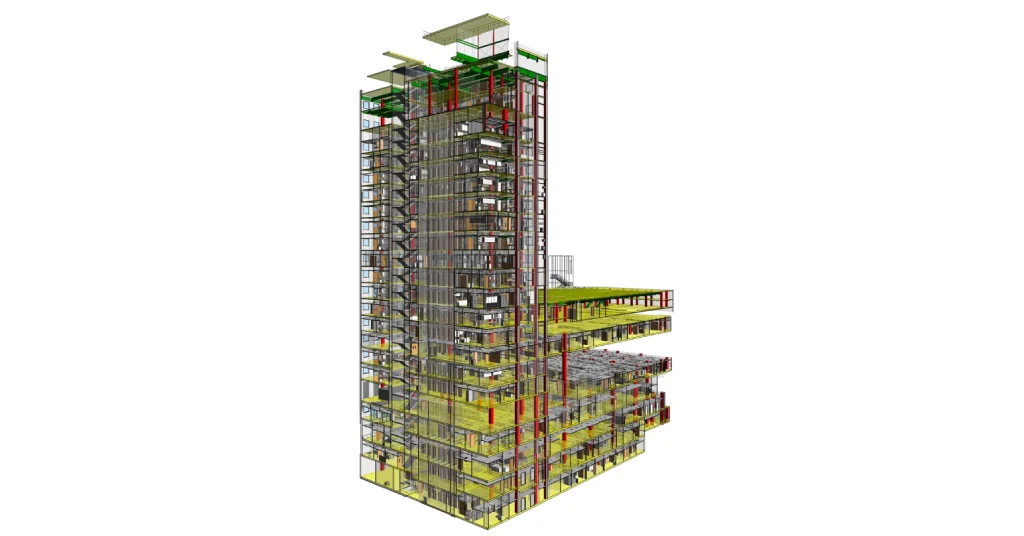
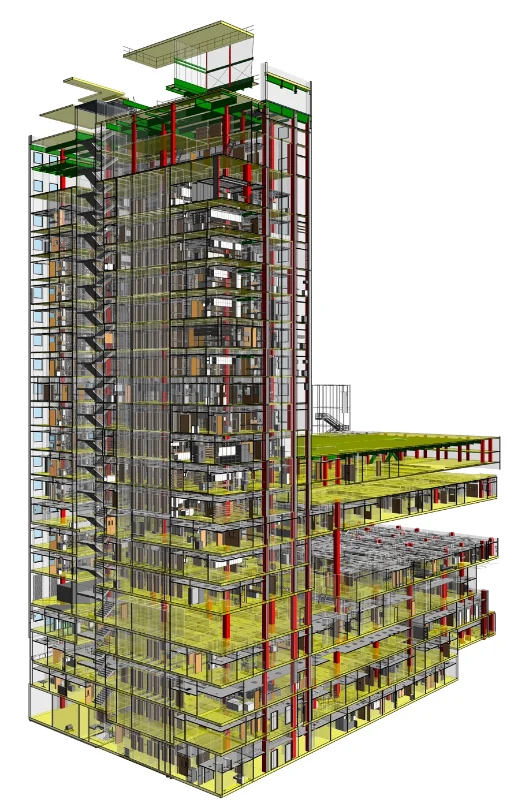
Now, this is where Building Information Modeling (BIM) comes in and makes real difference. Expressed simply, BIM is a digital twin of the hospital – an intelligent 3D model allowing for full collaboration among architects, engineers, and medical staff before anything goes up. It almost feels like a rehearsal for the big show that helps the team identify issues early on, better their workflows, and avoid unforeseen costly surprises later on.
Why is BIM majorly helpful when it comes to hospital construction? In this blog, we will look at:
- The genuine industrial challenges associated with healthcare design-and why these are more complex than a building that you would typically encounter.
- How BIM transforms hospital design from a safety and operational approach into future readiness.
- A stepwise explanation of how BIM establishes planning, construction, and facility management.
- With a look into the AI, IoT, and Digital Twins of the future next generation of smart hospitals.
If you are one of the architects, engineers, healthcare planners, or facility managers reading this, find new insight into how BIM is giving hospital design a makeover from the very start.
BIM in Hospital Design
The Importance of BIM in Healthcare Architecture
Why Hospital Design is More Complex than Other Buildings
As well, hospital structures require very careful consideration as these are not just ordinary buildings. This is why it becomes very complicated to build them because:
- There are Multiple Stakeholders – Among this group are the doctors, nurses, hospital administrators, architects, civil engineers, and so on, and each of them has his or her kind of requirements. Hence the importance of coordination among all of them.
- High Health & Safety Standards – These would involve fire safety measures, emergency exits, infection control, and accessibility for all patients.
- Effective Flow of Patients & Staff – Patients must be able to move quickly and safely between the rooms, and doctors as well as nurses, between offices and rooms without jostling.
- Movement of Medical Equipment and Mobility Aids – Beyond the movement of patients and staff, the design of a hospital must also be conducive to the easy movement of stretchers, wheelchairs, medical carts, and critical equipment. Corridors have to be wide enough, doorways accessible, and lifts adequately sized and strategically located. Any obstruction in these routes will delay the time taken to provide urgent care to compromise patient safety, making this an issue that architects and planners need to prioritize from the earliest design stage.
- Very Complex MEP Systems – HVAC systems, plumbing, electrical and medical gas systems should be very meticulously coordinated to avoid conflicts in operation.
- Future Growth and Adaptability– Hospitals need to be easily expandable and adaptable for the introduction of new medical technologies.
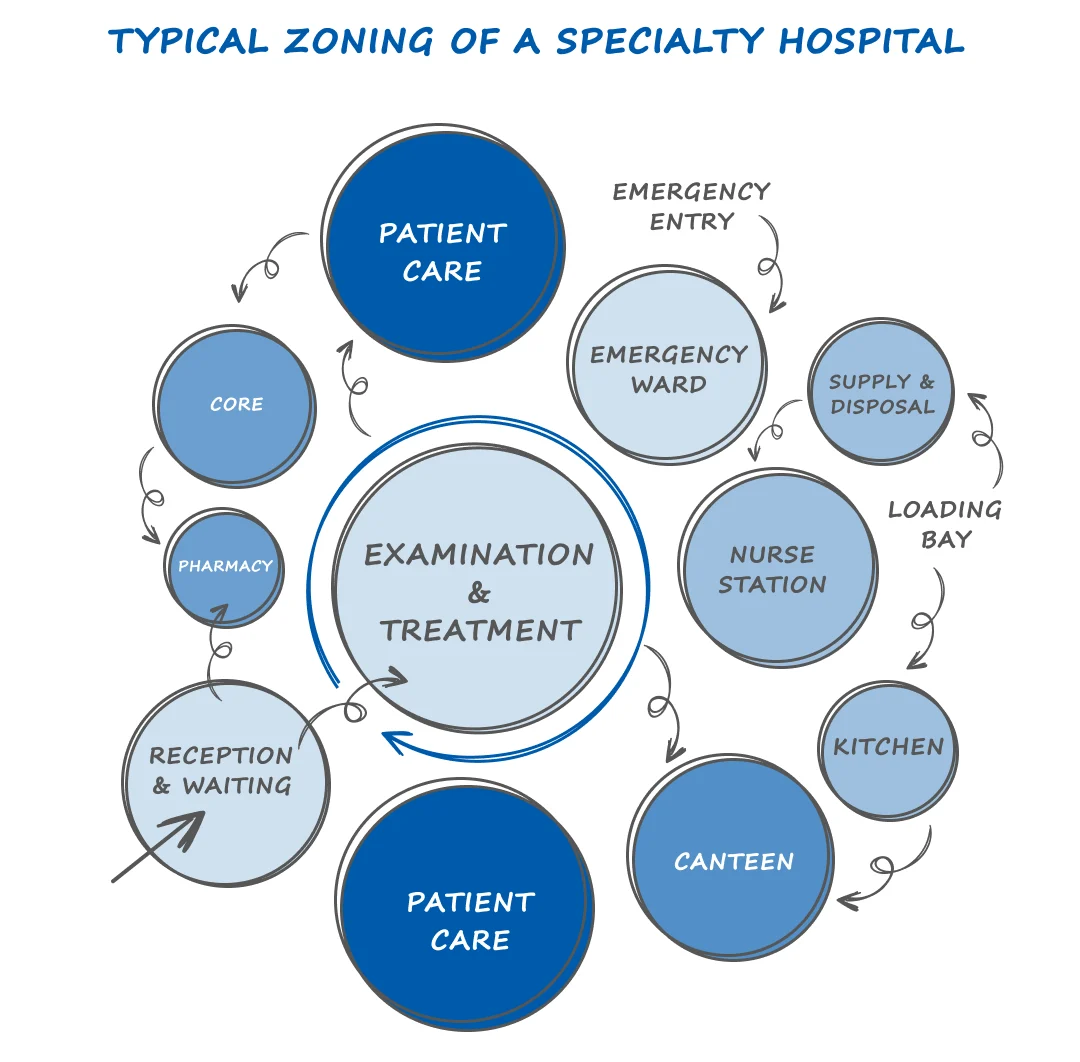
Typical Zoning of a Hospital
Source: https://www.kaarwan.com/blog/architecture/how-to-design-hospitals-everything-you-need-to-know
Studies show that poor hospital design can lead to longer patient wait times, increased stress for staff, and even higher infection rates. That’s why precision planning with BIM is critical!
Key Benefits of BIM in Hospital Design
Improved Space Utilization & Functional Layouts
Hospital spaces must be efficiently planned to ensure easy movement of patients, medical staff, and equipment. BIM helps:
- Optimize hospital layouts based on actual usage patterns.
- Ensure emergency areas (ICUs, trauma centers) are placed strategically for quick access.
- Design modular spaces that can be expanded or repurposed easily in the future.
Studies show that efficient hospital layouts can improve staff response time by 30%, leading to better patient care.
Enhancing Coordination between Disciplines
A hospital design involves multiple teams working together—architects, MEP engineers, structural consultants, and hospital administrators. Without proper coordination, errors can occur, leading to:
- Misaligned medical equipment due to incorrect electrical or plumbing connections.
- Clashes between HVAC ducts and lighting fixtures, causing delays.
- Incorrect room dimensions, affecting patient safety and comfort.
How BIM Solves This:
- Centralized BIM models allow all stakeholders to work on a single source of truth.
- Navisworks clash detection helps resolve conflicts before construction begins.
- Cloud-based BIM collaboration tools (like BIM 360) ensure real-time updates for all teams.
In the Hospital Fort Bliss in Texas, BIM was used in a well of about $1 billion to construct a medical facility to perform coordinated MEP shop drawings for clinical buildings whose gross area is 500,000 square feet. The overall process involved the conversion of design inputs into 3D models for coordination, which resulted in many clash resolutions and streamlined construction with reduced rework.
Cost & Time Efficiency
Hospitals are expensive to build, and any mistake can lead to huge financial losses. BIM helps keep projects on budget and on schedule by:
- Using 4D BIM to create construction sequences, reducing delays.
- 5D BIM for cost tracking, ensuring no cost overruns.
- Prefabrication of hospital components based on BIM data, saving time.
BIM-driven hospital projects have been found to reduce construction time by 20% and save up to 15% in costs.
Energy Efficiency & Sustainability in Hospitals
Hospitals consume huge amounts of energy for lighting, HVAC, medical equipment, and more. BIM helps reduce energy costs and improve sustainability by:
- Optimizing natural lighting and ventilation through daylight analysis.
- Using energy-efficient HVAC & electrical systems, simulated in BIM.
- Reducing material waste by integrating precise material take-offs in 5D BIM.
A green hospital in Europe used BIM-based energy simulations and reduced energy consumption by 30% compared to traditional designs.
BIM Workflow for Hospital Projects: Step-by-Step Process
Conceptual Design & Feasibility Studies
Every successful hospital project starts with a vision, but that vision must be backed by data-driven planning. Here’s how BIM helps at this stage:
- Site Feasibility Analysis – BIM integrates geospatial data and environmental factors to assess whether the location is suitable for a hospital.
- Space Zoning & Layout Planning – Early spatial zoning ensures proper separation of critical areas (ICUs, operation theaters, waiting areas).
- Regulatory Compliance Checks – Using BIM, architects can pre-load hospital regulations and automatically flag design violations before construction.
A major hospital in Canada (Scarborough Health Network) used BIM simulations to assess ambulance access and emergency room efficiency, resulting in 25% faster patient intake times.
3D BIM Modeling & Clash Detection
Hospitals have one of the most complex MEP networks in any building. A single clash between ventilation ducts and oxygen supply lines could lead to costly rework.
- BIM-based 3D modeling helps create a detailed representation of all hospital spaces.
- Clash detection (Navisworks) ensures that MEP, structure, and equipment placements don’t interfere with each other.
- AR/VR for design validation – BIM-integrated VR allows hospital staff to walk through the design virtually and suggest improvements before construction starts.
Perth Children’s Hospital in Australia: The implementation of BIM reduced a specific clash detection task from 40 hours to just 2 hours, showcasing significant time and cost savings.

Perth Children’s Hospital in Australia
Source: https://wikimedia.org/
3D Scheduling & 5D Cost Estimation
Hospitals often have phased construction, where some sections remain operational while others are being built. BIM-driven 4D and 5D planning help manage this complexity.
- 4D BIM (time simulation) – Visualizes the entire hospital construction process over time, preventing schedule conflicts.
- 5D BIM (cost estimation) – Tracks real-time material usage, labor costs, and budget fluctuations to prevent overspending.
Facility Management & Digital Twins
Once the hospital is built, BIM’s role doesn’t stop. Hospitals require constant maintenance, and Digital Twins (a real-time 3D model of the building) transform facility management.
- IoT Sensors + Digital Twin Integration – Real-time monitoring of air quality, power consumption, and medical gas levels ensures optimal performance.
- Predictive Maintenance – Rather than wait for an equipment breakdown to happen, Predictive Maintenance enables a Digital Twin to give a prediction of how long an HVAC system or a medical device will need servicing.
- Post-Occupancy Evaluation – Hospital administrators will be capable of studying space usage data and using it to make decisions in future extensions.
A smart hospital in Singapore (Tan Tock Seng Hospital) uses BIM-based Digital Twins to track real-time patient movement and optimize staff efficiency, reducing wait times by 40%.
Challenges & Solutions: BIM for Hospital Design
Managing Complex MEP Systems
The Challenge: Hospitals require highly specialized MEP systems for HVAC, medical gas, electrical, plumbing, and security—all working in harmony.
The BIM Solution:
- Automated clash detection ensures no system conflicts.
- Prefabrication of MEP components based on BIM models reduces on-site errors.
Compliance with Healthcare Regulations
The Challenge: Hospitals must adhere to fire safety, infection control, and accessibility regulations across different countries.
The BIM Solution:
- BIM models are integrated with regulatory codes to flag violations automatically.
- Simulation tools help test fire evacuation routes and emergency response times.
- Adherence to ISO 19650 standards provides a standardized framework for managing building information throughout the hospital project lifecycle. This ensures consistent, reliable data exchange and collaboration, which is essential for tracking and verifying compliance with all applicable regulations.
Handling Large-Scale Hospital Projects
The Challenge: Mega-hospital projects involve multiple stakeholders across different locations.
The BIM Solution:
- Cloud-based BIM collaboration platforms (BIM 360, ACC) ensure real-time updates for global teams.
- BIM Execution Plans (BEPs) standardize workflows, avoiding miscommunication.
The Future of BIM in Healthcare Infrastructure
BIM isn’t just transforming hospital design today—it’s shaping the future of smart hospitals with AI, automation, and digital innovation.
AI & Machine Learning in Hospital Design
- AI-driven generative design – Software will automatically create the most optimized hospital layouts based on patient flow data.
- AI-powered patient tracking – Hospitals will use BIM-integrated AI to predict patient movement trends and optimize waiting areas.
IoT-Enabled Smart Hospitals
- Real-time energy monitoring – IoT sensors will adjust hospital lighting and HVAC based on occupancy, reducing energy waste.
- Live asset tracking – BIM-integrated RFID will track the exact location of medical equipment across the facility.
Prefabrication & 3D Printing for Hospitals
- Prefabricated hospital units – BIM will allow entire hospital wings to be built off-site and assembled in record time.
- 3D printing of medical spaces – Custom-built patient rooms and surgical theaters will be 3D printed with BIM-driven precision.
The first 3D-printed hospital in Africa is currently being designed using BIM-based prefabrication techniques, drastically reducing construction costs.
Conclusion
Buildings that are among the most complex types are hospitals, and just like the rest, they have undergone a revolution with the onset of BIM in facility design, construction, and management. It has gone way beyond simple 3D modeling; it’s functionality optimization and improving different levels of patient care.
Why BIM is a Game-Changer for Hospitals
- Reduces errors and rework by detecting clashes before construction.
- Enhances operational efficiency through better space planning.
- Ensures compliance with healthcare safety regulations.
- Optimizes costs & timelines using 4D & 5D BIM.
- Enables long-term smart hospital management with Digital Twins.
Looking to Implement BIM for Your Healthcare Project?
At Tesla Outsourcing Services, we specialize in:
- Hospital BIM modeling & coordination
- MEP clash detection & resolution
- 4D & 5D BIM scheduling & cost estimation
- Digital Twin & smart hospital integration
Get in touch today to see how BIM can revolutionize your healthcare facility and create a hospital that’s efficient, functional, and future-proof!
Contact UsFrequently Asked Questions
Is BIM applicable only to new hospital construction, or can it be used in existing hospitals?
Yes! BIM is not only for new hospitals. It can be applied for expansion or renovation of existing hospitals by developing as-built models to assist with facility management, maintenance, and future renovation.
Does BIM assist with hospital safety and compliance with healthcare regulations?
Definitely! BIM enables architects to incorporate building codes, fire protection regulations, and healthcare standards within the design. It detects potential compliance issues ahead of time so that hospitals will be health and safety compliant without incurring modifications down the road.
How does BIM enhance hospital construction schedules?
BIM applies 4D scheduling, and therefore construction teams can envision the whole process step by step prior to work commencement. This avoids delays, reduces errors, and enables phased hospital construction planning to be planned better, particularly while operating on live hospital sites.
What is the function of BIM in hospital facility management after the building has been completed?
Once the construction of a hospital has been completed, BIM makes possible the following actions in its post-construction management: Digital Twin-the-real-thing, i.e., real-time virtual modeling of the hospital facility that assists maintenance, asset management, and energy monitoring, making hospitals run more efficiently and economically even after several years.


