
Discover how BIM is transforming roads, bridges, tunnels and airports with improvised operational efficiency, safety and environmental sustainability.
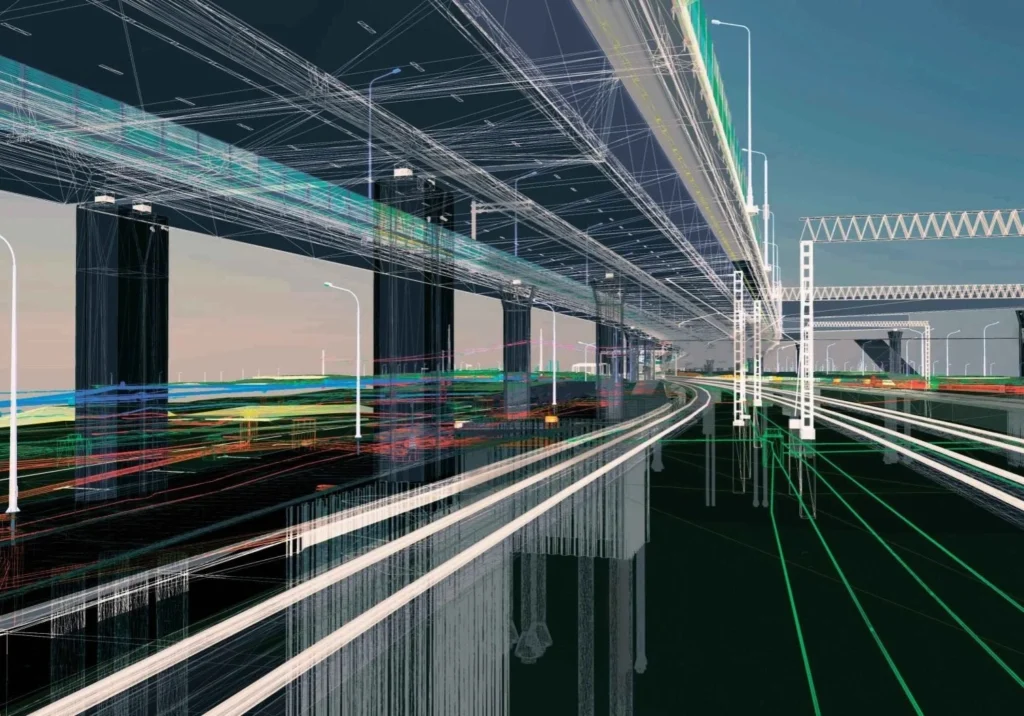
BIM’s evolution from building design to infrastructure
BIM has revolutionized architectural and engineering design methods for buildings throughout multiple years. BIM technology has expanded its traditional application in building design for buildings and shopping centers to now serve infrastructure development. The technology serves as a fundamental component for current roads, bridges, tunnel and airport construction projects. The transition from traditional methods to BIM-based systems became essential because of project requirements. The combination of large size, complex nature and high costs in infrastructure projects requires management of multiple stakeholders under strict time constraints. The conventional approach resulted in higher project costs, communication breakdowns along with increased project risks for stakeholders. The digital model of BIM unifies geospatial data with structural information and lifecycle details to create a single point of truth for all stakeholders. Modern cities together with public authorities use BIM technology to develop modern infrastructure systems which combine safety with sustainability and operational efficiency.
BIM for Roads: The Four Imperative Pillars

BIM for Roads and Bridges
The construction of roads faces three major obstacles which include land acquisition problems, unstable ground conditions and traffic congestion challenges. The four essential BIM applications help organizations handle these difficulties effectively.
1. Route Alignment
BIM software enables users to create multiple route alternatives within a virtual environment. Engineers use survey data with geospatial models to select the optimal route which avoids conflicts and environmental disturbances. The UK A14 Cambridge to Huntingdon improvement scheme achieved better results through BIM implementation which minimized construction conflicts and optimized the road path.
2. Terrain Modeling
BIM creates exact 3D ground models through the combination of LiDAR scans, drone photography and GIS input data. The system alerts engineers about existing slopes, soil conditions and drainage patterns. The construction process becomes shorter allowing engineers to identify potential project issues before they occur during construction.
See how Tesla Outsourcing Services leveraged Scan to BIM and helped European topography survey client create high-quality 3D mesh of a river.
Scan to Mesh Conversion3. Traffic Simulation
BIM technology allows planners to create virtual models of future traffic patterns. The system enables better planning of intersections, signal systems along with improved road network development. Digital flow simulation helps cities predict traffic congestion and emission levels before starting road construction projects.
4. Predictive Analysis
BIM technology allows users to predict both present-day usage patterns and upcoming maintenance requirements for infrastructure. The forward-thinking design of roads enables them to endure multiple decades without needing costly government-funded reconstruction projects.
BIM for Bridges: Some Pivotal and Transformative Features
Bridges represent the most intricate infrastructure projects because they need both precise measurements and absolute safety standards. The following features make BIM stand out as a revolutionary tool for these applications:
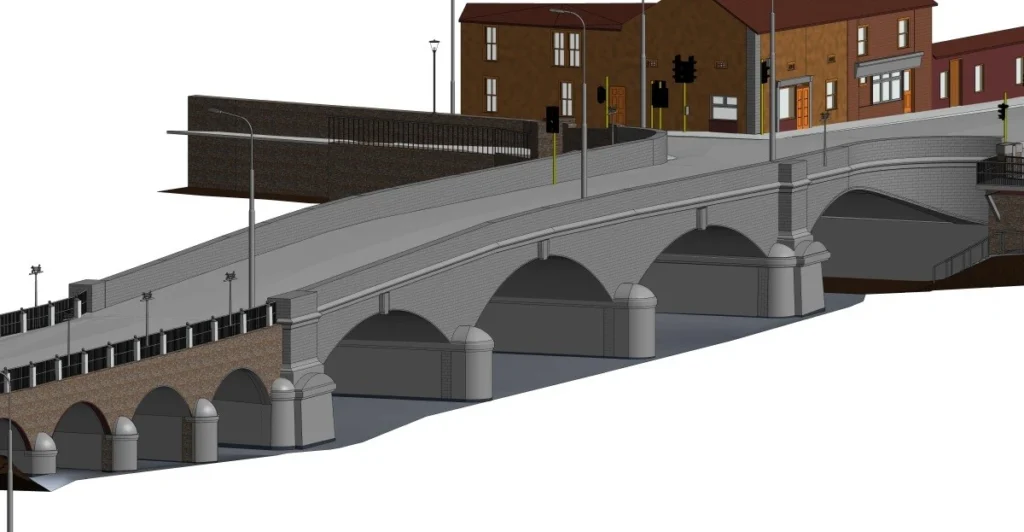
BIM for Bridges
1. Structural Modeling
BIM technology allows users to create detailed visualizations of beam structures, cable systems, pipe networks and reinforcement elements at a highly detailed level. The complete structural view of the structure through BIM reduces mistakes and duplicate work which results in precise cost along with progress forecasting.
2. Stress Analysis
The simulation tests of different loads including traffic weight, wind pressure, rain and earthquake forces become possible through BIM to prepare for unpredictable events which will help the bridge endure harsh conditions.
3. Clash Detection
BIM technology detects potential conflicts between drainage systems, utilities and structural elements before any construction work begins. The ability to detect issues using BIM enables teams to adjust changes before construction starts which prevents costly rework saving both time and financial resources.
4. Maintenance Planning
BIM transforms traditional drawings into a digital twin that represents the bridge structure. The solution stores essential data about inspections and materials along with repair activities to support proactive maintenance operations when needed.
BIM for Other Infrastructure Projects: Tunnels, Railways, and Airports
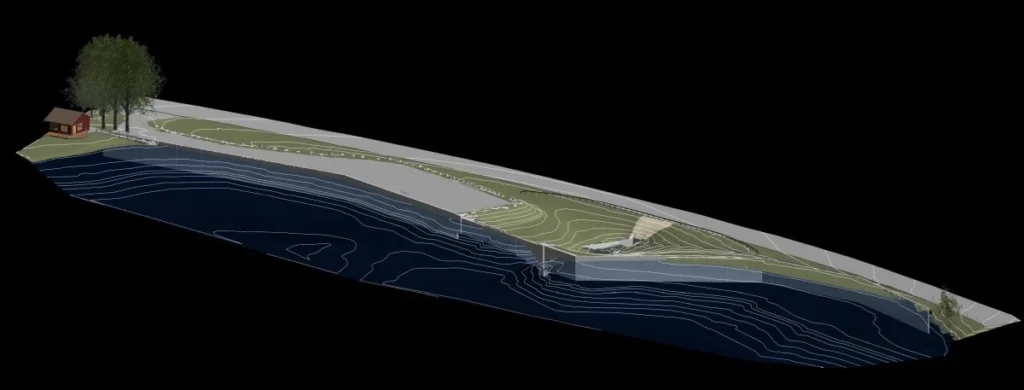
BIM for Dam
BIM technology provides essential value to multiple infrastructure sectors which makes it essential for contemporary engineering practice.
Tunnels
The construction of tunnels requires working with unpredictable geological conditions while maintaining absolute safety standards. The Gotthard Base Tunnel in Switzerland which holds the title of world’s longest rail tunnel applied BIM to merge geological survey data with design information. The project reduced excavation dangers while guaranteeing correct ventilation system implementation.
bim-beyond-buildings-applications-in-infrastructure-1Railways
The HS2 high-speed rail line in the UK demonstrates the complete potential of BIM technology for rail infrastructure development. The BIM system enabled better alignment and environmental design along with station planning which resulted in enhanced contractor coordination and decreased project delays.
Airports
Airports present complex operational environments. The Denver International Airport expansion project implemented BIM to create simulations for passenger flow management, runway control and predictive maintenance systems. This integration allowed for better operational performance and sustained long-term improvements with efficiency.
The 3 Key Benefits Across Infrastructure: Cost-Effectiveness, Reduced Delays, Enhanced Safety
BIM implementation in infrastructure projects delivers quantifiable advantages which include:
BIM technology enables cost-effective operations through waste reduction, improved procurement methods and elimination of duplicate work. The implementation of BIM technology leads to cost reductions which can reach as high as 30% according to reports.
Digital simulations together with clash detection systems prevent unexpected site issues which maintain project schedules on schedule.
BIM technology enables virtual risk modeling which helps contractors use to develop safer construction sites and operational environments.
Challenges Facing BIM Adoption: High initial costs, Employee Resistance to Change and System Integration Problems.
The proven benefits of BIM implementation face multiple obstacles to adoption. The process of acquiring computer programs, machinery and equipment needed for data collection demands substantial initial financial outlays. The high initial costs of BIM implementation might prevent its adoption in standard construction projects of average size. Human beings naturally resist change which leads them to maintain their reliance on outdated construction methods. Sometimes the difference in BIM platforms used by the design and construction teams leads to data sharing and project collaboration difficulties due to incompatibilities.
Conclusion: Future Trends and Recommendations for all Stakeholders
The path toward BIM adoption in infrastructure development shows increasing promise for the future. The combination of Artificial Intelligence with Internet of Things (IoT) and smart digital twin technology will enable real-time monitoring of bridges, highways and railroads.
The stakeholders who include governments, contractors and engineers need to understand that BIM implementation should begin early while investing in employee training and selecting common data standards. The initial expenses of BIM implementation result in lasting advantages together with better safety measures and environmental sustainability. BIM has evolved from being an architect’s design tool into the fundamental structure for building sustainable infrastructure during the twenty-first century.
FAQs
Does BIM technology work for small-scale municipal construction projects?
Absolutely. The BIM system provides optimization benefits for all types of small-scale construction projects including pedestrian bridges, tunnels and road expansion works.
Does BIM need to be used in every infrastructure development project?
Not globally. The UK and EU require BIM implementation for all government projects although other nations continue their transition process.
What sustainable infrastructure benefits does BIM provide to the construction industry?
BIM enables sustainable design through its ability to simulate synthetic traffic patterns, material usage and energy consumption. This results in significant waste reduction and carbon emission minimization.
Which industries reflect the fastest adoption rate of BIM technology?
Transportation, utility and aviation sectors lead BIM adoption rates. These industries are closely followed by water management and renewable energy infrastructure projects.
Unlock Immersive Design Capabilities
Partner with Tesla Outsourcing Services to deliver hyper-realistic walkthroughs and interactive design experiences to your clients. We Offer expert –
- Building Information Modeling
- Architectural 3D Rendering
- Architectural Immersive Walkthrough


