Carbon emissions significantly contribute to climate change, with the built environment accounting for roughly 40% of global annual carbon emissions. This alarming statistic has prompted industry organizations and companies worldwide to establish ambitious carbon reduction and net-zero targets. A critical element in achieving these goals, and a substantial source of emissions within buildings, is embodied carbon.
Embodied Carbon
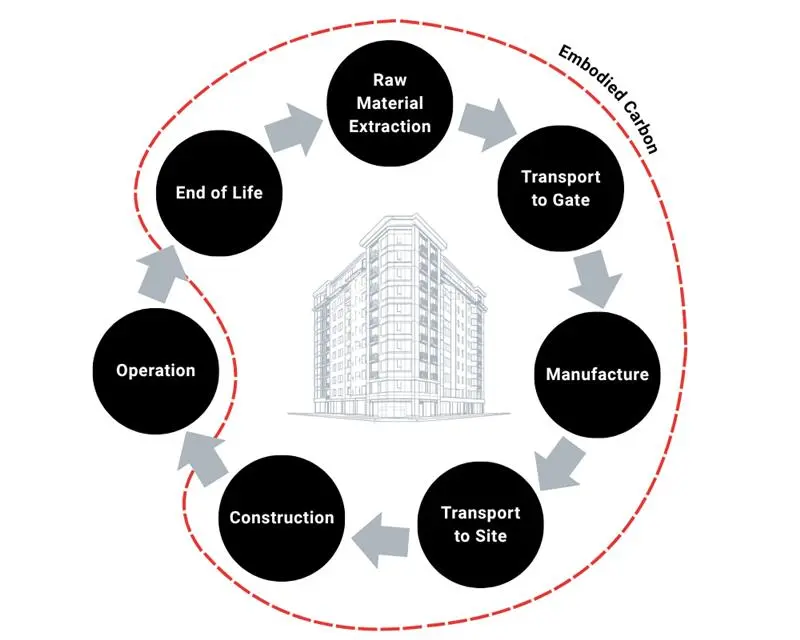
Embodied carbon includes all carbon emissions associated with building materials and includes all phases of the material lifecycle. For exploration, emissions produced from raw materials start with the extraction of raw materials from the earth and carry through production, transportation, on-site construction, and then end-of-life with either disposal or recycling.
Embodied Carbon in Key Phases of Building Material Life Cycle
Embodied Carbon Footprint
Embodied carbon emissions will occur in every phase of the building material life cycle:
Raw Material Extraction
This phase will include mining or harvesting a raw resource like limestone for cement, sand for glass, or timber for wood products. This can even include “natural” mineral extraction like granite and soapstone for countertops., even harvesting post-consumer wood products (reclaimed). This phase is usually done with heavy machinery or earth movers that run on fossil fuels, and if they are logging, they may be clearing vegetation or assuming land is degraded.
Manufacturing and Processing
Raw materials are processed and manufactured into useful building products like cement, steel, bricks, and building insulation. Usually, there are high energy inputs in industrial processes with commonly coal or natural gas burned to produce energy that led to carbon dioxide emissions.
Transportation
Once materials produced, building materials are transported to construction sites, using trucks, ships, and trains, effective adding carbon footprint.
Construction Activities
The actual process of assembling a building includes machinery and tools that consume fuel and electricity. Construction waste generated on site also adds to the overall impact.
Maintenance and Renovation
During a building’s life, periodic repairs or upgrades may require new materials. These introduce additional embodied carbon even after the building is completed.
End-of-Life
When the building is demolished or dismantled, the disposal of its materials also contributes to carbon emissions. Even recycling involves energy use, though it is generally less than creating new materials.
Because embodied carbon is embedded in materials, reducing it requires us to think differently about how we design, build, and maintain buildings.
Which Materials Have the Highest Embodied Carbon
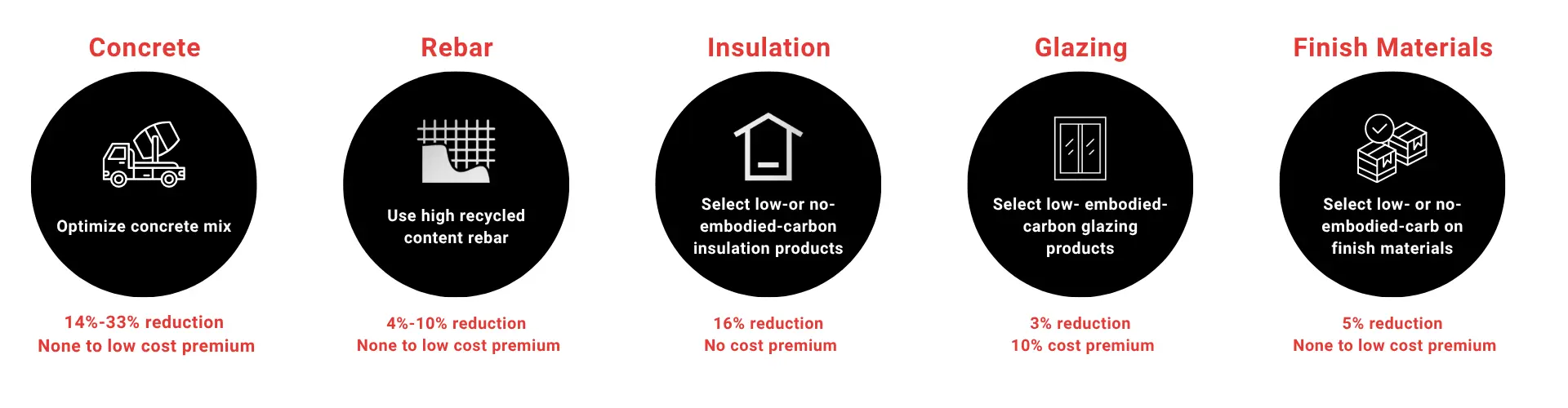
Some materials used in construction are far more carbon-intensive than others. Because of their strength, durability, and availability, these materials are among the few that are in common use, but they come with serious environmental costs. Here are some examples:
- Cement, the main ingredient of concrete, is one of the top single contributors to industrial carbon dioxide emissions. Production of cement entails a chemical reaction that releases a large quantity of CO2.
- Steel is produced in high-temperature furnaces powered by the combustion of fossil fuels, which thus makes it a material of the highest embodied carbon.
- Bauxite requires a huge amount of electricity for refining into aluminum, with electricity coming chiefly from coal or gas.
- Glass manufacturing processes demand heat and energy, magnifying the embodied carbon footprint. Making glass also consumes energy at high temperatures, working towards increasing its embodied carbon footprint.
- Insulation cuts down operational energy consumption; however, some foam-based type embodies high emissions since it is petroleum-based in their production process.
Developing an understanding of what materials contribute more to embodied carbon will allow architects and builders to better choose products for their projects.
Materials with High Embodied Carbon
Global and Local Impact of Embodied Carbon
We estimate that embodied carbon contributes to approximately 11 per cent of total anthropogenic greenhouse gas emissions. A seemingly small piece of the pie, however, looks very different when we focus on just the construction and building sector. That number suddenly feels a lot more critical and is only anticipated to grow. Here is why these matters:
- Urbanization is skyrocketing, especially in developing countries. With urbanization comes more housing, more roads, and more infrastructure.
- The materials we are making, concrete, steel, and brick, all of them take carbon to produce, and we are using huge quantities of them.
- It is difficult to conceptualize, but effectively, we are building a fresh New York City every month for thirty years.
If we continue designing and building in the same manner, by making things out of energy-intensive materials and methods, and we do not change any of this, the environment will suffer. It will not only be the buildings, but the way we design and build the buildings.
Conclusion
Embodied carbon is a significant, yet often underestimated, component of the built environment’s climate impact. From extraction to end-of-life, every stage of a material’s journey contributes to this embedded carbon footprint. Recognizing the materials with the highest embodied carbon and understanding the global implications of our current construction practices are crucial first steps. The good news is that by shedding light on this issue, we can begin to explore practical solutions for designing and building more sustainably. In our next blog post, we will delve into actionable strategies for significantly lowering embodied carbon in our buildings.


