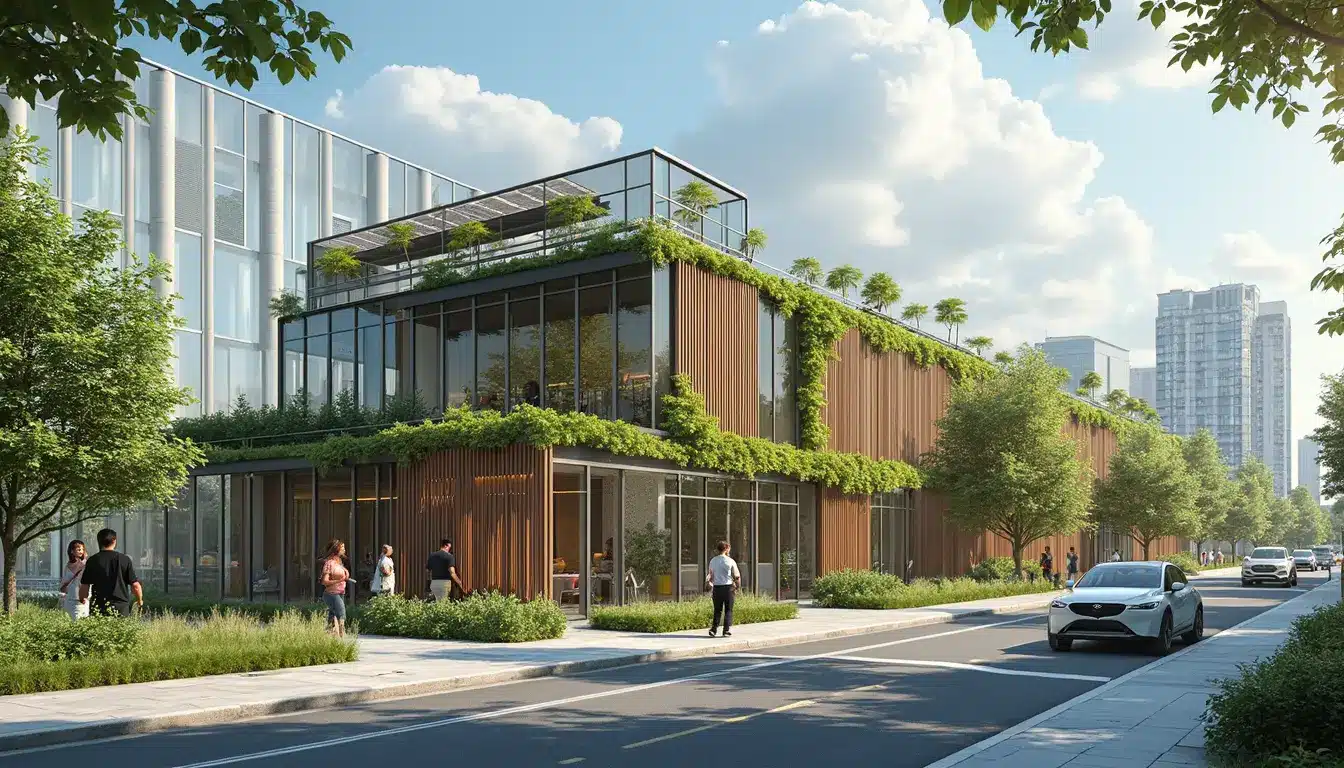
In our previous post, we explored what embodied carbon is and why it is a critical component of the built environment’s climate impact. Now that we understand the scale of the challenge, the crucial question becomes: How can we effectively lower embodied carbon in our buildings? The answer lies in making conscious choices throughout the entire design and construction process, emphasizing efficiency, reuse, and the selection of low-carbon materials.
How to Lower Embodied Carbon Through Design
Reducing embodied carbon should happen at the beginning of the design of a building. Once materials have been ordered or construction has begun or been reviewed, it is often too late to make any relevant variations. When many use low-carbon strategies, it is usually too late, emphasizing the importance for designers, engineers, and builders to consider low carbon strategies as early in the process as possible. Here are some practical and effective ways to reduce embodied carbon through design, materials, and construction.
About 11% of the world’s greenhouse gas emissions from buildings stem from the construction phase.
Design for Material Efficiency
Material efficiency does not mean compromising the safety or strength of the structure. Designing material efficiency can mean reduced embodied carbon by using less and smarter. Material Efficiency can be achieved by doing the following as part of building design:
- Do not design oversized structural material.
- Use lightweight partitions and floors when appropriate.
- Minimize unnecessary complexity in building geometry; minimize surface area and material use.
Design for Reuse and Adaptability
Reusing or adapting existing buildings or their elements means less consumption of materials. Some considerations for limiting the need for new materials are:
- Consider adaptive reuse over demolition.
- Design buildings that can be adapted or added to the future.
- Consider compact, flexible, or movable interior spaces without color structural walls.
Utilize Modular and Prefabricated Construction
Modular and prefabricated are created away from the job site in controlled conditions, which increases efficiency and minimize waste:
- Reduce construction waste because of cutting precision.
- Reduce on-site construction time, which reduces energy use.
- Reduce transportation-related emissions (especially if local).
Choose Low Carbon Building Material
Choosing lower lifecycle impact materials is part of sustainable construction.
- Products with Recycled Content Examples include recycled steel and reclaimed wood.
- Natural/Bio-based materials Examples include bamboo, straw bale, hempcrete, rammed earth, wood. Many bio-based materials sequester carbon during their growth and reduce emissions through manufacturing.
- Alternatives to concrete with lower carbon Supplementary cementitious materials (SCMs) such as fly ash or slag. New cements such as limestone calcined clay cement. Concrete with carbon injected to sequester CO₂.
- Engineered wood instead of concrete or steel. Engineered wood is strong, renewable, but it also sequesters carbon
Building Smart: Minimize Waste, Optimize Reuse, and Treat Finishes Simply
Construction can be carried out in an efficient way to limit waste and emissions in construction
- Use of modular construction to decrease site errors and waste materials.
- Utilizing off-site fabrication allows for more precision in assembly times and less energy use overall.
- Design to disassemble & reuse material to extend material usefulness and minimize landfill output.
- Use mechanical fasteners (screws, bolts) vs adhesives.
- Have separations between your structural system, mechanical systems, and finish system.
- Plan systems for future upgrades, untenable places, and deconstruction.
- Don’t use more finishes & layers (finishing materials, labor, materials) of carbon-intensive materials.
- Don’t use more cladding, false ceilings, and decorative wall/ceiling paneling.
- Choose finishing materials that are simple, durable, and on the local level.
- Exposed structural materials where sensible (concrete, wood)
- Material sourced locally saves transportation emissions and supports local economies.
- Avoid specification for interior items which can overuse material and over inflate price.
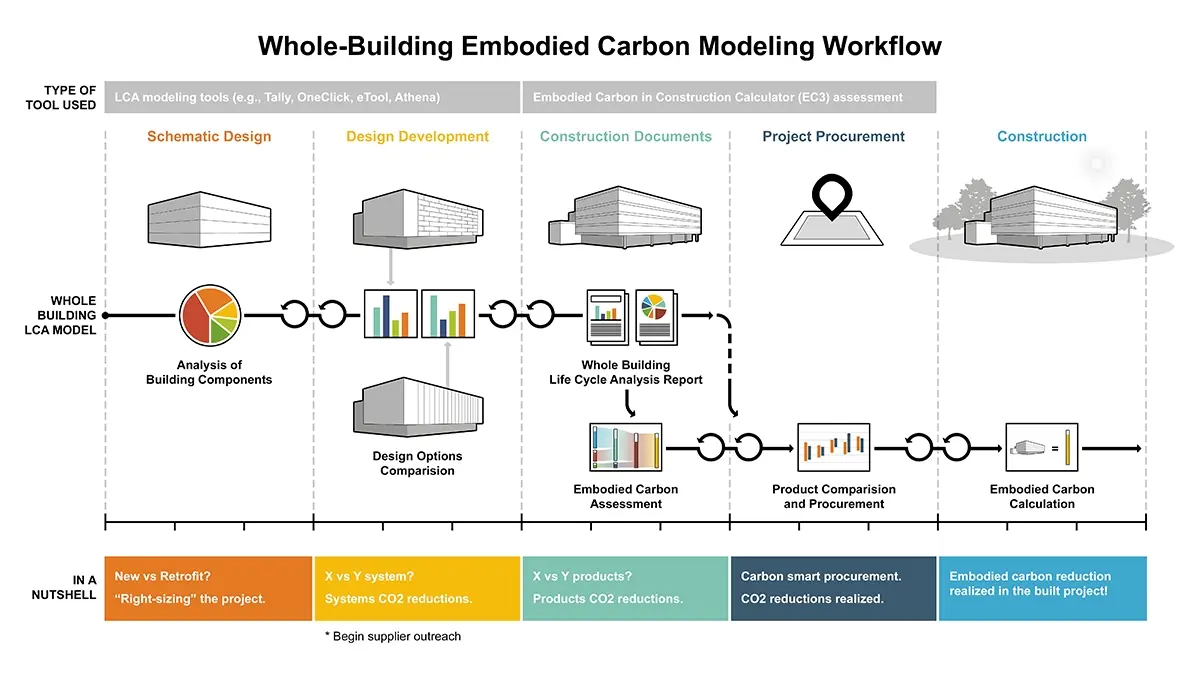
Defining a building workflow for Embodied Carbon
Real-World Examples
Let us look at a few projects around the world that have successfully focused on reducing embodied carbon.
1. Brock Commons Tallwood House in Vancouver, Canada
This 18-storey student residence was built using cross-laminated timber and glulam columns, which store carbon instead of releasing it. It achieved about a 70 percent reduction in embodied carbon compared to a conventional concrete structure.
This 18-storey student residence achieved about a 70 percent reduction in embodied carbon compared to a conventional concrete structure.
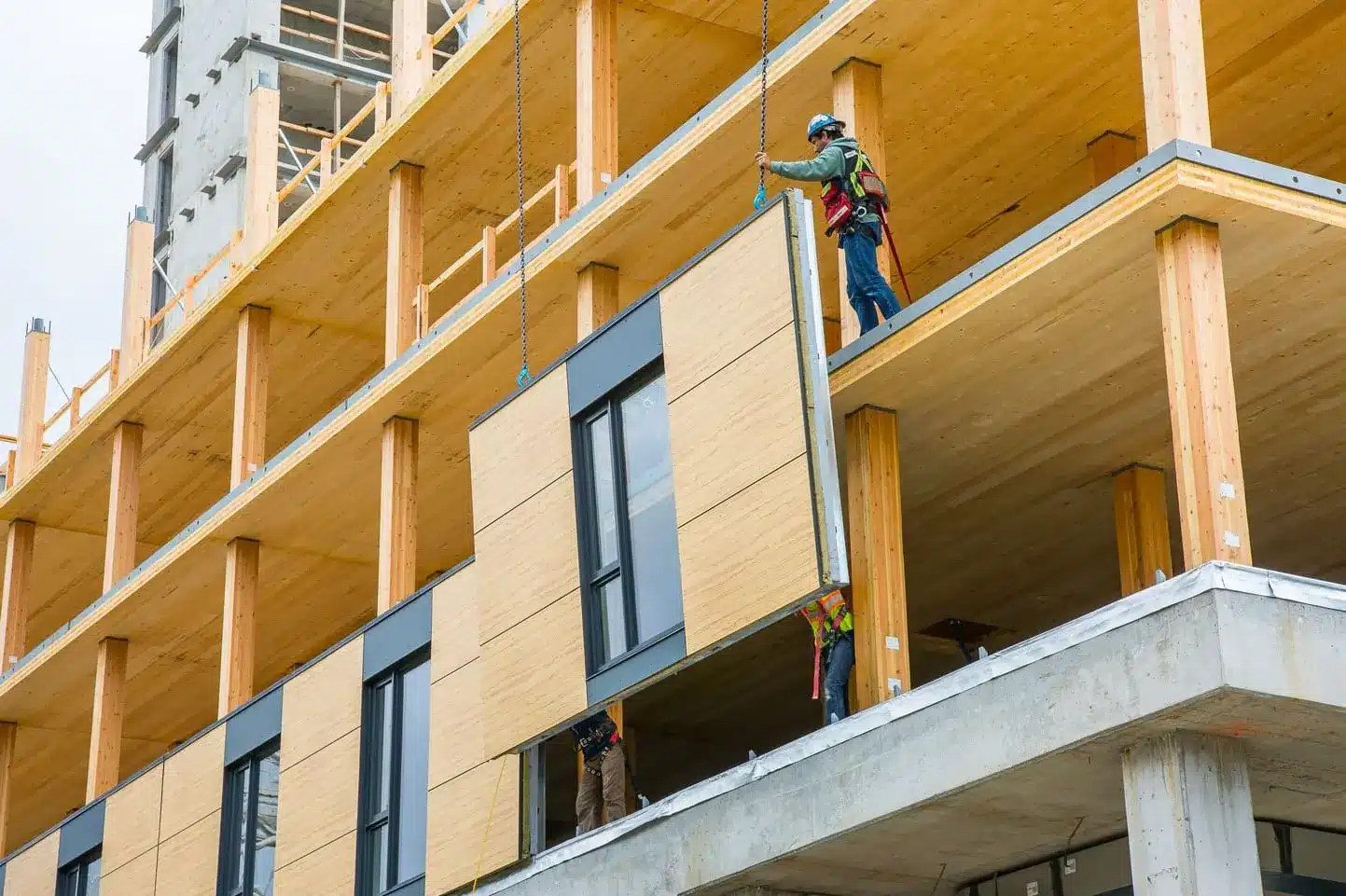
Use of cross-laminated timber in Brock Commons Tallwood House
2. The Bullitt Center in Seattle, USA
Often referred to as the greenest commercial building in the world, the Bullitt Center was constructed with FSC-certified timber and other low-carbon materials, as well as designed for disassembly (e.g. modular panels, ease of dismantlement, etc.).
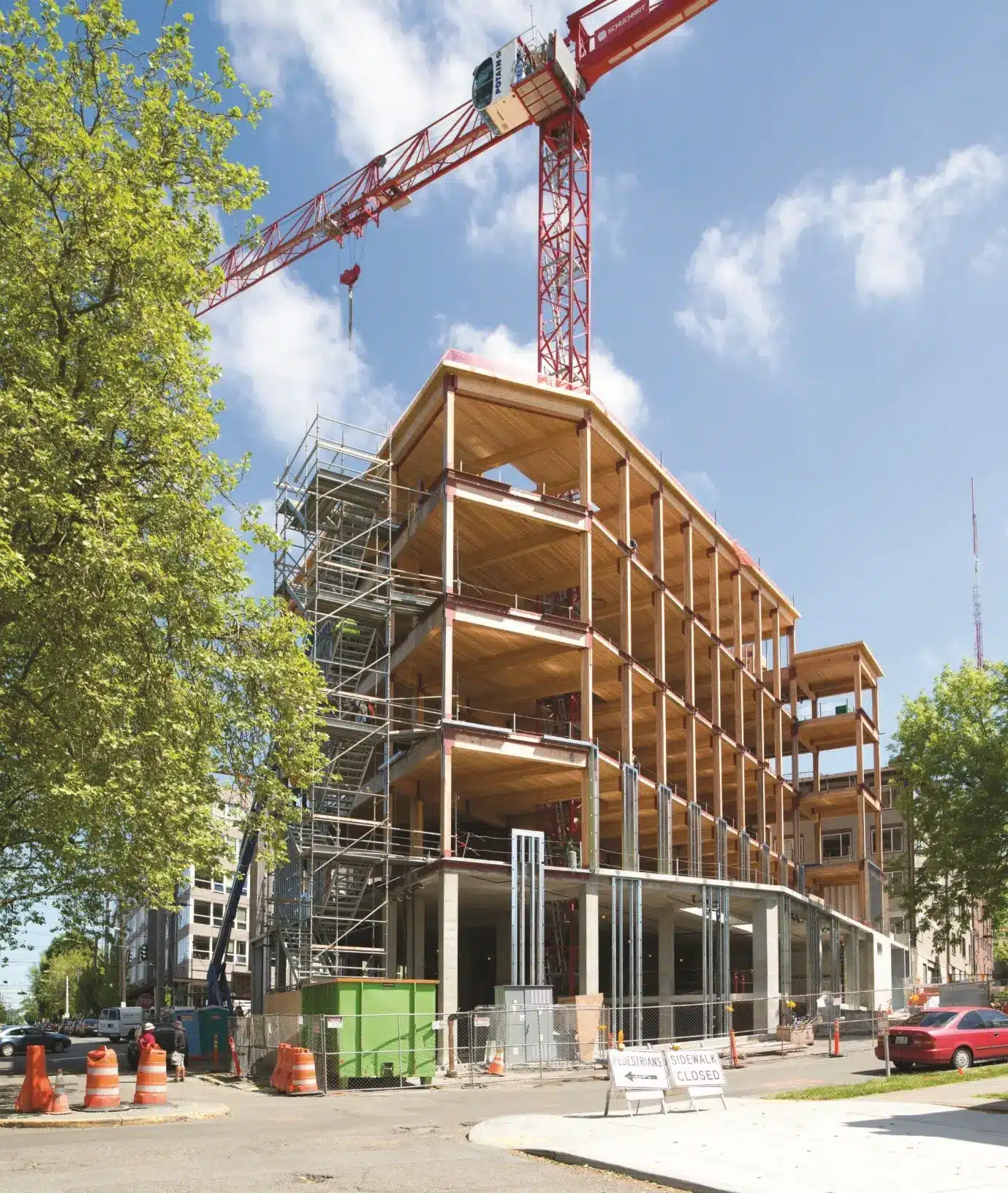
Use of FSC-certified timber in Bullitt Center in Seattle
3. CII-IGBC Net Zero Energy Building, Hyderabad, India
This is one of India’s first net-zero energy buildings. It focused not just on operational energy but also used fly ash-based cement and low embodied carbon materials. The project also recycled its construction waste, setting a benchmark for the Indian construction industry.
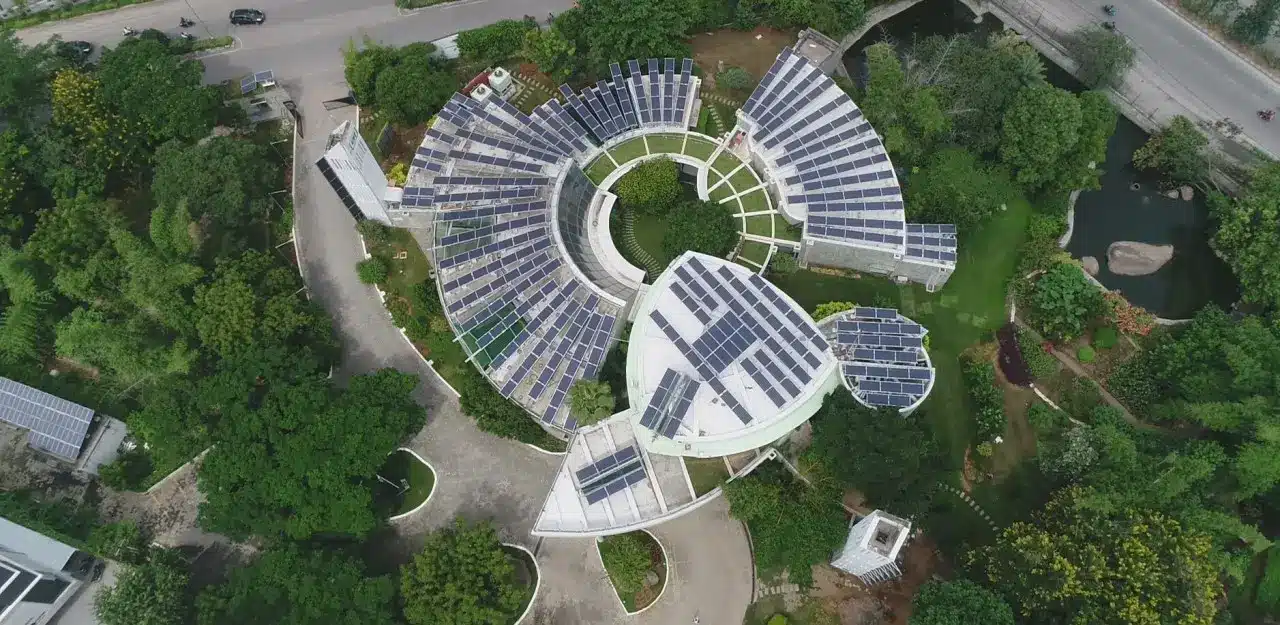
Use of fly ash-based cement in CII-IGBC Net Zero Energy Building
These examples show that it is possible to achieve significant carbon savings through smarter design, thoughtful planning, and the right material choices.
Role of Policy and Certification
While action is always important, policies and incentives can facilitate serious changes on a larger scale. Globally, governments and certification bodies alike are beginning to give embodied carbon some attention.
Green Building Certification Systems
Systems such as LEED, BREAM, IGBC, and GRIHA are beginning to offer credits for Life Cycle Assessment, and the use of low-carbon materials, prompting project teams to think about embodied carbon from the beginning.
Government Policies
Some regions are adopting embodied carbon policies. For example:
- In the European Union, the Level(s) framework promotes life cycle thinking and material efficiency.
- In the USA, cities such as Portland and New York have established embodied carbon policies for public buildings.
- In India, the Bureau of Energy Efficiency is developing embodied energy standards that will become part of the future green codes.
What You Can Do
Even if you are not an architect or builder, there are steps you can take to support lower embodied carbon in buildings.
- Choose buildings and homes made with natural or recycled materials
- Ask your architect or builder about low-carbon material options
- Products with Recycled Content Examples include recycled steel and reclaimed wood.
- Support adaptive reuse or renovation instead of building new
- Choose furniture made from sustainable materials or reclaimed wood
- Spread awareness about embodied carbon in your community
Summing Up!
Reducing embodied carbon emissions is possibly the most effective way we can combat climate change. Unlike operational energy, embodied carbon is baked into the building from the instant construction begins. Therefore, every decision we make, from the selection of materials to our method of building to the reuse of old buildings, is crucially important. The good news is that there are already solutions in place. Smarter design, better materials, better construction methods and digital tools are some of the ways we can build more planet-friendly. If we couple these with robust policies and public awareness, we can reduce the climate cost of our buildings and create built environments that are designed to contribute to a better world for all.
Tesla Outsourcing Services can help you use BIM to reduce embodied carbon through smart design, low-carbon materials, clash detection, and lifecycle assessments. Let’s partner to meet your sustainability goals.
Talk to ExpertsFrequently Asked Questions
Why should we make sure that embodied carbon is addressed in green buildings?
As it is part of climate change, even though many people don’t know about it. As construction of new buildings takes place in cities, embodied carbon rises quickly. About 11% of the world’s greenhouse gas emissions from buildings stem from the construction phase. As the global building population grows, we will need to take action before it gets too big.
Which products have the most carbon emissions included in their production?
Cement, concrete, steel, glass and bricks are the materials with the greatest amount of embodied carbon, due to the large amount of energy needed to produce them. So, designing with materials like sustainably sourced wood, bamboo, recycled metal or low-carbon concrete can greatly help.
What can builders and architects do to lower the carbon footprint of the buildings they design?
- Use items and materials that are processed locally and utilize less energy.
- Adapt or reuse what is already on site
- Make the design of your product as simple as possible so you don’t use more materials than necessary
- Life cycle assessments can be used to check and compare the material usage in products
- Make using modular and prefabricated structures your main choice
Little choices at the beginning can strongly influence how much carbon a project generates.
Want to explore detailed strategies and real-world examples on lowering embodied carbon through smart design and innovative materials? Read more below to transform your projects sustainably.
Read Now!

