In the field of sustainable design, sunlight is both a resource you can use and an important form of design. Using solar power wisely can result in buildings that are much more energy efficient, warmer in the winter, brighter all day, and require less electricity for heating and lights.
Just how should you position a building to receive the right amount of sunlight all year long? How can you adjust to hot, summer days and make use of the shorter days in winter? Getting the answers requires more than making the same old drawings on paper.
Building Information Modeling is now helping architects and engineers rethink the way they design buildings. Thanks to smart 3D models and real-time simulations, designers can now predict how sunlight hits all the different surfaces, corners, and openings in a building before any work is done.
This blog is designed for architects, engineers, students, and anyone interested in sustainability. We need to see how combining strong digital tools with meaningful design can guide us, with the sun shining ahead.
We will look at the role of BIM in reaching optimal solar gain in architecture. We will clarify what solar gain is, discuss why it’s important, and describe how BIM tools help design solar-friendly buildings. We will study the Bullitt Center in Seattle as a real example, which is recognized as having the highest environmental standards among commercial buildings; and understand how BIM played a role in making energy independence possible, even in a city known for cloudy weather.
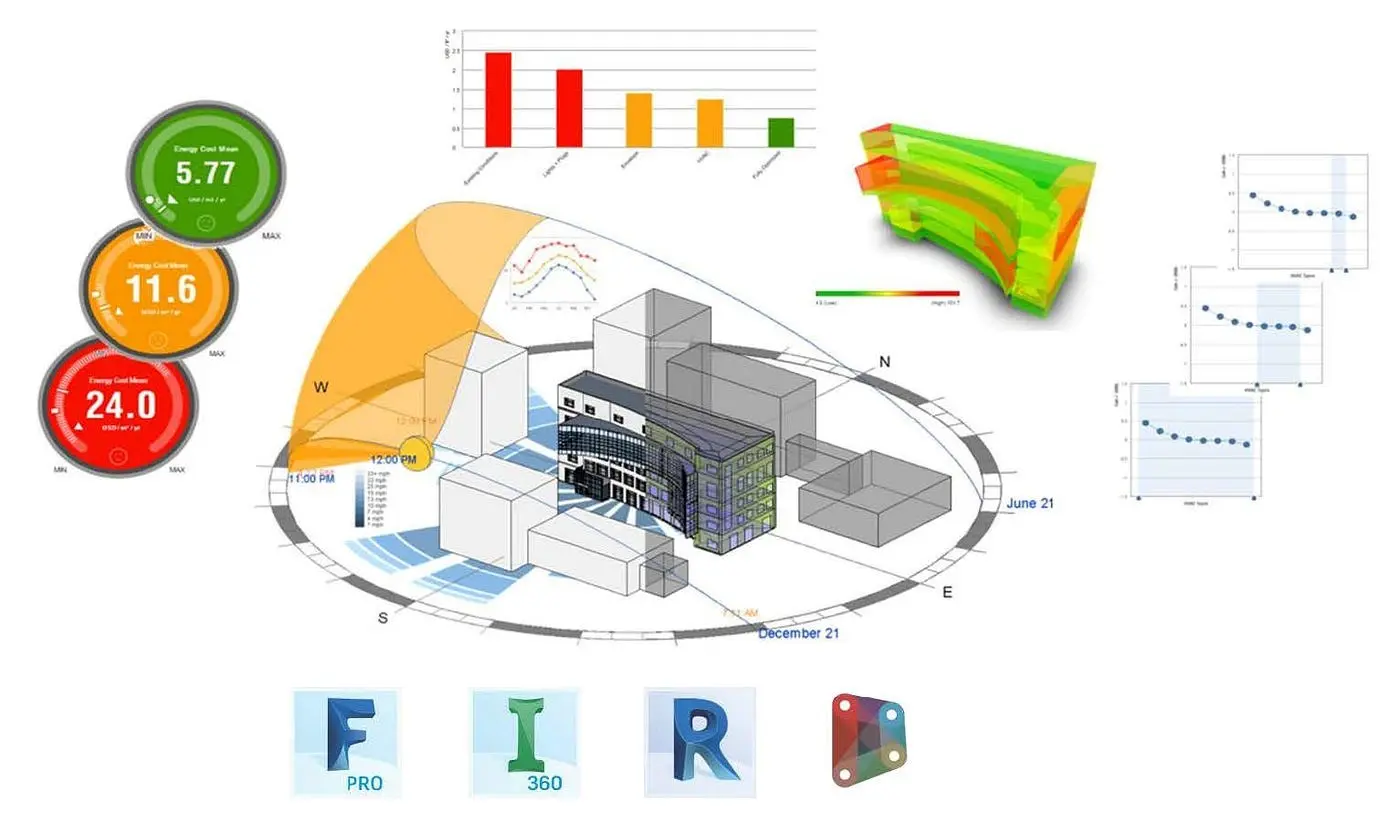
Solar Analysis Using BIM
Source: https://static.au-uw2-prd.autodesk.com/Class_Handout_AS468561.pdf (Calculating Shaded Areas in Revit for Sustainable Design)
Understanding the Power of Design and Data
As being energy efficient is now mandatory, architects and engineers are finding more intelligent solutions for building design. In an environmentally friendly design, it is important to take advantage of solar gain, letting the sun heat and light buildings without electricity. Understanding solar gain can help you lower the amount of artificial heating and lighting in your home. Organizing the event right means more than just trying to guess the weather. Here is when BIM (Building Information Modeling) becomes important.
What is Solar Gain and Why Does It Matter
Solar gain refers to the heat and light a building gets from the sun. Done right, it can transform a space from an energy-hungry structure to an eco-friendly haven.
There are three main types of solar gain:
- Direct Solar Gain:
Sunlight enters through windows and directly warms up the space. - Indirect Solar Gain:
Sunlight hits a thermal mass (like a stone wall or concrete floor), which stores the heat and slowly releases it. - Isolated Solar Gain:
A sunroom or greenhouse captures the heat and transfers it into the main building.
Why does this matter?
- It allows you to heat your home less with an artificial heater in winter.
- It brings in daylight, which decreases how much electricity is required.
- Having indoor plants helps make a room more comfortable and welcoming.
If solar gain is not organized well, homes may get so hot in summer or get blinding from the sun’s rays. It is important to keep solar gain balanced, and BIM makes that much more manageable for an architect.
The Challenges of Maximizing Solar Gain
Improving solar input is not easy for designers because of various issues:
- The sun shifts as your day goes on and as summer turns into winter and back again.
- The buildings, trees, and landscape around an outdoor area can either prevent or give off sunlight.
- Choices about windows, shades, and what a building is made from control the amount of heat and light inside.
- If issues with the design are noticed after much work, fixing them can become very costly.
How BIM Helps in Optimizing Solar Gain
BIM is not just a 3D modeling tool. It is a smart design process that combines data, modeling, and collaboration to improve how buildings are planned and built. Here is how BIM supports solar gain:
Sun Path and Site Orientation Analysis
- BIM tools can simulate the sun’s path throughout the year.
- This helps identify the best orientation for the building to capture maximum sunlight.
BIM software like Revit can simulate the sun’s path for any location on Earth, allowing architects to test how sunlight will interact with a building throughout the entire year—before a single brick is laid. This helps maximize natural light and heat in winter, while minimizing overheating in summer.
Daylight and Solar Radiation Simulation
- Tools like Revit, Insight, and FormIt Pro allow real-time sun studies.
- You can see how shadows move, how much light different rooms get, and what areas need exposure.
Design Adjustments in Real-Time
- Change the size or placement of windows and immediately see how it affects sunlight.
- Experiment with different materials, shades, and overhangs in minutes.
Collaborative Design Process
- Architects, engineers, and sustainability consultants work on a single shared model.
- This ensures solar gain strategies are in sync with HVAC systems, materials, and structural planning.
Informed Decision-Making
- Designers can test multiple design options digitally.
- No need for expensive physical models or guesswork.
Energy Analysis Integration
- BIM tools often link with energy modeling software.
- This lets teams calculate energy savings from solar gain strategies before construction even starts.
Whether the project is in a hot desert or a snowy region, BIM can help tailor solar gain strategies to suit the climate and building type.
Case Study of the Bullitt Center, Seattle
Let us examine how these concepts were put to work in a world-class project, The Bullitt Centre in Seattle, which shows how a building can be both environmentally friendly and profitable. Many call it the greenest commercial building in the world, and it is an office space that obtains its electricity from solar panels. BIM was used along with planning and simulation to ensure that this level of performance was achieved.
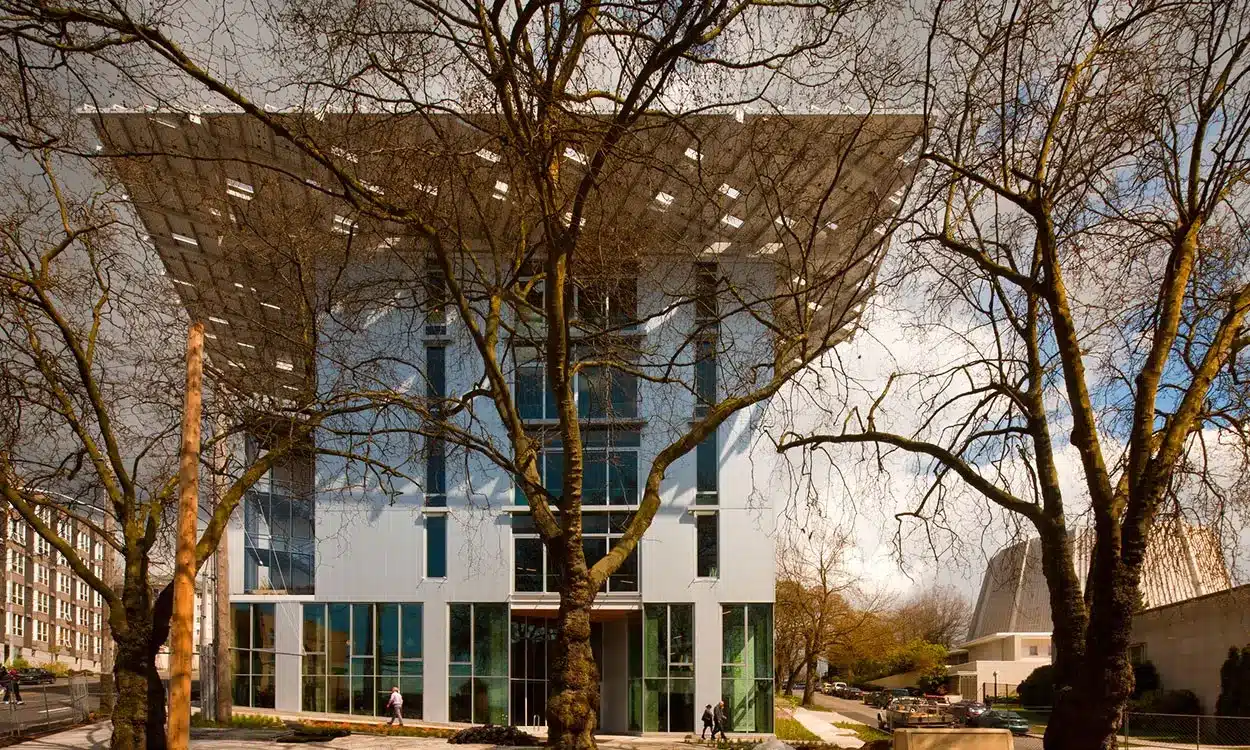
Bullitt Center, Seatle
Why the Bullitt Centre?
The Bullitt Center, completed in 2013, is in Seattle, a city known for its cloudy skies and long rainy seasons. Despite this, the building is entirely powered by the sun. This makes it a perfect example of how design, driven by BIM analysis, can unlock solar gain even in challenging climates.
Here is what makes this project so fascinating:
- It meets the strict Living Building Challenge performance standards.
- It is net-positive, producing more energy than it uses annually.
- It uses zero fossil fuels on-site.
- It maximizes daylight and passive heating to reduce energy use.
All of this was achieved with careful planning, and BIM played a central role in making it possible.
Why Is Sustainability the Next Step of Revolution in Construction? Explore how sustainable practices, including solar gain optimization, are transforming the construction industry and making buildings more efficient and eco-friendly.
Read Now!How BIM Was Used in the Bullitt Center
Let us break down how Building Information Modeling helped shape the Bullitt Center to work with the sun, not against it.
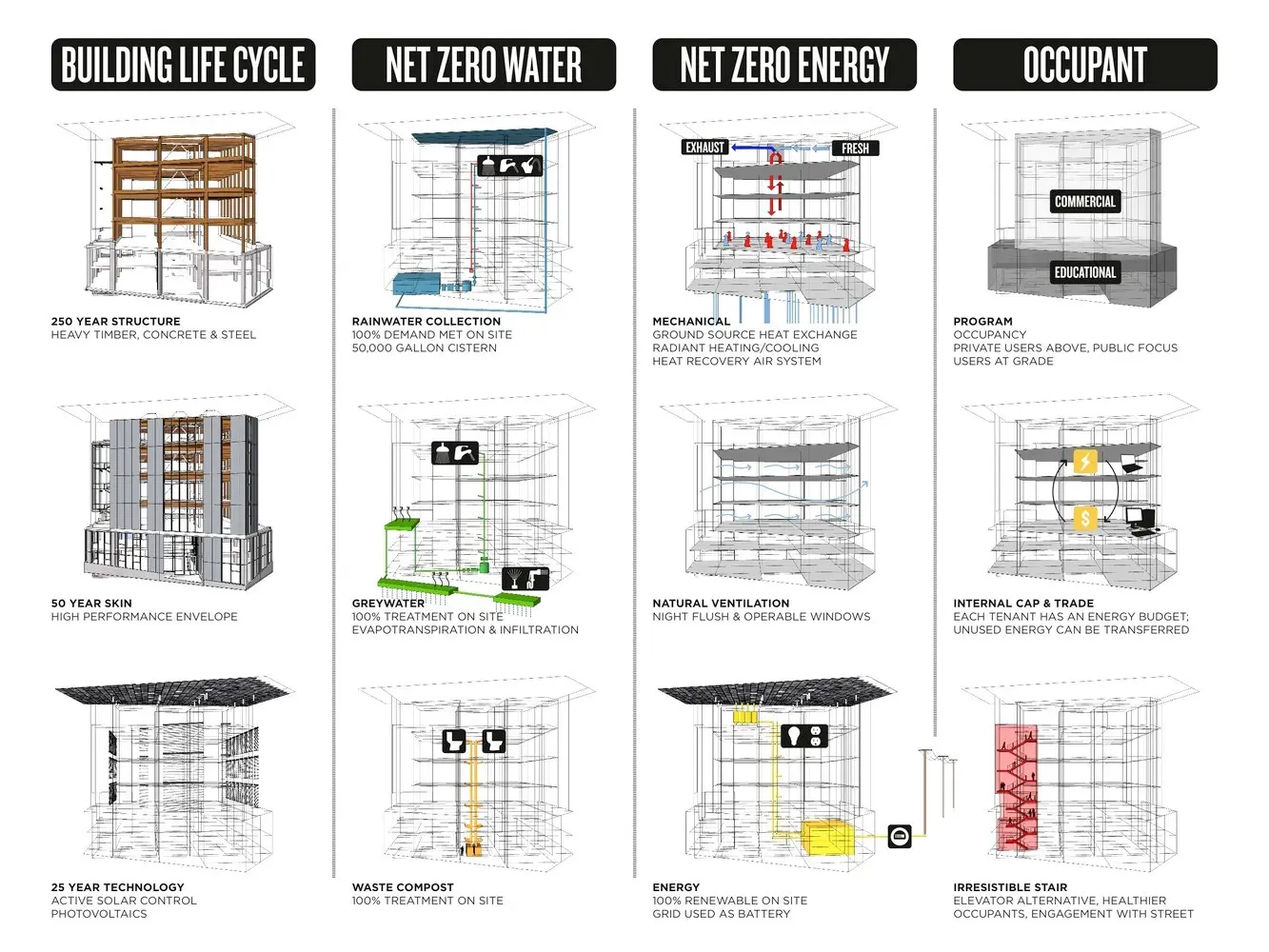
BIM for sustainable building design – Varying stages of lifecycle
Source: https://bullittcenter.org
Site Orientation and Massing Studies
- Leveraging BIM helped the design team analyze the site’s solar potential.
- The building was oriented to maximize south-facing exposure, the side that receives the most sunlight in the northern hemisphere.
- Massing studies in BIM ensured the building’s form allowed sunlight to reach all levels without self-shading.
Daylight Simulation
- To decide how many and which windows to place, where to put the floors and the amount of glazing, we relied on BIM-driven daylight analysis.
- Natural lighting sources were used by placing important rooms in areas where there is a lot of sunlight.
- Both the light shelves and the high ceilings helped daylight penetrate deeper throughout the space.
Solar Panel Layout and Energy Prediction
- The building’s rooftop solar array spans over 14,000 square feet.
- BIM was used to simulate solar exposure, shading, and panel angles to get the maximum energy output.
- Energy prediction tools helped estimate whether solar production could meet the building’s needs, even in a cloudy city like Seattle.
Real-time Feedback and Iteration
- The BIM model was used to test different design scenarios—window sizes, shading devices, and materials.
- The team adjusted the building form based on real-time solar and energy data, not just guesswork.
- BIM helped them strike a balance between solar heat gain and thermal comfort.
Coordination of Systems
- BIM made it easy to coordinate solar gain strategies with HVAC and lighting systems.
- For example, overhangs were designed to block summer sun while allowing winter light in, reducing heating and cooling loads.
- These design strategies were synced across disciplines through a shared BIM model.
Buildings designed with BIM for optimal solar gain can reduce heating costs by up to 50% and lighting energy use by up to 30%, making them not only more sustainable but also significantly cheaper to operate.
Lessons from the Bullitt Center
The success of the Bullitt Center shows how powerful BIM can be when used with a strong vision for sustainability. Here are some lessons that designers and architects can take away:
Solar Gain is Achievable Anywhere
Even in cloudy, rainy cities like Seattle, solar energy can power buildings, if planned smartly using BIM.
Early Design Matters Most
Solar analysis in the early design stages leads to better results than adjusting later. BIM gives teams the ability to test and fine-tune early on.
Collaboration is Key
BIM allows for cross-disciplinary teamwork, bringing architects, engineers, energy consultants, and contractors together in one model. This reduces errors, improves outcomes, and ensures solar strategies work with the building’s systems.
Passive Design First
Before adding technology, focus on passive strategies, orientation, daylighting, shading, and thermal mass. BIM helps you design with nature instead of fighting it.
So, How Can We Harness Natural Light to Shape the Future of Sustainable Design?
Sunrise fills everyday life with clean, limitless, and free energy. Most of the time, we don’t think about accessibility when we are designing. Thanks to BIM, it is not necessary to rely only on estimates and do repairs after a building is finished. With simulation and analysis, we can design how sunlight feels in a house during cool, winter days and how bright it makes a work desk at lunchtime. When you know what to use and how to think, solar gain can be as simple as making the most of a new opportunity.
The Bullitt Center demonstrates what you can do when the right design ideas meet data and technology. Smart early design proves that even in cities with gray clouds, we can make buildings that generate their energy. So, when you are making a sketch or planning a building, pay close attention to more than walls and windows. Reflect on the path and impact of the sun, the way shadows form, and everything you do can help or hurt your access to natural light. BIM should lead you, and the natural light around you will help you find your way. Sustainable architecture isn’t a fad; it shows us the way to build a more promising future.
BIM and LEED Certification: A Look into the California Academy of Sciences. Discover how BIM is used to achieve LEED certification and create high-performance, sustainable buildings.
Read NowFrequently Asked Questions
How does using BIM help gather information about the best solar design choices?
Thanks to BIM, people in the industry can observe the changing solar conditions of a building over the year. It helps find the best positioning for a building, where to put windows, suitable shades and the best materials for letting in the most solar energy and natural light.
Is it still possible for BIM tools to be used when sunlight is limited, as in Seattle?
Yes, BIM becomes particularly useful in places with half the sunshine of other regions. Using the available light is made possible by adjusting building features, positioning windows and using energy-saving systems, as shown in the Bullitt Center project in Seattle.
What kinds of BIM tools can be employed in solar analysis?
Advanced architects generally use Autodesk Revit with Insight, Rhino with plugins from Ladybug and Honeybee and IES VE. They support direct analysis of solar conditions, daylight conditions and the performance of energy in the same virtual environment.
Does the importance of maximizing solar gain extend only to sustainable or green buildings?
It’s not the case at all. Not only are orienting buildings towards the sun a sustainable method; it also improves how interior spaces feel, cuts down on energy costs and ensures a higher standard of living for everyone in any building.