For a long time, digital twins were spoken about as something futuristic, interesting, impressive, but distant from everyday facilities work. They were often associated with high-tech campuses or mega infrastructure projects, not with the daily realities of facility owners and FM teams. That belief is changing rapidly.
As early as 2026, digital twins cease to be experimental. They are turning into useful, operations-oriented solutions that respond to the largest issues of the facility management day, operational cost increases, aging equipment, pressure to be sustainable and the necessity to always have to respond quicker with less. For FM teams and asset managers, digital twins are not about visuals or hype. They are about clarity.
The Changing Reality of Facilities Management
Facilities management today runs under constant pressure. Buildings must be efficient, comfortable for occupants, reach sustainability goals, and adapt to changing usage, keeping budgets tight.
In such conditions, working with incomplete or disconnected information is no longer sustainable. What FM teams need is not more data, but better visibility and context. This is exactly where digital twins begin to fit naturally.
FM teams work where:
- Issues cannot be delayed.
- Occupant comfort is non-negotiable.
- Downtime has real consequences.
- Decisions often need to be made quickly.
Fragmented Information as a Daily FM Challenge
Fragmented information is one of the most prevalent areas of concern in facilities management. There is vital data, and it is rather widely distributed. If something happens, teams will waste precious time on information search and, so, do nothing. The solution to this issue that digital twins offer is to collect build information into one and interconnected digital environment where the data is not simply stored but is connected meaningfully.
FM teams rely on:
- Maintenance logs and work orders
- CAFM or BMS platforms
- Energy monitoring dashboards
- PDFs, drawings, and manuals
- Personal experience of long-serving staff
According to industry research, facility management teams spend nearly 35% of their time searching for fragmented information; Digital Twins mitigate this by centralizing logs, PDFs, and BMS data into a single environment.
What a Digital Twin Really Means For FM Teams
Within FM, a digital twin is not a complicated simulation or a visual trick. It can be described as a living digital image of a real structure, which is how the structure acts with respect to time. Digital twins are not supposed to replace existing systems but rather exist above them, to give them context and make FM teams see what the data is telling them.
By 2026, digital twins used in facilities management are.
- Focused on daily operations, not design visuals.
- Connected to asset and system data.
- Integrated with existing FM tools
- Designed to be intuitive, not technical.
1. From Reactive Work To Informed Operations
Traditional facilities management often follows a reactive cycle. A complaint is raised, an alert is triggered, or equipment fails, and the team responds. This context reduces guesswork and unnecessary site visits. Over time, teams move from firefighting to more informed, confident decision-making.
Digital twins do not cut issues, but they change how teams respond.
With a digital twin, FM teams can quickly understand:
- Where the issue is happening
- Which systems or assets are involved?
- Whether similar issues have occurred before
- If the problem is isolated or part of a larger pattern
2. Operational Simplicity through Better Visibility
There is a common concern that digital twins might add complexity to already busy FM workflows. When implemented correctly, they do the opposite. Instead of jumping between tools, FM teams gain a clearer, more complete picture of how the building is functioning.
Digital twins simplify daily operations by:
- Making asset locations easy to find
- Showing how systems are connected.
- Reducing dependence on multiple dashboards
- Turning raw data into understandable insights
3. Asset Visibility and Long-Term Planning
For asset managers, one of the strongest advantages of digital twins is improved asset visibility. Questions about asset conditions, remaining life, and replacement priority are often difficult to answer with confidence.
Digital twins place asset data within the spatial and operational context of the building. Assets are no longer just entries in a spreadsheet—they are understood as part of a larger system. Asset management becomes initiative-taking rather than reactive.
This supports:
- Better lifecycle planning
- More correct budgeting
- Fewer surprises during upgrades or replacements
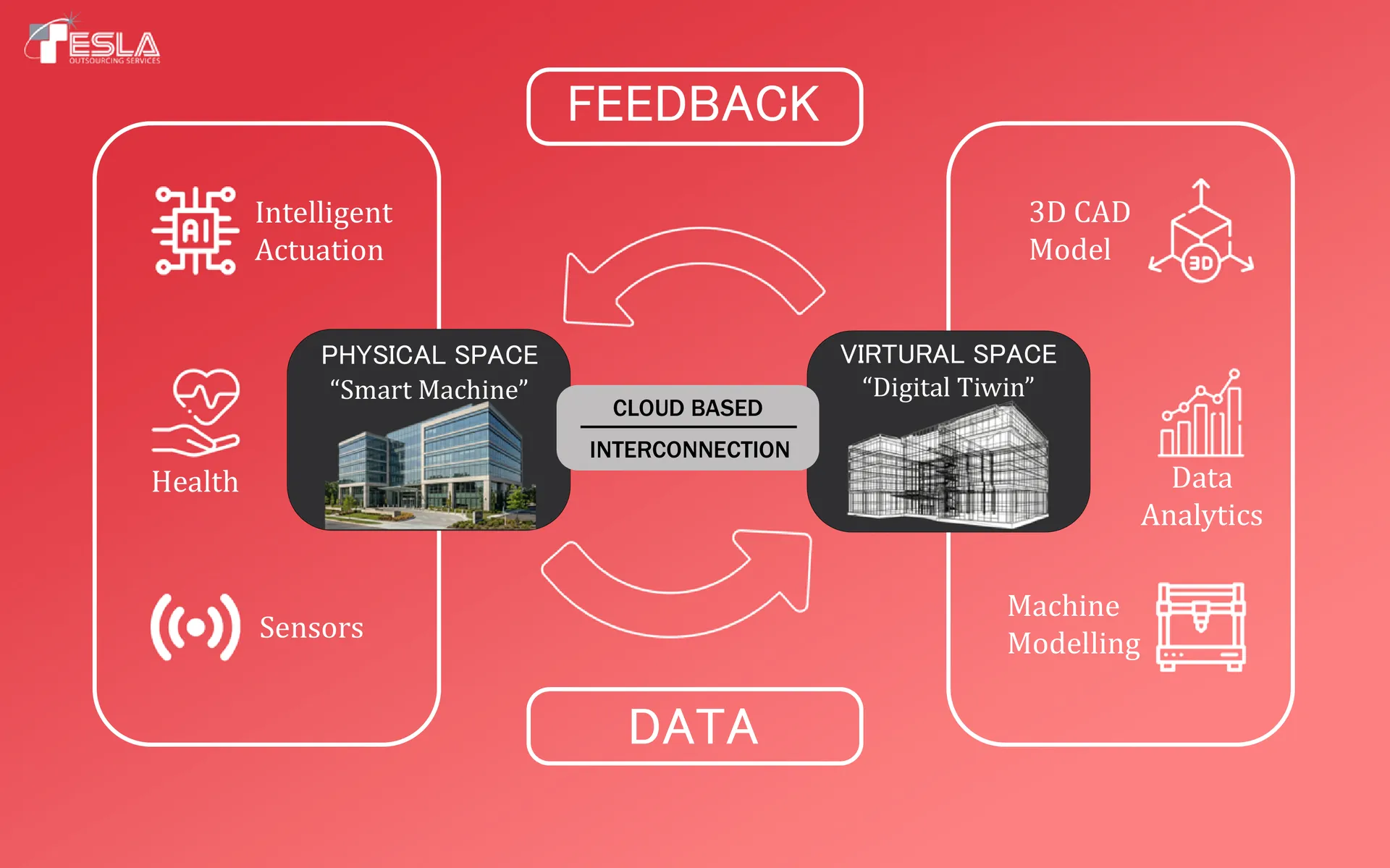
How Digital Twins Work
4. Reducing Dependency
Facilities rely heavily on experienced individuals who “know the building.” While this knowledge is extremely valuable, it is also vulnerable to staff changes. As a result, knowledge becomes an important part of the building’s digital memory. This reduces operational risk and makes onboarding new team members easier.
Digital twins help capture this operational knowledge digitally by:
- Linking Maintenance History to BIM Geometry: Instead of searching through paper logs, teams can leverage the BIM (Building Information Modeling) foundation to “pin” work orders, repair logs, and warranty data directly to 3D components. This provides technicians with immediate spatial context and access to original design specifications during a repair.
- Tracking System Behavior Over Time: By integrating IoT sensors with the digital twin, facilities can move beyond snapshots to see a “movie” of performance. This helps identify “ghost” issues—those intermittent problems that usually only the 15-year veteran of the building would recognize.
- Documenting Relationships Between Assets: Digital twins map the “downstream” effects of a failure. While a veteran knows that shutting off Valve A kills the cooling on Floor 4, a digital twin documents these complex dependencies digitally, preventing accidental outages during maintenance.
Why Digital Twins are Becoming Practical By 2026
The rise of digital twins in facilities management is not driven by trends; it is driven by practicality. This makes digital twins achievable for a wide range of facilities, not just large or high-profile projects.
- Sensors are more affordable and dependable.
- Cloud platforms are stable and scalable.
- Integration between systems is easier.
- Digital twins are now designed around real FM use cases.
A) Predictive Maintenance
Digital twins introduce a more informed approach. One of the most immediate benefits digital twins offer FM teams is a shift in maintenance strategy.
Traditionally, maintenance has followed two familiar paths:
- Fixed schedules that may not reflect real asset condition
- Reactive repairs after something have already failed.
By continuously tracking asset performance, digital twins help find early warning signs, small deviations that show wear, inefficiency, or stress. This will enable the FM teams to act before failures are experienced and not when they are under stress. Maintenance will be less urgent and disruptive and will be more planned, calculated, and strategic. To the facility owners and asset managers, this results in:
- Reduced unplanned downtime.
- Lower repair and replacement costs
- Longer asset life
- More predictable maintenance budgets
Shifting from reactive to predictive maintenance via Digital Twins can extend the life of critical building equipment by 10–15%, significantly reducing unplanned capital expenditure.
B) Energy Optimization
One of the most difficult aspects of facilities teams is energy management. Although energy data is a common phenomenon, in cases, it is challenging to understand without background.
Digital twins change this by linking energy consumption directly to:
- Spaces and zones
- Systems and equipment
- Occupancy patterns
- Operating schedules
This allows FM teams to move beyond surface-level questions like “Why did energy use increase?” and instead ask, “Which systems or spaces are driving this change, and why?”
With this, teams can:
- Target inefficiencies. precisely
- Avoid blanket cost-cutting measures.
- Balance comfort with performance.
- Track improvements over time.
Real-world implementations show that Digital Twins can reduce building energy consumption by up to 20% by providing FM teams with the context needed to ask “why” specific systems are driving usage rather than just tracking “what” was used—SOURCE
C) Sustainability Performance
Sustainability demands are no longer attached to the design level. The owners of the facilities are supposed to prove the performance of the buildings overall.
Sustainability becomes measurable and transparent instead of presumed or being measured once. This is not only to support compliance but also to create credibility with the stakeholders. The digital twins ease such transformation because they can track performance in real time.
They help FM teams:
- Monitor real energy and resource usage.
- Track indoor environmental quality.
- Document operational improvements.
- Support sustainability reporting with evidence.
BIM 6.0: What the Next Era of Building Information Modeling Will Look Like in 2026 & beyond.
BIM 6.0: The Next Era of Building Information ModelingE) Stronger Asset Lifecycle Planning
For asset managers, one of the most valuable aspects of digital twins is the ability to plan with confidence.
Digital twins offer a clear view of:
- Asset age and condition
- Performance trends over time
- Maintenance history
- System dependencies
This visibility supports smarter decisions around:
- Replacement timing
- Upgrade prioritization
- Capital expenditure planning.
F) Reducing Operational Risk
Facilities run under increasing regulatory and operational scrutiny. Compliance reporting, safety checks, and performance audits are becoming more frequent and more detailed. Digital twins help simplify this process.
By supporting structured, up-to-date building and asset information, FM teams can:
- Respond to audits faster.
- Reduce manual reporting effort.
- Demonstrate compliance more clearly.
- Find risks early.
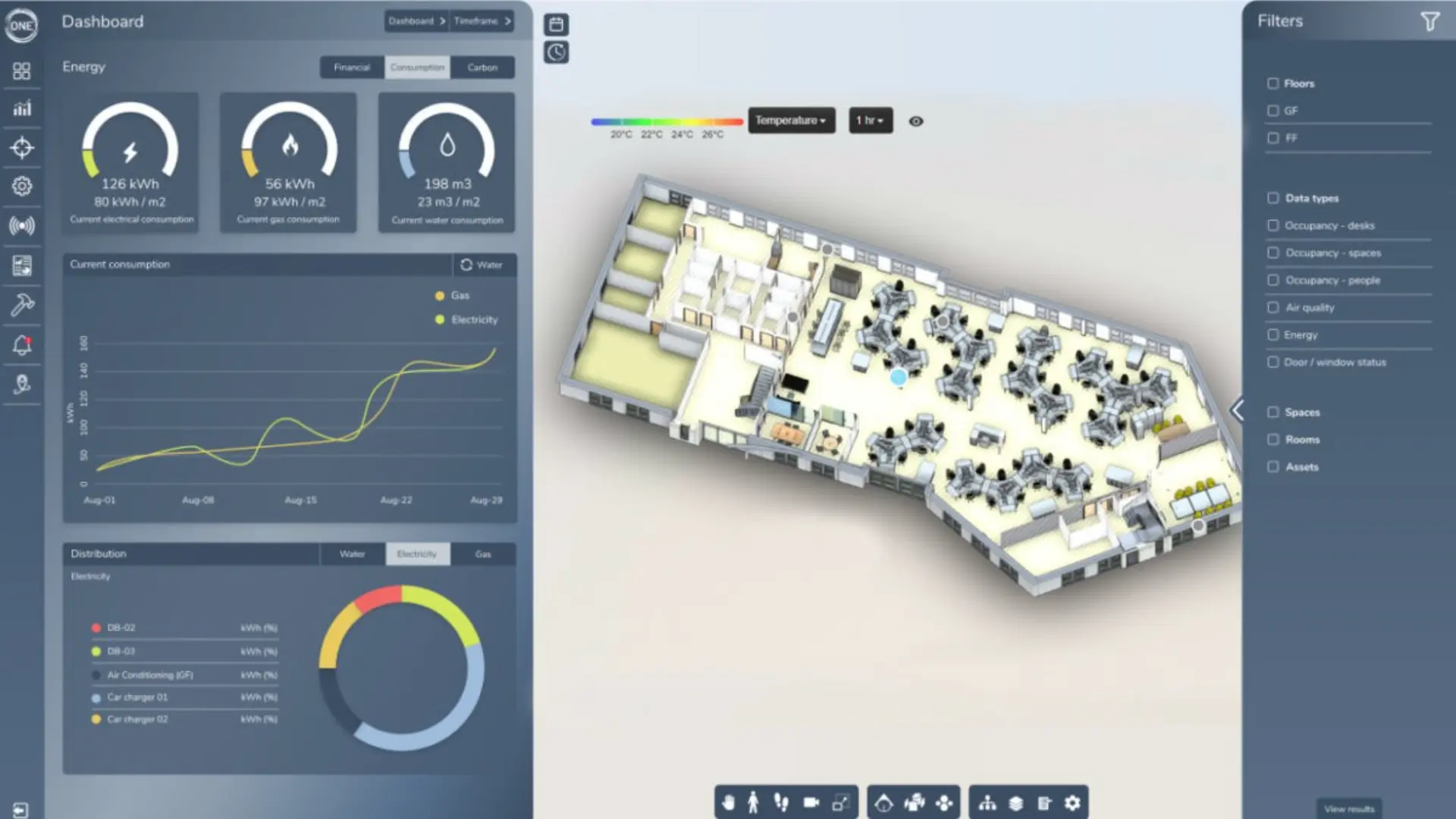
Digital Twins For Facility Management
Digital Twins a Support System, Not a Replacement
A common concern among FM professionals is that digital twins might replace human ability. Digital twins work best when they support people rather than replace them. FM teams and asset managers still make the decisions. The variation is that such decisions are now informed with clearer information that is more dependable.
This change enables the professionals to concentrate on judgment, prioritization, and strategy where human experience is of utmost importance.
They manage:
- Data organization
- Pattern recognition
- Performance tracking
Digital Twins in 2026
By the year 2026, the digital twins will not be seen as an added technology. They will also feel part of the operating environment and will silently support the decisions without ensuring that they always have full attention.
To various stakeholders, it implies:
- Facility owners: improved management of effects of costs and performance over the long term.
- FM crews: less firefighting and more belief in day-to-day operations.
- Asset managers: less risk and more definite lifecycle strategies.
By the year 2026, the digital twins will not be seen as an added technology.
The 2026 AEC Technology: BIM, AI, & Digital TwinsConclusion
Digital twins in 2026 are not the promise of the future or the complicated simulation. They have to do with easier-to-manage, easier-to-operate, and smarter facilities over the course of time.
- To the facility owners, they ensure long-term asset value.
- In the case of FM teams, they lessen stress and uncertainty.
- In the case of asset managers, they embrace factual, confident decision-making.
With purpose, digital twins cease being a technology project and begin to be an operational advantage. With the ever-increasing complexity of facilities, steps to the start of digital twins are no longer a matter of whether they will be implemented, but rather the question is how well the teams will implement them.


