
Introduction
If you are in the AEC (Architecture, Engineering, and Construction) sector, then there is a possibility that you have heard something about ISO 19650. But the real question is, what is it, and why is everyone talking about it?
Let’s dissect. ISO 19650 is an international standard for a systematic approach to managing information within Building Information Modeling (BIM). Put simply, it’s a rulebook that keeps all the project players working off the same page with the same set of standards, file formats, and processes. They may be architects, engineers, contractors, or facility managers.
Suppose a large construction project has several teams working on various tasks, and if there is no methodical means of dealing with the information, things can soon get out of hand. Misunderstandings, old files, and redundant work are like a nightmare, aren’t they? That’s where ISO 19650 is important.
In this blog, we will come to know everything you want to know about ISO 19650, its major concepts, advantages, disadvantages, and, most importantly, how you can implement it successfully in your BIM projects.
ISO 19650 is a series of standards, with different parts addressing specific phases of the asset lifecycle. For example:
- ISO 19650:1 focuses on the concepts & principles.
- ISO 19650:2 focuses on the delivery phase.
- ISO 19650:3 focuses on the operational phase.
- ISO 19650:4 focuses on the information exchange and interoperability.
- ISO 19650:5 focuses on the security of information.
- ISO 19650:6 focuses on the health, safety, and on-site risk mitigation.
Understanding ISO 19650
What is ISO 19650?
ISO 19650 is an international standard for managing information in Building Information Modeling projects, which covers everything from project initiation to asset management. It started from the UK’s BS 1192 and PAS 1192 standards. It has made it easier for firms to work on global projects with consistent BIM protocols.
- It aligns with BIM Level 2 and beyond, which means that structured collaboration, data, sharing, and model coordination are prioritized.
- It focuses on information management so that data is well-organized, easy to access, and reliable throughout the project lifecycle.
- It is applicable to all project sizes, whether it is a small residential building or a complex infrastructure project.
ISO 19650 is built upon the foundation of the UK’s PAS 1192 standards. This means that a design team in Japan can seamlessly collaborate with a construction team in Canada, using the same information management principles.
It’s important to differentiate between ISO 19650 and the older concept of ‘BIM levels’. Historically, ‘BIM levels’ were used to describe the maturity of an organization’s BIM implementation. However, ISO 19650 takes a different approach. It provides a standardized framework for managing information throughout the lifecycle of a built asset. Essentially, ISO 19650 defines how data should be handled, ensuring consistency and collaboration, rather than simply classifying a project or organization based on a maturity level. ISO 19650 provides the methodology for the information management aspects of what was previously defined as BIM level 2.
Why is ISO 19650 Important?
ISO 19650 addresses the problem by making a mandatory standardization on BIM information management. This means reduced rework, better team collaboration, and efficient workflows. Many projects generate data from different kinds of teams on various platforms, which results in:
- Confusion about versions of files (Has anyone worked with someone whose model has become outdated? Yes, very often!)
- A lot of redundant work because the information is not in one place.
- Miscommunication among project members leads to time and financial overruns.
Key Objectives of ISO 19650
Not creating rules upon another rule creates a new barrier to get across or indulge yourself within the thought of constructing new barriers to get across: that is ISO 19650.
- Everyone should follow the same format for naming files, organizing data, and sharing models, which means that all parties will work from one version of the document, rather than forcing teams to declare their own document versions.
- All information is kept accurate and accessible throughout design, construction, operations, and maintenance.
ISO 19650 – Framework & Key Concepts
Now that you understand why ISO 19650 is important, let’s get into the nitty-gritty of how it works. The standard is divided into four key parts, each focusing on different phases of BIM projects.
ISO 19650:1: Concepts & Principles
This part lays the foundation. It introduces the basic principles of information management and explains the importance of a Common Data Environment (CDE).
Common Data Environment (CDE): What is it?
Think of a CDE as a centralized “cloud” where all BIM data is stored, shared, and accessed by project teams. It eliminates confusion by ensuring that everyone works with the latest information.
ISO 19650:2: Delivery Phase of Assets
This is where things get practical. It explains how to manage information during the active construction phase. Some key concepts include:
- BIM Execution Plan (BEP) – The blueprint for managing BIM workflows. It defines roles, responsibilities, and data exchange protocols.
- Exchange Information Requirements (EIR) – A document that sets out the information clients need from the project team.
- Responsibility Matrix – A clear assignment of tasks to avoid duplication of work.
ISO 19650:3: Operational Phase of Assets
The first two sections describe how to design and construct, but ISO 19650:3 describes how to handle information when a building is finished. This is useful to asset owners and facility managers who require trustworthy information to perform maintenance and modifications.
ISO 19650:4: Information Exchange
This section facilitates the seamless sharing of information across various BIM platforms and stakeholders. It establishes:
- File formats that may be used for smooth interoperability.
- Validation rules to maintain consistency.
- Simple procedures for updating and sharing information.
Benefits of ISO 19650 Implementation
So, why should you invest time and resources into adopting ISO 19650? Simple—because it makes your life easier and your projects more efficient. Here are some key benefits:
For Architects & Engineers
- It helps in better Design Coordination. No more version mismatches! Everyone works on the same updated model.
- Because of this, the rework gets reduced. Changes are tracked in a structured manner, minimizing costly mistakes.
For Contractors & Project Managers
- It improves scheduling & Cost Estimation. Clear information management reduces delays and unexpected costs.
- Contractors and subcontractors work with real-time, accurate data, which helps in stronger and efficient coordination.
For Owners & Facility Managers
- It is an easier asset maintenance. Accurate digital records ensure smoother facility management.
- It gives better insights about when systems need upgrades or repairs.
Did You Know?
A key aspect of ISO 19650 is its emphasis on the entire asset lifecycle, not just the design and construction phases. This includes the operational phase, which is often overlooked. This whole-lifecycle approach enables better asset management and can lead to significant cost savings and efficiency gains over the long term.
For BIM Consultants & Managers
- It helps in better and standardized BIM Documentation. Clear protocols mean less confusion and fewer errors.
- It is good for faster approvals & reviews. Structured information speeds up decision-making and compliance checks.
Companies adopting ISO 19650 have reported significant efficiency improvements. Reach us today for ISO 19650 consultation and implementation guidance.
Challenges in Implementing ISO 19650
Complex Documentation & Compliance
The Problem
ISO 19650 presents such a comprehensive mix of guidelines, documents, and procedures that one could readily understand how it might be overwhelming for firms completely unfamiliar with structured BIM workflows.
Solution
The solution is in taking baby steps, with a focus on the initial essentials: BIM Execution Plans (BEPs) and Common Data Environments (CDEs) first, with the rest of the ISO 19650 machinery coming in later.
Resistance to Change & Training Gaps
The Problem
Many people have become accustomed to the traditional BIM workflow and might have considered ISO 19650 “just another paperwork.” Also, without proper training and awareness, they might resist the change.
Solution
How do you deal with resistance? Educate the team on the benefits! Regular workshops and hands-on training so that the staff realizes ISO 19650 as simplifying their work as opposed to complicating it.
Interoperability Issues between BIM Platforms
The Problem
The bottom line is that not every BIM software can be interoperable with others. Each platform deals with data differently based on tools such as Revit, ArchiCAD, and Navisworks, thus leading to serious issues across the teams for information management.
Solution
The use of BIM standards as IFC and COBie would also ensure interoperability by enabling maximum transfer of data through the different software.
Customizing ISO 19650 for Specific Projects
The Problem
For every project, the scenario is different, and companies usually find it difficult to tailor ISO 19650 standards to their own workflows.
Solution
The art is to customize specific documents– BEP, EIR, and Information Delivery Plans (IDP)-according to the needs of the project; the alternative is forcing a set of all-purpose templates onto all projects.
It’s important to understand that ISO 19650 is about information management, not just creating 3D models. It sets out a framework for organizing, sharing, and maintaining information throughout the asset lifecycle. This distinction highlights the importance of data quality and accuracy, which are essential for effective decision-making.
Best Practices for ISO 19650 Compliance
Now that we are through with challenges, let’s focus on how to put ISO 19650 into practice successfully on your BIM projects.
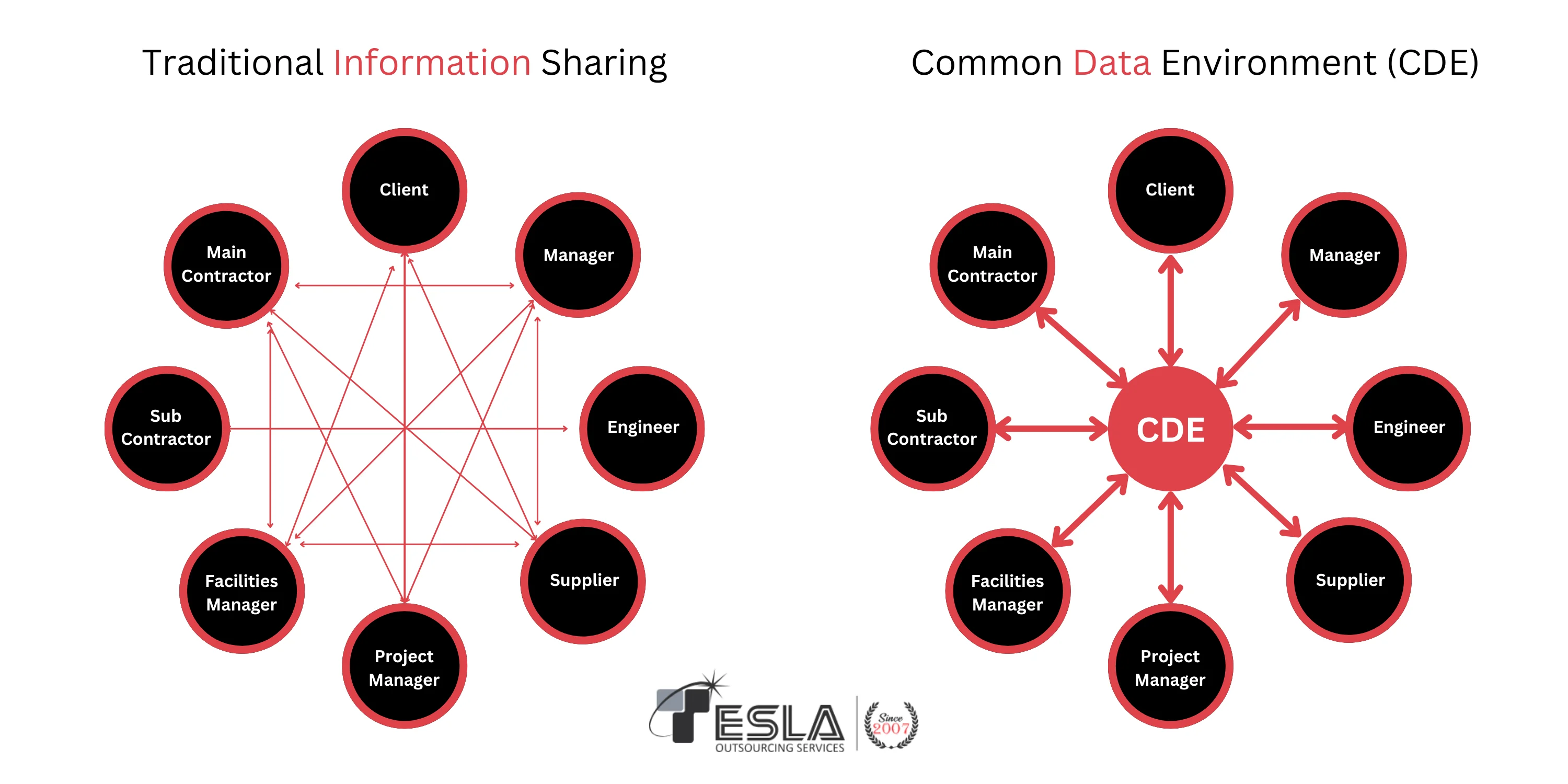
Establish a Strong Common Data Environment (CDE)
- Choose a centralized, cloud-based CDE (like BIM 360, Trimble Connect, or Dalux) to manage project data.
- Make sure that it will define and implement clear folder structures, access rights, and versioning systems.
- Incorporate automatic validation tools to avoid the use of outdated documents in ongoing projects.
One of the core principles of ISO 19650 is to promote better collaboration among project stakeholders. By standardizing information management practices, it ensures that everyone has access to the right information at the right time. This enhanced collaboration can lead to fewer errors, reduced rework, and improved project outcomes.
Define Clear Roles & Responsibilities
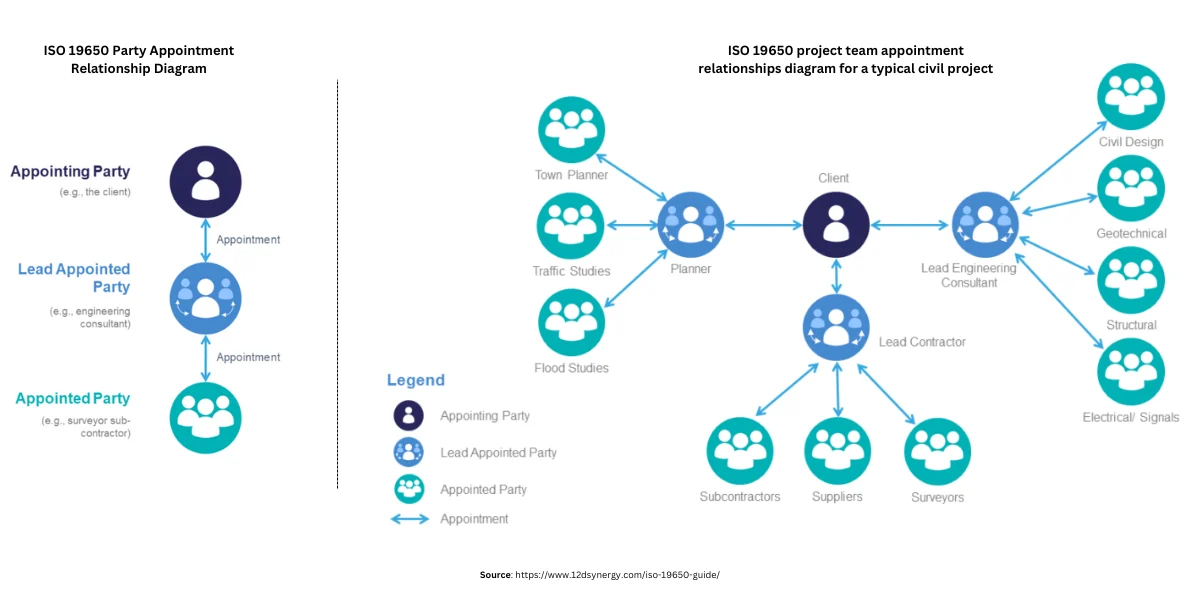
Setting up a Responsibility Matrix will ensure everyone knows who does what and avoid duplicate efforts. ISO 19650 emphasizes role-based workflows, which means you need a clear assignment of tasks:
- Appointing Party: Defines project requirements.
- Lead Appointed Party: Manages the overall BIM execution.
- Task Teams: Execute specific BIM-related tasks.
Create Standardized BIM Execution Plans (BEP)
The BEP is your roadmap to ISO 19650 compliance. Make sure it includes:
- A clear data-sharing protocol.
- Defined naming conventions and metadata standards.
- A strategy for updating and validating information.
Use Automated BIM Validation Tools
With automated model checking, one can be assured that any project adheres to the ISO 19650 standards without manual clerical errors with platforms like Solibri, Navisworks, or BIMcollab.
Conduct Regular Training & Awareness Programs
The better your team understands ISO 19650, the more effectively your company will be able to implement it. Harboring regular webinars, case studies, and workshops can help fill the gaps.
How Tesla Outsourcing Services Supports
Switching to a structured BIM workflow can be hard and pretty challenging, but it is where we come in to help.
BIM Implementation
We help firms transition to ISO 19650-compliant workflows by:
- Analyzing your current BIM processes.
- Creating customized adoption plans.
- Setting up CDEs and project-specific templates.
BIM Documentation & Compliance Support
We provide end, to, end support for ISO 19650 documentation, including:
- BIM Execution Plans (BEP) tailored to your projects.
- Exchange Information Requirements (EIR) to standardize data requests.
- Model validation workflows to ensure data integrity.
BIM Coordination & Clash Detection
Focusing on clash detection and resolution in adherence to ISO 19650 standards is our aim. With tools such as Navisworks and BIM 360, we render smooth coordination across disciplines.
Training for AEC Firms
We offer customized training programs on:
- ISO 19650 principles and best practices.
- Hands-on BIM workflow training.
- Software integration for smooth compliance.
Software Solutions & Customization
Need help integrating ISO 19650 with your BIM software? We assist with:
- Setting up standardized BIM libraries.
- Custom Revit families and templates.
- Developing automation scripts for BIM validation.
Summing Up!
ISO 19650 is not one more industry standard; it is a strategic framework intended to improve efficiency, transparency, and collaboration for BIM-driven projects. By adopting ISO 19650, AEC professionals would be able to minimize the incidence of miscommunications and the extent of costly rework on projects and use systematically structured information management in project execution.
The learning process while transitioning to ISO 19650 may be quite a haul. However, with long-term benefits, these instances seem pretty insignificant. The ISO 19650 framework is a well-established architecture that guarantees the synchronization of all architects, engineers, contractors, and facility managers with current, accurate information. This translates into shorter delays in projects, better decision making, and a more sustainable way to manage such assets.
At Tesla Outsourcing Services, we specialize in ISO 19650 implementation, BIM consulting, and digital transformation for AEC firms. Our team can help you:
- Setting up a fully compliant Common Data Environment (CDE)
- Developing project-specific BIM Execution Plans (BEP) and other key documentation.
- Improving coordination and clash detection using the ISO 19650 standard.
- Will train the teams on ISO 19650 best practices and software integration.
We are on top of streamlining your BIM workflows and ensuring compliance with ISO 19650 standards! Join us to make projects more efficient, compliant, and hedge-ready for future developments.
Tesla Outsourcing Services specializes in ISO 19650 implementation and BIM consulting. Contact us today to streamline your BIM workflows and ensure compliance.
Talk to ExpertsFrequently Asked Questions
How does ISO 19650 differ from previous BIM standards?
It is the international version of the previous BIM standards UK’s PAS 1192 family with national applicability for international projects. It builds on the disciplined methodology of PAS 1192 while improving workflows for better sharing of information and controlling its life cycle.
Can small firms adopt ISO 19650, or is it only for large projects?
It is scalable and can be modified to suit small and large projects. While larger projects take advantage of its formal collaboration, smaller companies can adopt only the required elements to improve their efficiency without overburdening their teams.
What software is required to comply with ISO 19650?
There is no requirement for specific software, but commonly used BIM platforms such as Autodesk Construction Cloud (ACC), BIM 360, Trimble Connect, and Navisworks accommodate ISO 19650-compliant processes. The use of CDE-enabled software is necessary for compliance.
How long does it take to implement ISO 19650 in a firm?
The timeline varies depending on the company size, current BIM and project requirements. A phased approach is needed, starting with training, documentation setup, and CDE implementation, which can help firms transition within a few months to a year.


