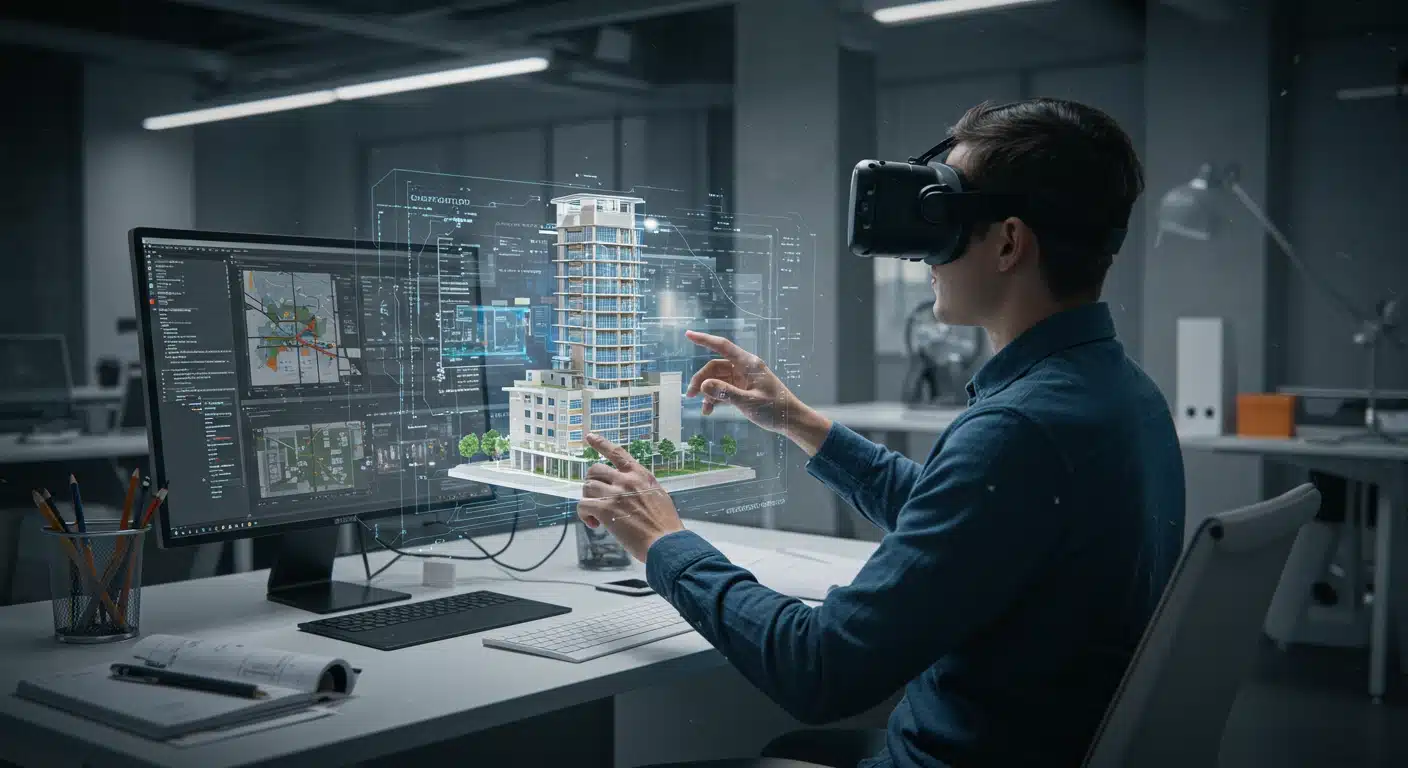
With the constantly changing environment of architecture, engineering, and construction (AEC), newer technologies are evolving with established processes to create a new design paradigm. The use of Virtual Reality (VR) in Computer-Aided Design (CAD) and Building Information Modeling (BIM) is possibly one of the most powerful things that is going to happen on the horizon-as it is largely redefining our conceptualization, communication, and built-form processes.
Traditionally, CAD has formed a strong base for the design and drafting procedures by assisting professionals to transform their ideas into technical accuracy. Whether using 2D blueprints or complex BIM 3D models, CAD software has been the powerhouse in most of the documentation in design work. However, CAD can lack one important aspect of experience, even though it creates technical precision. Untechnical clients and stakeholders will not be able to achieve a complete visualization of a design by staring at a screen or a sheet of paper. Now, Virtual Reality comes in.
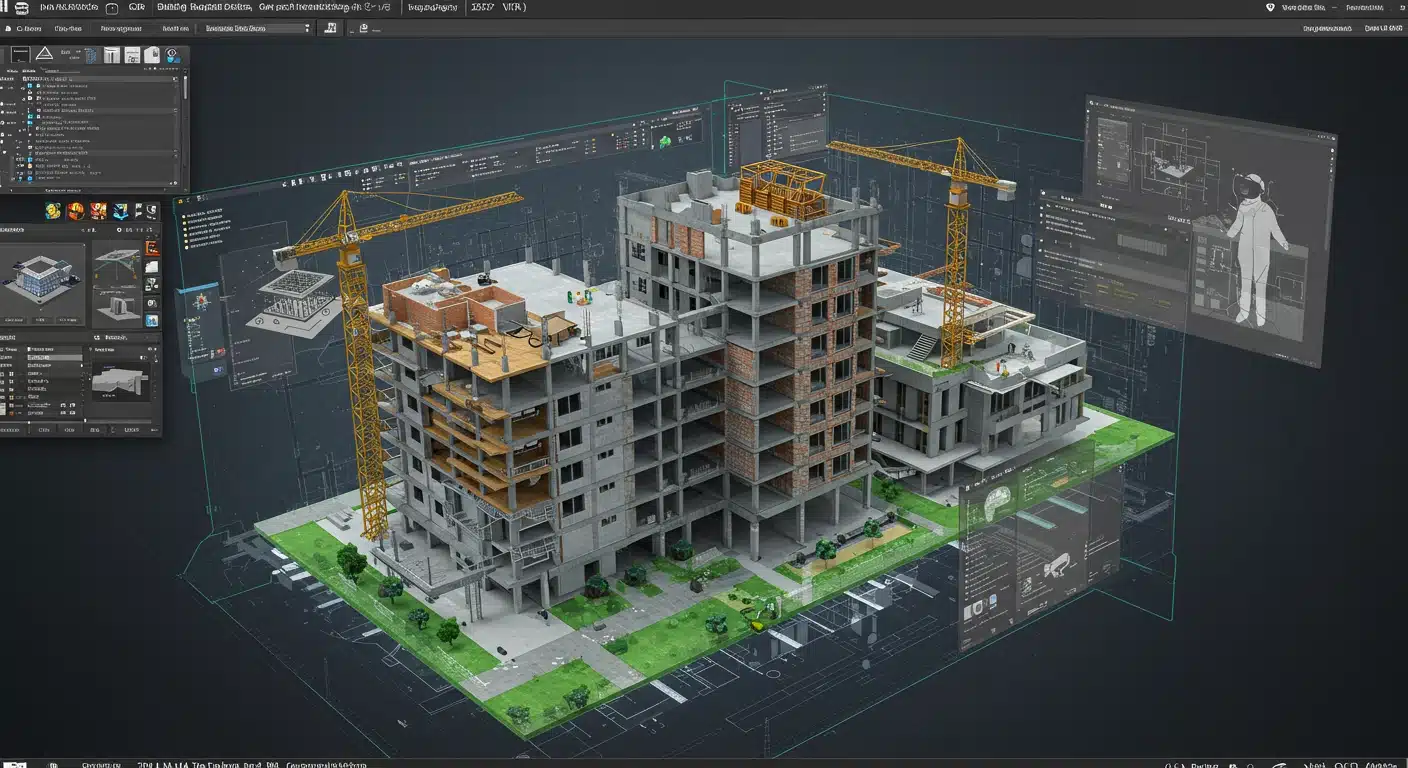
Virtual Reality-Enabled CAD Designs
The gap is filled with VR-enabled CAD/BIM that gives users the chance to enter their designs. It develops immersive spaces where the designers, the authors of the project, their clients, and the people constructing these buildings can view them in three dimensions, touch their elements, and able to modify them in real-time. This physical sensation transcends the perception and choices related to design and presents a fresh, new degree of understanding as well as involvement.
Just picture this spectacular power being joined with outsourcing. Global outsourcing in terms of CAD drafting and BIM services has already shown its worth when it comes to cost benefit, scalability, and availability of specialized resources. Due to the advent of VR-powered CAD/BIM, outsourcing vendors now have the modest means of providing top-tier workforce next-tier deliverables, hyper-realistic walkthroughs, interactive simulations, immersive design review, and so on at a fraction of in-sourcing expenses.
This blog explains the way the game is being changed using Virtual Reality in Computer Aided Design and why outsourcing these services is providing a vital course of action in the more progressive companies in the AEC industry. Are you an architect who needs the full-scale presentation of their designs, or a developer who needs to expand in time, but lacks the resources to hire a team or is looking to outsource and expand quickly? Perhaps VR-enabled CAD is the future frontier you were waiting to be able to use.
Understanding Virtual Reality in CAD
To have a clear picture of what the potential of VR-enabled CAD for outsourcing is, it is first good to know what the integration represents and how it is redrawing the rules of digital design.
What is Virtual Reality within the CAD Scene?
CAD Virtual Reality means viewing a 3D model in an immersive environment in real time. Unlike the conventional CAD models, which show up on the screen, VR models can only be observed through the sensors installed in head-mounted displays (HMDs) such as Meta Quest, HTC Vive, or Varjo, beauty wore which the user can physically traverse through the design.
The user becomes a participant in the design, no longer being the viewer. If it is an architectural floor plan, a mechanical assembly, or a large infrastructure project like a city, VR is what turns a model into a physical place that can be explored like an actual three-dimensional building.
The Technology behind It: How It Works:
A few layers of software and hardware are required to make VR work with CAD models:
- CAD/BIM Software: Use such platforms as Autodesk Revit, SketchUp, or Rhino to be a foundation for the model.
- VR Plugins or Extensions -Plugins like Enscape, Twinmotion, IrisVR Prospect, and Unity Reflect make CAD models interactive.
- VR Headsets: Headwear such as Oculus/Meta Quest, HTC Vive, and Pico 4 provides the technology required in spatial visualization.
- VR-ready work stations: These are high-performance PCs or cloud-based platforms where the data-intensive models are rendered on them with a smooth flow to interact in real-time.
Traditional CAD vs. VR-Enabled CAD: A Quick Comparison
| Feature | Traditional CAD | VR-Enabled CAD |
| View Mode | 2D screen/monitor | Fully immersive (headset) |
| Client Understanding | Technical drawings/renders | Real-time walkthrough & interaction |
| Design Changes | Manual edits & reviews | Instant feedback in a VR environment |
| Collaboration | Desktop sharing/screenshots | Shared virtual space meetings |
| Emotional Connection | Abstract understanding | Real-world spatial experience |
Cases of VR Software in designing CAD
- Enscape – Real-time rendering plug-in. revit, SketchUp, ArchiCAD, Rhino. Provides a single-click VR output.
- Twinmotion – Real-time visualizer that is easy to use; supports VR; great option when a quick walkthrough is needed.
- Unity Reflect- A BIM-to-VR workflow system that allows real-time teamwork and engagement.
- IrisVR Prospect- It is tailor-made for AEC practitioners to import Revit and Rhino files and turn them into VR experiences.
- Unreal Engine (through Datasmith) Advanced rendering and interactivity to give serious visual storytelling.
The Importance of VR in Design
True-to-Scale visualization: It helps to identify lapses or inefficiencies in dimensions, circulation, or accessibility even before the construction commences.
- More efficient communication: Fills the knowledge gap between designers and non-technical clients.
- Emotional Engagement: Allows the stakeholders to sense the emotional ambiance (feel) of a building, its light, and the free movement of space in areas that 2D/3D cannot replicate.
- Interactive feedback: Allows on-the-fly tuning and what-if analyses within the model, saving on redesigning costly elements later.
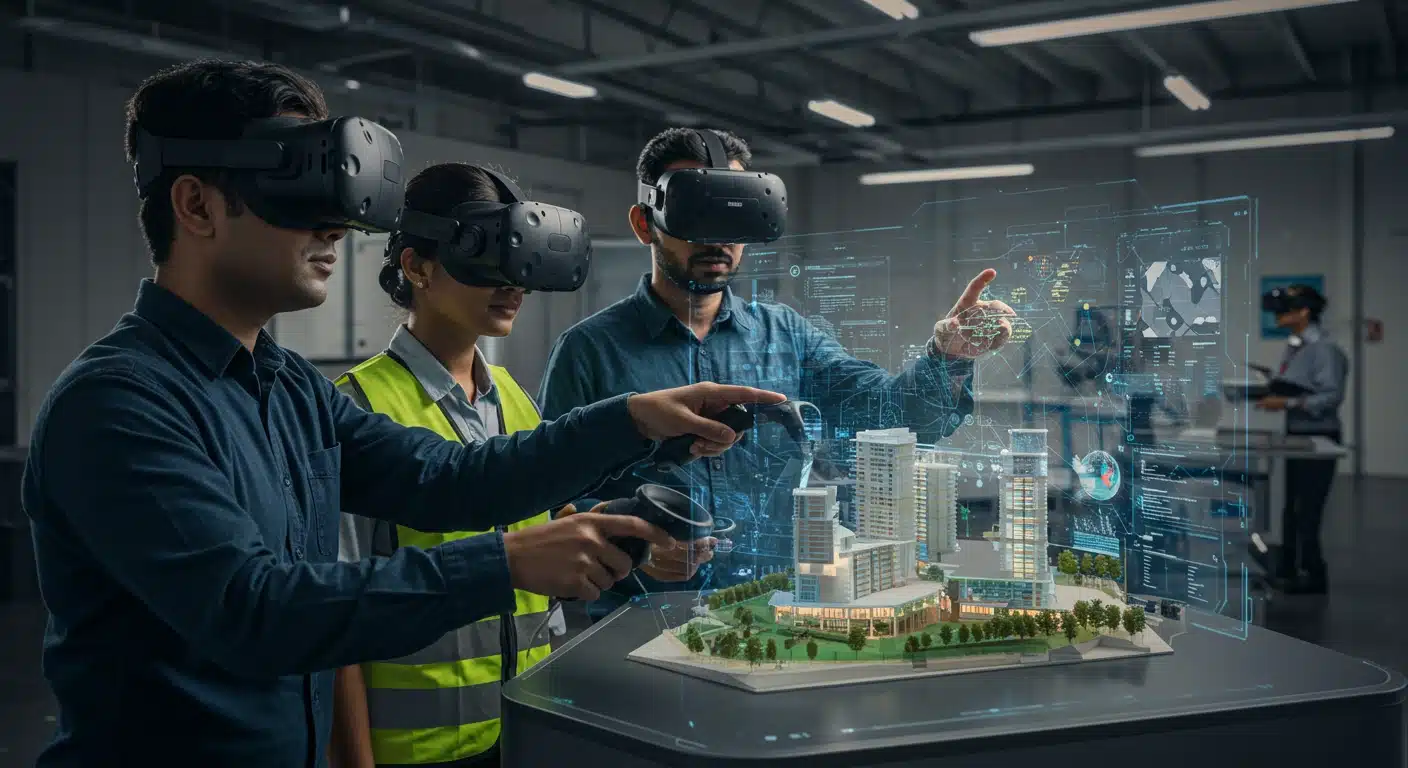
The Importance of VR in Design
Examples of VR applications in CAD: Common Uses
- Pre-design presentations: Reality-like demonstrations that secure customers and investors.
- Design development: Consider material, color, and lighting dynamically.
- Stakeholder buy-in: Give municipalities or communities a chance to tour proposed urban infrastructure virtually.
- Construction handoff: VR can be used in training operations or safety simulations.
Benefits of VR-Enabled CAD for the AEC Industry
It is not just technology, but a strategic advancement of the Architecture, Engineering, and Construction (AEC) industry, to integrate Virtual Reality (VR) into Computer-Aided Design (CAD). Due to the increased complexity of the design and the variety of stakeholders, there is an even more pressing need to communicate better, make faster decisions, and minimize rework.
What are the most essential potential advantages of VR-enabled CAD in the AEC industry? Let us have a closer look:
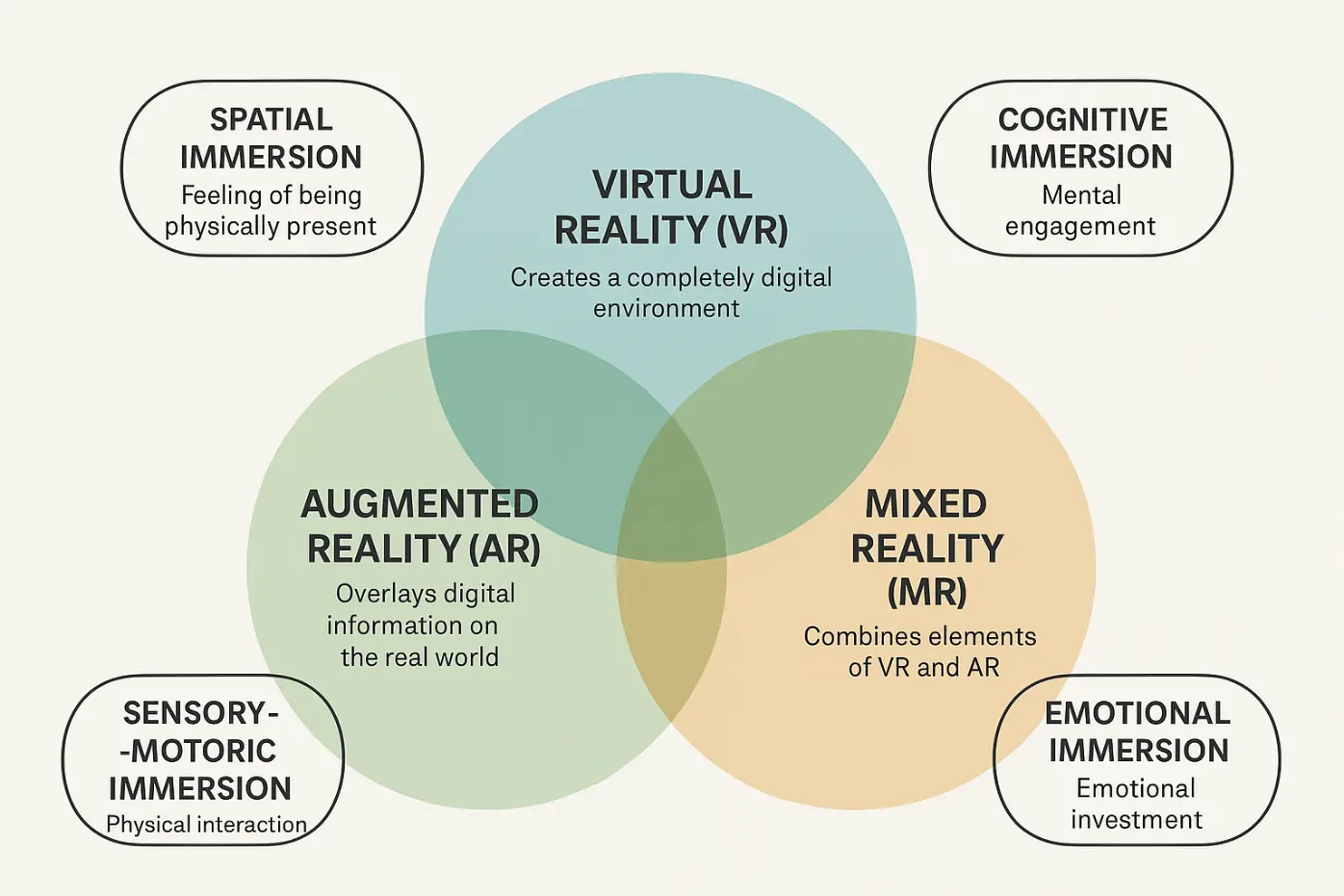
Benefits of VR in AEC Industry
Augmented Design Visualization
The need to make clients understand spatial intent has been one of the greatest challenges in the field of design communication. The solution to this problem is VR that places clients in the design environment and gives them a walkable experience, which is true to scale.
- Architects can exhibit lighting effects during the day.
- Interior designers can model textures, materials, and furnishings.
- Within the model, engineers will be able to check structural relationships.
Better Inter-Team collaboration
What this means today is that projects are being done with geographically dispersed teams: the architects in India, consultants in the US, and developers in the Middle East. VR-based CAD enables multi-user virtual meetings in real-time, which means that stakeholders, at their locations, can:
Read over the model.
- Highlight and mark the problems in 3D.
- The ability to propose matters of content of layout during the session.
Decreased Design and Construction Mistakes
A major percentage of construction problems can be identified as having arisen due to misinterpretation of a design or lack of coordination. VR can be used in the early stage to identify errors in the whole design process:
- Spatial conflicts (i.e., HVAC conflicts with structural beams).
- Ease of access and safety considerations.
- Lights or visibility-related problems with the machines.
- Fewer RFI (Requests for Information).
- Decreased change orders.
- Better documentation of the construction.
VR Doubles Error Detection Capability
Statistic: Construction novices with less than three years of experience were able to double their ability to spot design errors in 3D models using immersive VR interfaces compared to traditional desktop-based review methods —SOURCE
Time Saving and Cost Savings
Although a VR configuration might appear to be a luxury, it results in abundant downstream savings:
- Improved Reduced Rework: Errors are detected early that resulting in reduced re-work during construction.
- Quick iterations: Design in real-time, build and test.
- Effective Training: VR will allow contractors and teams to rehearse the construction process or launch the equipment.
A noteworthy observation
AR Technology Reduces Construction Costs and Accelerates Progress
AR-based modeling reduces model design time by 10% and reduces construction time by 7%, while AR implementation can reduce rework costs by 18.4% to 34%—The Glimpse Group Research
AR Technology Reduces Construction Costs and Accelerates Progress
AR-based modeling reduces model design time by 10% and reduces construction time by 7%, while AR implementation can reduce rework costs by 18.4% to 34% —The Glimpse Group Research
What makes CAD enabled to be executed with VR particularly attractive is that it combines the expertise of those who are required to be technically competent and non-technical parties involved in a particular project. Clients, investors, and community members are going to be able to see a project the way the designers see it, a walkable location that engulfs you, for the first time. This mutual awareness cuts down on miscommunication, establishes higher levels of trust, and vastly speeds up decision-making, and VR is more of a communication revolution than a tool.
Summing Up!
VR-enhanced CAD is rearranging how design is imagined, discussed, and inspected. Using everything from immersive walkthroughs to real-time feedback, it is developing a design environment that is more welcoming, effective, and interesting. The opportunities of VR do not end in the design studios, though. Part 2 will discuss the synergy between outsourcing and VR-enabled CAD, enabling access to global talent and lower costs, and scalable, cutting-edge solutions to all projects regardless of their scale.
Frequently Asked Questions
What makes VR-based CAD different than conventional CAD?
Traditional CAD draws on 2D screens, whereas VR-compatible CADs result in real-life-like experiences that, on a closer level, draw a better picture of comprehension.
What software is mostly used for VR-CAD?
Enscape, Twinmotion, IrisVR Prospect, Unity Reflect, and Unreal Engine with Datasmith are popular examples.
Why is VR significant in design?
It enhances true-to-scale visualization, communication, emotional involvement, and real-time feedback before the start of construction.
In what industries can VR-enabled CAD?
Architecture, engineering, interior design, urban planning, industrial plants, transportation, marketing and real estate, and even.
Unlock Immersive Design Capabilities
Partner with Tesla Outsourcing Services to deliver hyper-realistic walkthroughs and interactive design experiences to your clients. We Offer expert –
- Building Information Modeling
- Architectural 3D Rendering
- Architectural Immersive Walkthrough


