In the AEC industry, the bridge between a visionary design and a standing structure is built on paper, or more accurately, on digital documentation. Architectural Construction Documentation is the language architects use with contractors; if the grammar is poor, the project suffers.
For Project Managers and General Contractors, the quality of these drawings often determines the project’s profitability. A conceptual design might win the client, but it is the Code Compliant and Detailed Construction Documentation that wins the war against schedule delays and budget overruns.
This article explores the strategic utilization of professional construction drawing services and how high-quality CD Sets are replacing traditional workflows to drive construction efficiency.
From Concept to Concrete: The Role of Construction Drawings
Conceptual drawings focus on the “what”, the aesthetic and spatial intent. Construction drawings focus on the “how”, the technical assembly, material specifications, and regulatory compliance.
Modern Architectural Construction Drawing Services have evolved beyond simple CAD drafting. They now involve a comprehensive process of checking for constructability, discipline clashes, and code adherence before the data ever reaches the job site. This proactive approach ensures that the architectural firm isn’t just handing over a drawing, but a risk-mitigated plan of action.
Did You Know?
The High Cost of Poor Documentation
Rework accounts for approximately 5% to 12% of total construction costs globally. A significant portion of this waste is directly attributed to design errors and poor documentation. By investing in high-precision construction drawings, firms can protect profit margins that would otherwise be lost to avoidable on-site corrections.
The Value of Code-Compliant and Detailed Construction Documentation
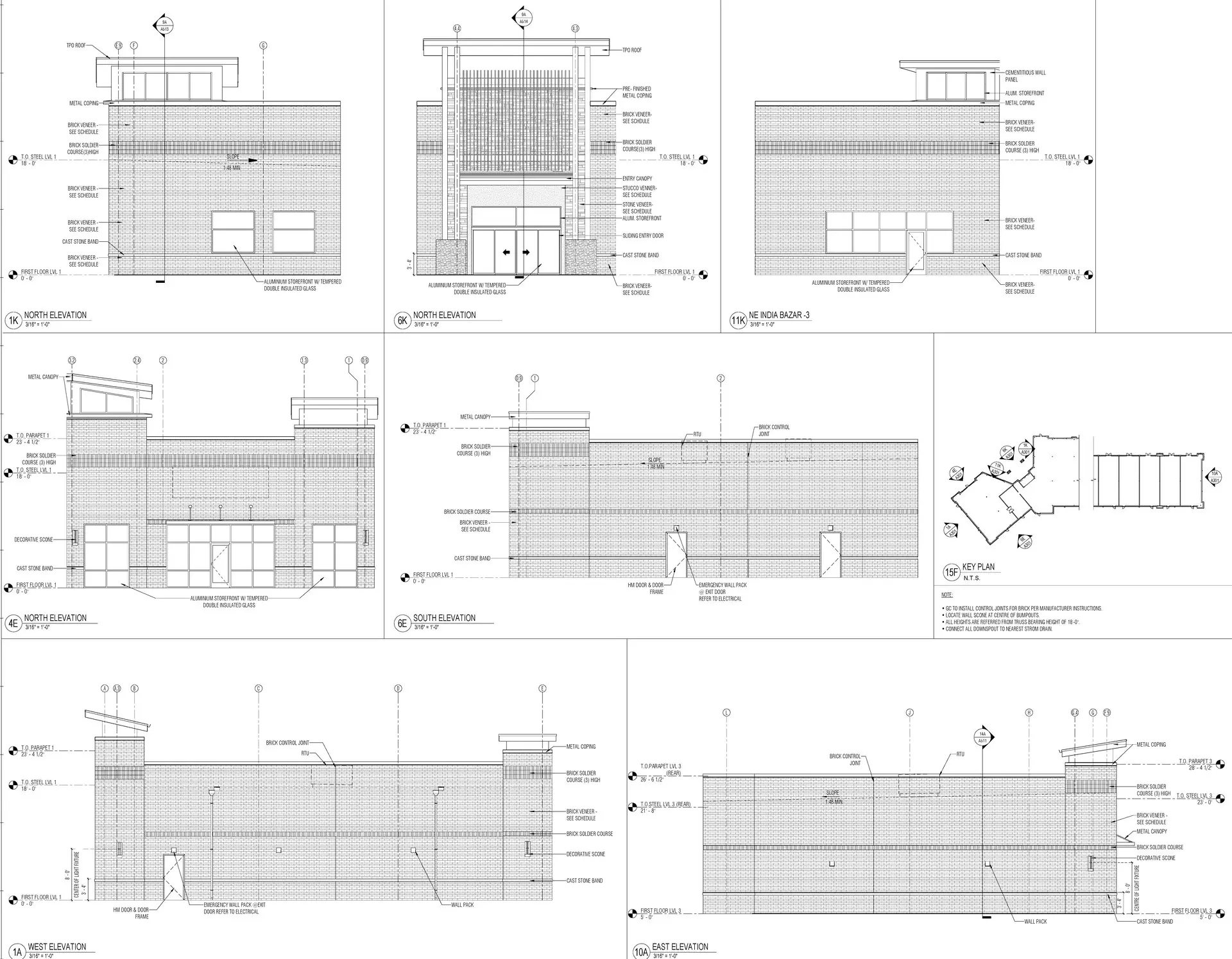
Elevations of a Commercial Building – Part of a comprehensive CD Set
The primary mandate for any CD set is compliance. Whether it is adhering to the International Building Code (IBC), ADA accessibility standards, or local zoning laws, the documentation must be watertight.
When you utilize specialized services for Architectural Construction Documentation, you gain access to teams who are rigorously trained in these standards. This ensures:
- Faster Permitting: Accurate, code-compliant drawings sail through municipal approval processes, preventing months of administrative delays.
- Reduced Liability: Detailed documentation serves as a legal safeguard, clearly defining the scope and specifications to prevent disputes between stakeholders.
- Standardization: Professional services ensure that every sheet, from site plans to interior elevations, follows a consistent layering and notation standard (e.g., AIA standards), making them readable for any contractor.
Precision in Practice
Documentation is only as good as the result it produces. We partnered with a client to deliver a comprehensive Revit CD set for a complex commercial facility, ensuring zero-clash execution on site.
Read the Case StudyWhat Goes Into a Complete CD Set?
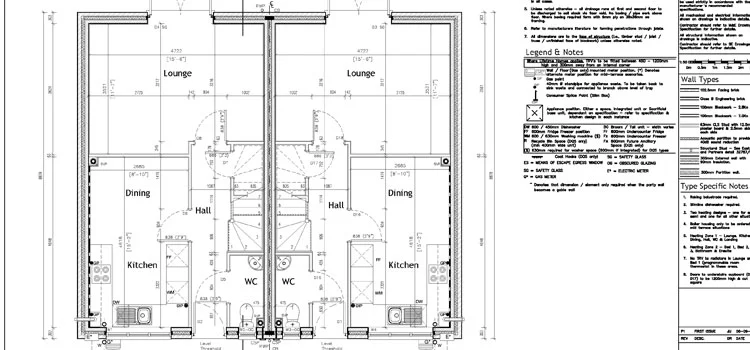
A robust set of CD Sets acts as the instruction manual for the building. While the specific contents vary by project type, a comprehensive package typically includes:
- Site Plans: Logistics, grading, and orientation.
- Floor Plans: Detailed dimensioning and partitioning.
- Reflected Ceiling Plans (RCP): Lighting and ceiling grid layouts.
- Exterior & Interior Elevations: Material finishes and vertical dimensions.
- Door & Window Schedules: Detailed manufacturing specifications.
- Wall Sections & Details: Micro-level views of complex junctions to guide tradespeople.
By ensuring these components are fully coordinated, often using BIM technology, Architects can eliminate the “information gaps” that lead to RFIs (Requests for Information).
Did You Know?
Moving from traditional 2D drafting to BIM-based construction documentation can reduce field-generated Requests for Information (RFIs) by up to 90%. When the model is coordinated in 3D, conflicts are resolved in the office, not discovered by tradespeople on the ladder.
Summing Up!
The construction industry is operating on thinner margins and tighter timelines than ever before. In this environment, relying on vague or incomplete drawings is a financial risk no Project Manager should take.
Code-compliant, detailed construction documentation is not just an administrative hurdle; it is a tool for cost control. By partnering with Tesla Outsourcing Services, you ensure that your project is built on a foundation of accuracy, minimizing RFIs and maximizing ROI.
Clarify the Terminology
Confused about where “Construction Drawings” end and “Shop Drawings” begin? Understanding the specific role of each drawing set is crucial for project success. Read the Guide: Difference Between Construction Drawings, Shop Drawings, and As-Built Drawings
Read the GuideFAQ: Construction Drawing Services
Q2: Can you convert our design sketches into complete CD Sets?
Yes. This is a core function of Architectural Construction Drawing Services. We take schematic designs (sketches, SketchUp models, or basic CAD) and develop them into fully detailed, dimensioned, and coordinated construction documents.
Q3: How do you ensure the drawings are code-compliant?
We use a multi-tier quality-check process. Our teams are well-versed in international codes (like IBC, NBC, and Eurocodes) and use checklists to verify that all necessary data, such as fire ratings, egress widths, and accessibility circles, are present and correct.
Is your documentation ready for the job site? Contact us today to discuss how our Construction Documentation services can streamline your next build.
Expert Consultation