In the pursuit of efficient and error-free construction projects, the early detection of design inconsistencies has emerged as a critical imperative. As the architecture, engineering, and construction (AEC) industry continues to evolve, effective risk mitigation strategies are essential for ensuring timely and budget-friendly project delivery. In construction projects, unforeseen design clashes can significantly undermine successful execution. To address this challenge, building information modeling (BIM) has become an indispensable tool, particularly through its clash detection capability. By identifying and resolving potential conflicts before groundbreaking, BIM-enabled clash detection minimizes expensive redesigns, delays, and project setbacks, ultimately enhancing overall project efficacy.
What is Clash Detection in BIM?
Clash detection in BIM Services involves identifying and resolving conflicts between design elements in a digital model of construction projects. Through the simulation of construction processes, architects, engineers, and contractors can discover clash-able places well in advance; therefore, they may take timely precautionary measures to eliminate problems that will otherwise occur at construction sites at a much greater cost.
Types of Clashes in BIM
Clashes can be categorized into three primary types:
- Soft Clashes: These occur when design elements are positioned in proximity that may compromise clearance requirements, potentially hindering construction or maintenance. For instance, a ductwork system passing too near a sprinkler head could be considered a soft clash.
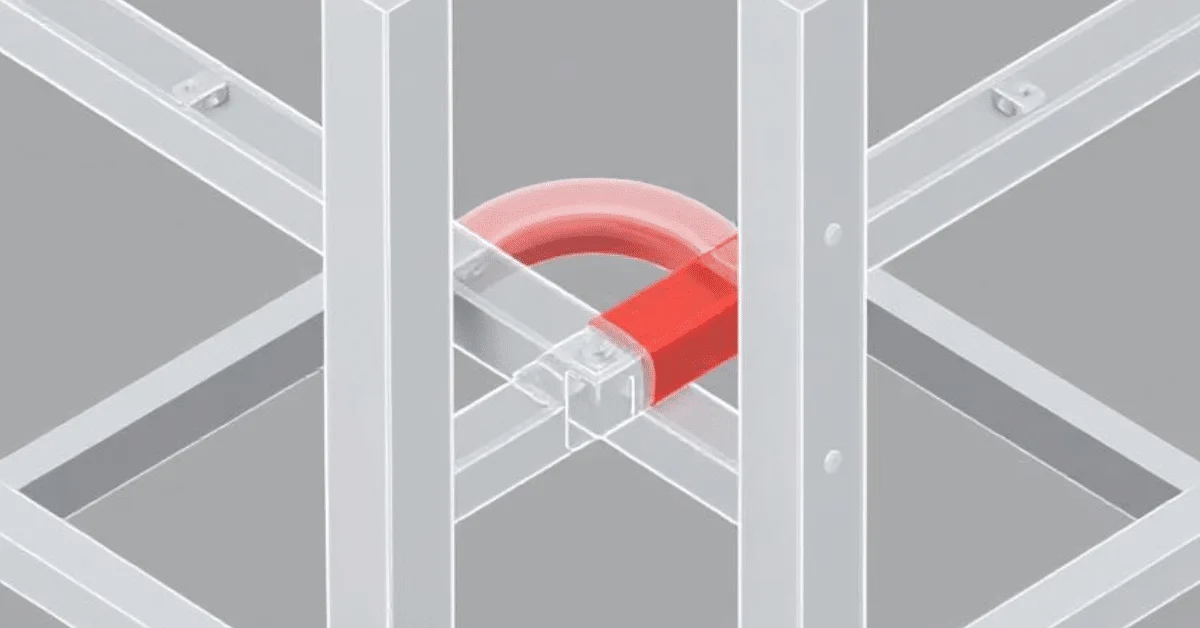
- Hard Clashes: These involve more significant conflicts in which design elements physically overlap or interfere with each other. A classic example of a hard clash is a pipe penetrating a structural beam.
Workflow clashes: These arise due to design assumptions or sequencing differences that create inefficiencies and delays in the construction process. Coordination of electrical and plumbing systems is a good example of workflow clash.
Causes of Clashes in BIM
Clashes can be attributed to several factors, including:
- Design concerns: Changes to design or specifications can create clashes with previously coordinated elements.
- Designing Errors: When the model has inaccurately or incompletely been put up in Revit, it can lead to clashes that may only become visible further down during the project.
- Time Constraints: Fast-paced project schedules drive teams to hurry through the design and modeling phase, which can lead to errors.
- Broken Communication: Poor communication can lead to confusion and inconsistencies in design.
- Size and complexity of the project: Large-scale or complex projects involving a large number of components and systems are often most prone to clashes.
Quality Issues: The accuracy and regularity of BIM models may be undermined by the findings of poor data management practices being executed.
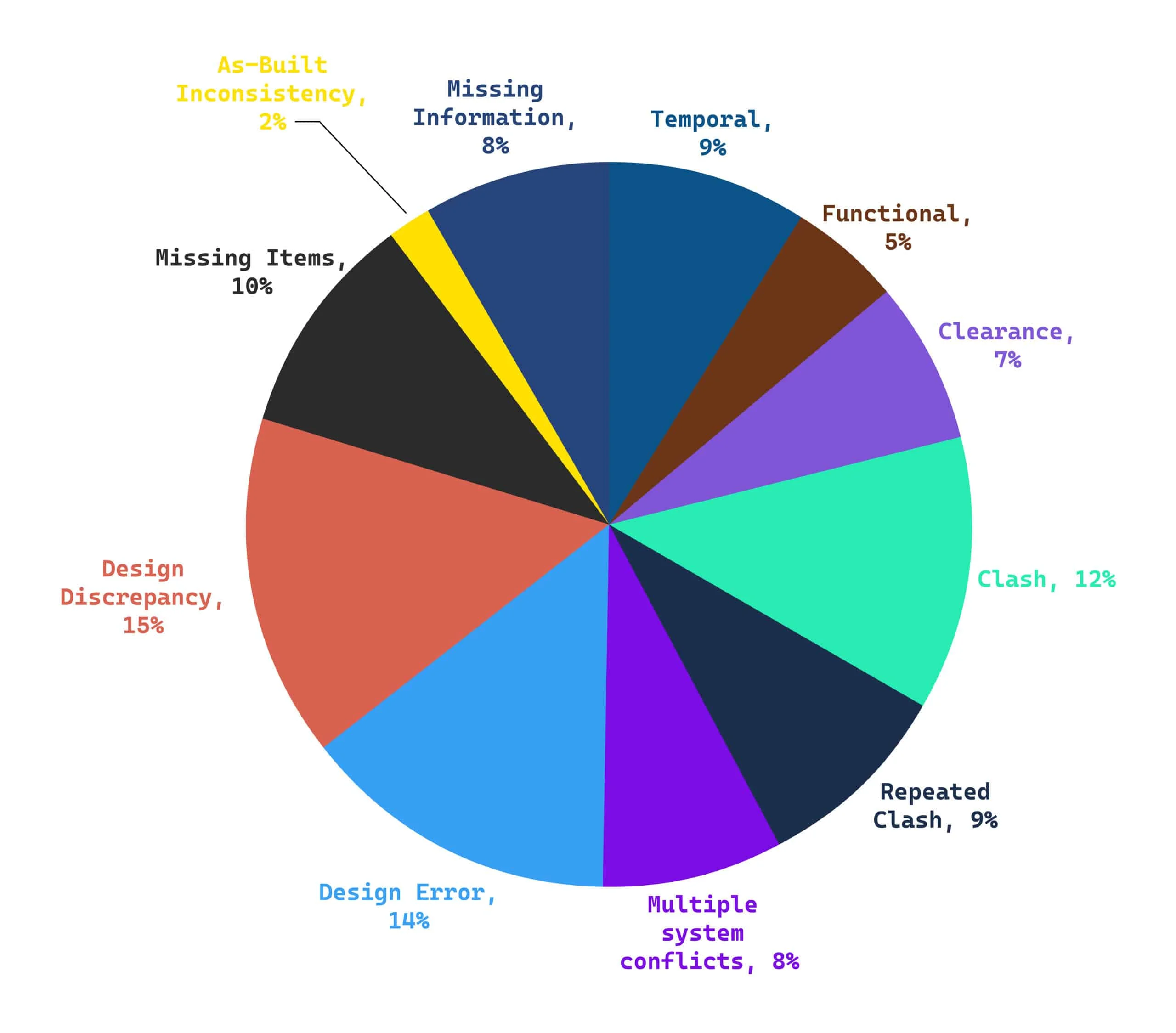
Effective management of BIM projects requires a thorough understanding of the potential causes of clashes, which can arise from design concerns, design errors, time constraints, broken communication, project complexity, software limitations, and quality issues. Recognizing these factors is crucial in mitigating their impact. To proactively address clashes, the clash detection process is employed, involving a systematic approach that starts with creating comprehensive 3D BIM models, followed by model integration, establishment of clash detection rules, automated clash detection, clear visualization and reporting of clashes, and collaborative clash resolution. By understanding the root causes of clashes and implementing a structured clash detection process, project teams can identify and resolve potential issues efficiently, ensuring the successful delivery of complex projects.
The Process of Clash Detection in BIM
The clash detection process typically involves the following steps:
- BIM Model Creation: Develop more comprehensive 3D models of features designed using BIM.
- Model Integration: Combine the single models into one central project model to show how different parts relate.
- Clash Detection Rules: Establish standards that will be used to identify potential issues concerning distance, overlap, and interference.
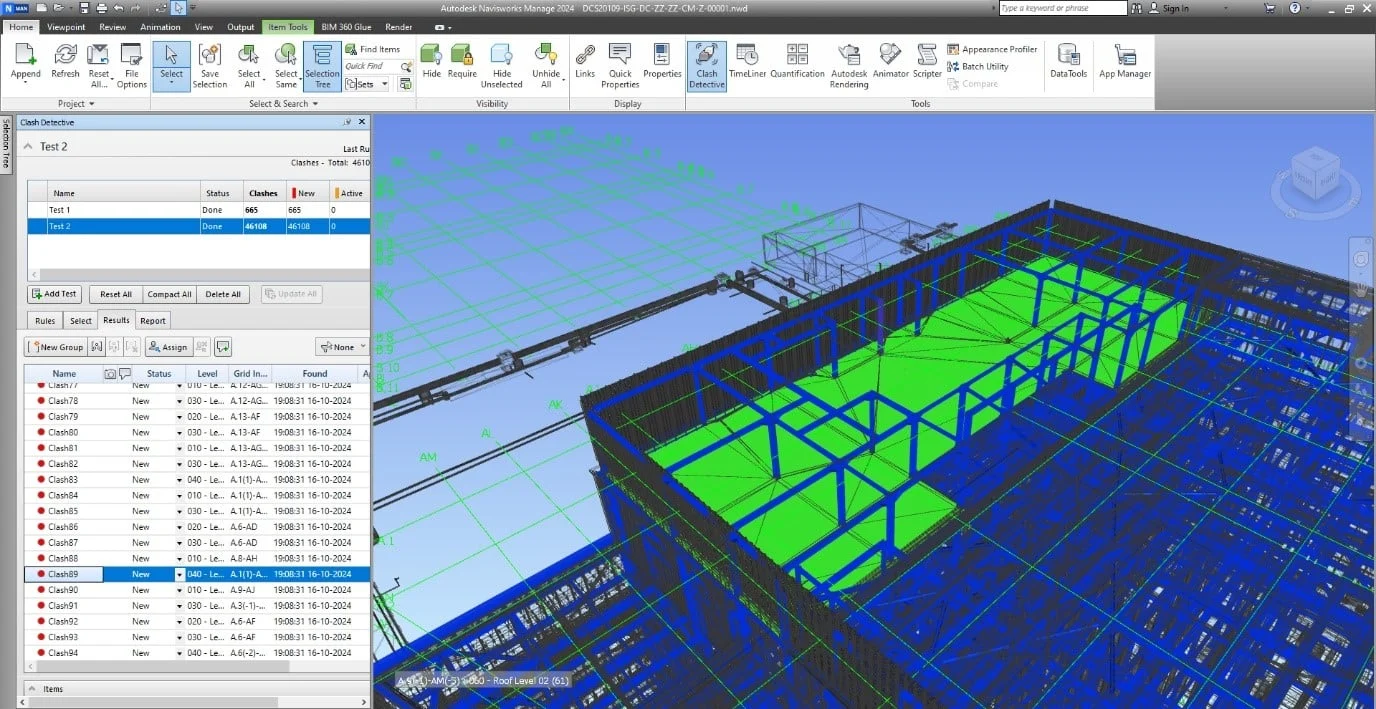
- Automated Clash Detection: Use software like Navisworks, Revizto, etc. to scan the combined model for clashes based on the set rules.
- Clash Visualization and Reporting: Show and report found clashes clearly, giving detailed info about the conflicting parts.
- Clash Resolution: Colleagues resort to approaches and resources aimed at overcoming the clashes that have been identified.
- Iterative Process: The clash-checking process is often repeated, with new clashes found and fixed as the design changes.
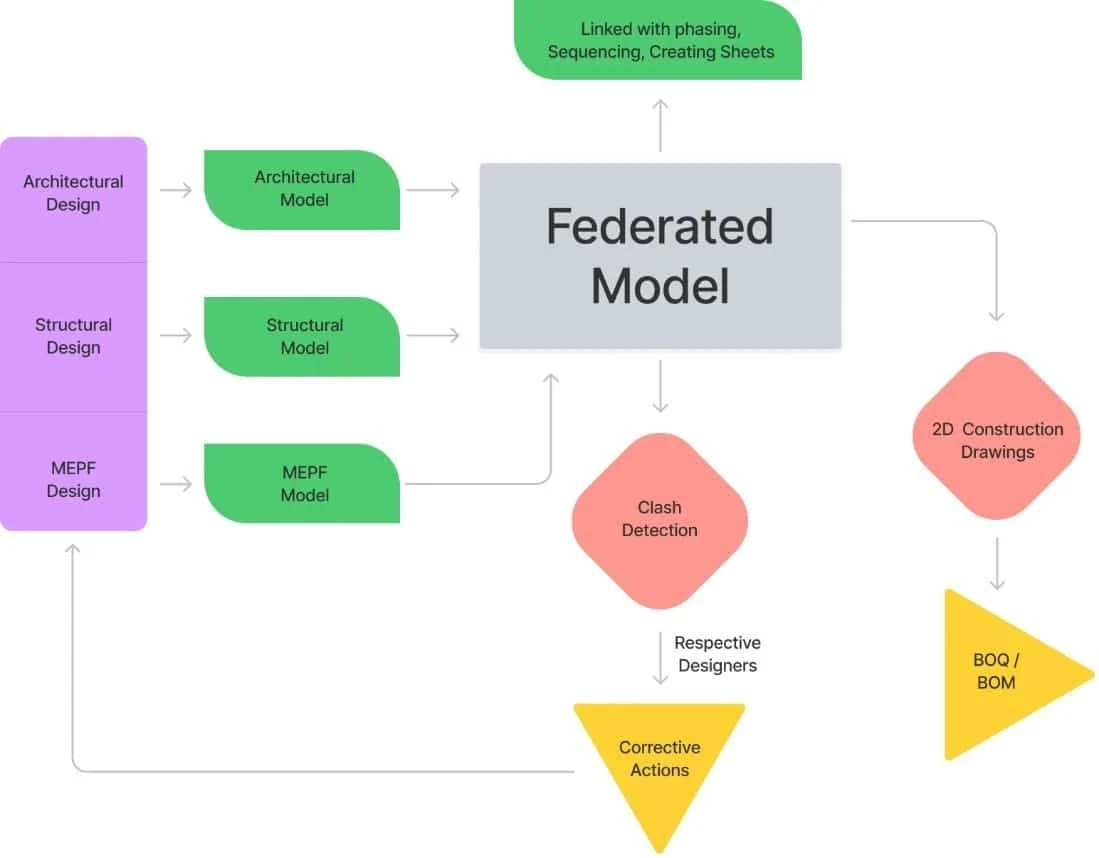
The process of clash detection in Building Information Modeling (BIM) involves a systematic approach to identify and resolve potential design conflicts. This process includes steps such as BIM model creation, model integration, establishing clash detection rules, automated clash detection, clash visualization and reporting, clash resolution, and iterative refinement. Various BIM software tools facilitate effective clash detection, including Autodesk Revit, Autodesk Navisworks, Autodesk BIM Collaborate, BIM 360, Trimble Tekla Structures, Bentley Systems AECOsim Design, Vectorworks, and Graphisoft ArchiCAD. By leveraging these tools, project stakeholders can identify and address potential conflicts early on, unlocking numerous benefits such as significant cost savings, time savings, quality improvement, safety enhancements, better collaboration and coordination, improved planning, and valuable facility management advantages. Ultimately, construction projects can minimize errors, reduce rework, and enhance overall project outcomes, ensuring more accurate and coordinated designs through improved efficiency, productivity, and project delivery.
BIM Tools Used for Clash Detection
Several BIM software tools are available for clash detection, including:
- Autodesk Revit: A popular BIM platform that offers integrated clash detection capabilities.
- Autodesk Navisworks: A specialized clash detection and coordination tool that can be used with various BIM software.
- Autodesk BIM Collaborate: A cloud-based platform for collaboration and clash detection.
- BIM 360: A comprehensive BIM platform with advanced clash detection features.
- Trimble Tekla Structures: A structural engineering software with built-in clash detection capabilities.
- Bentley Systems AECOsim Design: A multi-disciplinary design platform that includes clash detection tools.
- Vectorworks: A versatile BIM software with clash detection functionality.
Graphisoft ArchiCAD: A BIM software primarily used for architectural design, but also offers clash detection features.
Benefits of Clash Detection in BIM
Clash detection offers numerous benefits for construction projects, including:
- Cost Savings: Reduces re-construction by identifying and addressing issues early on. Contractors can prevent extended deadlines, utilization of more resources, and construction costs by utilizing BIM Coordination Services. Enables more accurate and precise Bills of Quantities (BOQs) and Bills of Materials (BOMs).
- Time Savings: As the clashes can be detected right in the preconstruction stage, this improves coordination between different trades and disciplines.
- Quality Improvement: Ensures the development of high-precision BIM models by detecting clashes, interferences, and design modification requirements for the accuracy and precision of the final product. Reduces errors and defects that can lead to costly rework.
- Safety Improvements: Identifies potential safety hazards that could result from clashes, such as falling objects or electrical hazards. Improves overall site safety by preventing accidents and injuries.
- Better Collaboration and Coordination: Improves communication and understanding between stakeholders. Enhances teamwork and collaboration among different design agencies. Facilitates a shared understanding of the project’s goals and requirements.
- Improved Planning and Project Coordination: Provides valuable insights for project planning and scheduling. Helps to identify potential bottlenecks and areas for improvement.
- Valuable for Facility Management: The BIM Model of the building can be used for maintenance and operations in the future. Facilitates easier identification and resolution of issues during the building’s lifecycle. Critical Building Information about the manufacturers, products, or equipment data can be saved within the model and used for maintenance of the building, renovation, or reconstruction at a much later stage.
The benefits of effective clash detection far outweigh these challenges, making it an indispensable component of modern Architecture, Engineering, and Construction (AEC) projects. By leveraging clash detection, project teams can focus on efficiency and speed, streamlining workflows and accelerating project delivery while highlighting significant cost savings and emphasizing quality and accuracy, ultimately delivering high-quality projects that meet or exceed client expectations.
Top BIM Clash Mitigation Strategies
To effectively mitigate clashes and ensure project success, consider the following strategies:
- Early Collaboration: Establish open communication and collaboration among all stakeholders from the beginning of the project.
- Utilize Clash Detection Tools: Leverage advanced BIM software and tools to identify and address clashes proactively.
- Hold Coordination Meetings: Regularly discuss and resolve detected clashes, ensuring alignment among different teams.
- Conduct Virtual Simulations: Use 4D simulation to visualize construction sequences and identify potential conflicts before they occur on-site.
Continuous Tracking: Monitor and track the resolution of clashes throughout the project, ensuring no issues are overlooked.
The Future of Clash Detection in BIM
As technology continues to advance, the future of clash detection in BIM holds exciting possibilities:
- AI-Driven Processes and Tools: Artificial intelligence can automate many aspects of clash detection, improving efficiency and accuracy.
- ML-Driven Processes and Tools: Machine learning can be used to analyze historical data and identify patterns to predict potential clashes.
- Automated Clash Resolution: Advanced software tools may eventually be able to resolve certain types of clashes automatically.
- Enhanced Interoperability: Improved interoperability between different BIM software and data formats will facilitate smoother collaboration and data exchange.
By leveraging clash detection to optimize efficiency, cost savings, and quality, AEC projects can significantly benefit from its advantages. However, as the industry continues to evolve, it’s essential to move beyond the fundamentals and explore innovative approaches that further enhance the clash detection process. Recent advancements have given rise to sophisticated techniques that offer even greater precision, insight, and project control.